Get Solar Qualified With Our Smart Calculator!

GET FREE ESTIMATE!

$0 Down, No Debt & No Payments for 12 Months, Power Up Smarter with New Solar Lease!

Best Home Energy Monitors: How to Choose the Right Monitoring System?

And once again, you got a high electric bill and you don’t have a clue why? Well, you aren’t the only one. Based on the U.S. Energy Information Administration, an average American family spends between $1,500 and $2,000 annually on electricity. Nevertheless, most families do not have any clue about the particular appliances contributing to this spending. Your old fridge that’s silently using up 20% of the electricity, that video game console plugged in while not in use, HVAC system that’s doing double duty. This is when home energy monitors come into play. These energy monitors now provide you with the possibility to track your circuits at real time. Also, they  detect all household appliances due to artificial intelligence algorithms, integrate with solar panels and smart homes. 

Best Home Energy Monitors

And what’s best about it all is the proven effectiveness of these devices. On average,  such devices decrease your electricity bill by 15% in 2 to 4 months. Regardless of whether you’re trying to save money, use solar panels, drive an electric car, or simply love smart homes, there is always a home energy monitor tailored especially to your needs. In this article, we will highlight what are home monitors and how they work. Also, we will explore some best home monitors in 2026 for your home.

What is a home energy monitor and how does it work?

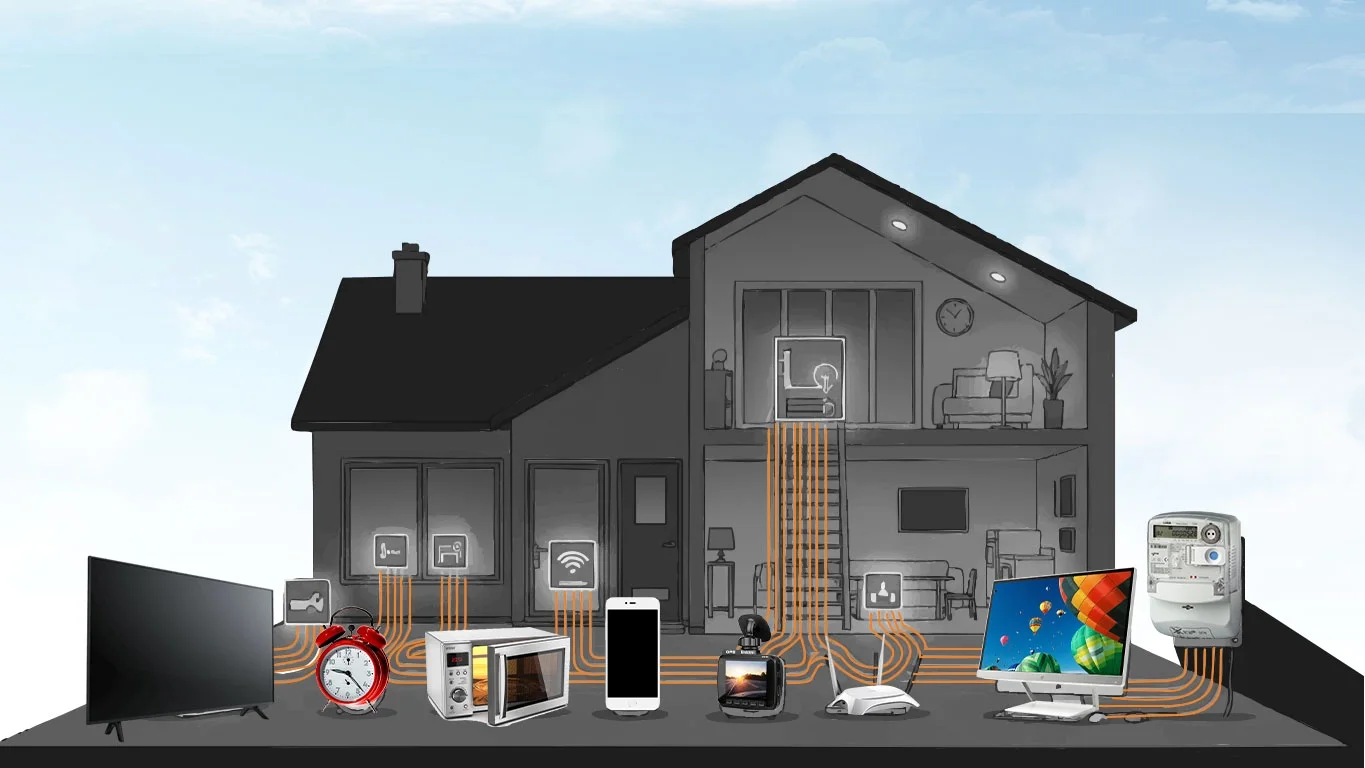
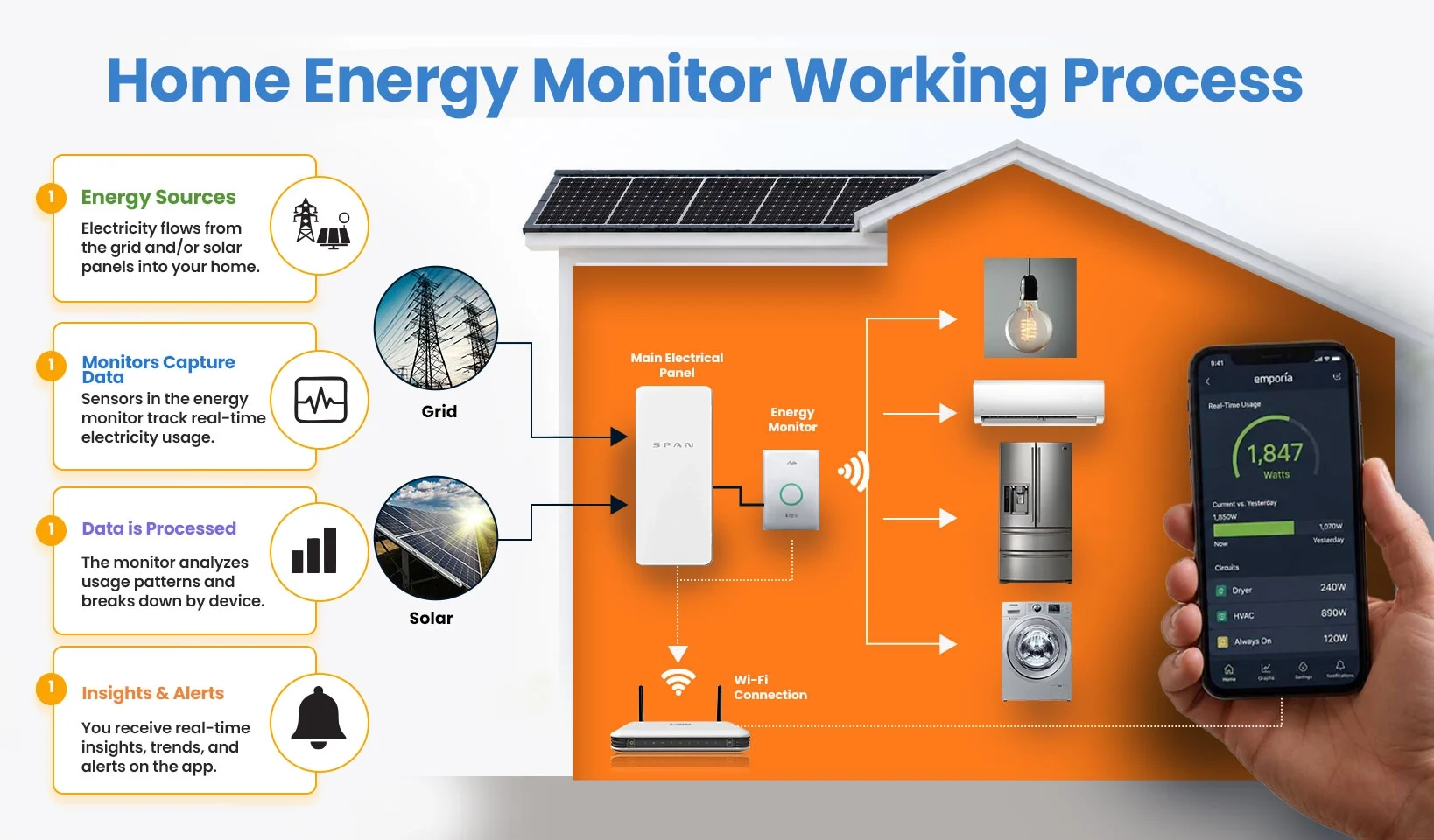
A home energy monitor is a device that helps measure and monitor energy usage within your household. They either work at a panel level by measuring your total household’s electricity usage, at a circuit level through individual electrical lines, or at a plug level by monitoring the power consumed by a particular appliance. 

Whole-home energy monitors mostly use clamp meters (CTs), which connect to the wires at the main electrical panel. The sensors will detect electrical currents and then wirelessly send data to the app on your phone. No alterations will be made to your electrical system and no wires cut.

Smart plug monitors operate in a rather simple way. They just need to be plugged in between the wall socket and the appliance to monitor its usage. This method isn’t that effective in tracking the total energy consumed by your home. But, it works perfectly well when trying to reduce the consumption of one particular gadget. 

home energy monitor working

Why U.S. homeowners need a home energy monitor in 2026?

Residential electricity prices in the U.S. have increased significantly in recent years. Due to climate-related surges, infrastructure expenditures, and rising costs, residential electricity rates in many U.S. states are estimated to hit around 16–17 cents per kilowatt-hour (kWh) in 2025–2026. Also, Time-of-use (TOU) pricing is common practice among utility providers, which means when you consume electricity has become just as important as how much you consume. Furthermore, Americans’ homes are gradually shifting toward a fully-electrified system with electric vehicles, induction cooking, and heat pumps installed. 

According to the estimates provided by the National Resources Defense Council (NRDC), the cost associated with phantom loads in homes amounts to about $165 per year. With a home energy monitor, you’ll be able to get rid of unnecessary electricity use immediately. It is possible to save up to $150–$300 per year just by cutting your electricity consumption by 10-15%. 

What are the types of home energy monitors and which one fits you?

There are four primary types of energy monitors for home including: 

1. Whole-Home Panel Monitors:

The most extensive solution for you. By installing right into your electric panel and using CT clamps on both your mains and individual circuit breakers, they provide you with real-time information about all the circuits at once. Great choice for those wishing to see everything that happens and save as much as possible. 

2. Smart Plug/Outlet Monitors:

Plug-and-play energy monitors track the usage for each device separately. There is no need to install anything other than the monitor itself into your socket. Perfect for renters and people new to tracking home electricity usage. 

3. Solar + Grid Hybrid Monitors:

If you have solar energy system, hybrid monitors will be perfect for you. Not only will they tell you how much electricity is produced, but also how much is consumed and whether there is a surplus of energy. Ideal if you want to make a good investment in your home. 

4. AI-Based Disaggregation Monitors:

Devices such as the Sense Energy Monitor use Ai learning to recognize different types of loads based on electrical signals. They will automatically identify each device in your home, and you won’t even need additional circuitry. 

What are the top considerations for buying a home energy monitor in 2026?

For many of homeowners, buying an energy monitor is a wise choice; but the equipment you select will have a significant impact on both your initial expenses and long-term savings. Since not all energy monitors are made equally, we’ll go over the things to think about to choose the one that best suits your requirements. 

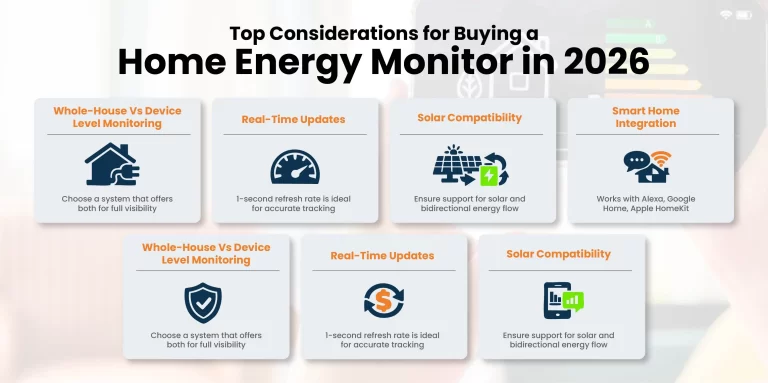
top considerations for buying a Home Energy monitor

1. Whole-House vs. Device-Level Monitoring: Whole-house meters show you the entire picture. Device-level meters allow you to focus on specific devices. It’s always optimal to choose meters capable of doing both. 

2. Real-Time Updates:  Prefer meters with at least a 1-second update frequency. The delay means loss of valuable time when reacting to problems. 

3. Solar Energy and Bidirectional Charging Monitoring:  Consider bidirectional energy monitoring capabilities if you plan to install a home solar energy system

4. Smart Home Capabilities In 2026:  The best home energy monitor will connect with Amazon Alexa, Google Home, Apple HomeKit, and other popular virtual assistants.  

5. Safety Standards Check: It is vital to verify whether the home monitor has UL, ETL, or CE certification. This certificate proves the device underwent necessary electrical panel testing 

6. Subscription Charges:  Some energy monitors are entirely subscription-based. Others might offer a few subscription-free features. Consider all possible expenses when buying. 

7. App Quality:  Choose a home energy monitor with an app available for both iOS and Android systems. Look for user-friendly dashboards showing daily kWh costs rather than numbers themselves.  

What are some best energy monitors for home?

Energy monitors allow you to see how you’re using your power rather than through the electric bills you receive each month. These are particularly useful when it comes to reducing wastage, monitoring the use of solar power, and identifying power-intensive devices. The following are some of the best home energy monitors in 2026: 

Emporia Vue 3 Energy Monitor:

The Vue monitor from Emporia is an affordable choice that appears to be popular by users. You may add sensors that clamp onto individual circuits in your electrical panel for a much more detailed view, but the base model only provides an in-depth analysis of your home’s energy use by monitoring the main power breaker. To track energy use by location or appliance, users can mark these circuits with labels like “kitchen,” “dryer,” “EV charger,” or “heat pump.” Additionally, for devices connected to Emporia smart plugs, you can obtain even more detailed information. Vue seamlessly connects with other Emporia products, such as its smart EV charger, which can be used in conjunction with the monitor to maximize charging by utilizing excess solar power or syncing with time-of-use rates. Various statistics, insights, and notifications for anomalous energy use are available on the Emporia app. 

Siemens Inhab Energy Monitor:

Homeowners can see exactly how much electricity their house is using in real time with Siemens’ Inhab Smart Home Energy Monitor. In addition to tracking total household use, the system may be set up to monitor specific circuits for a more thorough analysis of energy usage. For homes who don’t necessarily require high-end system but want more structure and brand support than ultra-budget monitors, it’s a good solution. 

Schneider Electric Energy Monitor for Homes:

Schneider’s monitor, formerly known as the Wiser energy monitor, is installed in your home’s electrical panel to track the amount of electricity used throughout your home. It uses Schneider’s Wiser app to measure energy savings, let you establish energy goals, show real-time energy usage, alert you when gadgets turn on or off, and suggest ways to cut waste and save money. Homeowners may monitor net usage and measure both production and consumption with solar panel installations. Homeowners that seek brand continuity in their electrical system and already use Schneider equipment may find it most appealing. 

Solar + Home Energy Monitoring: The Most Powerful Combination in 2026

When looking toward the future of energy management in the United States, one cannot overlook the connection between home solar power and energy monitors. They form an amazing combination that will help homeowners reduce their electricity, fully utilize the produced clean energy, and become energy independent. Installing solar panels on your roof without connecting them to a home energy monitor would be equal to driving a car without any gauges in front of you. You might drive and feel like everything works perfectly, but do not know whether you are using all the advantages offered by your car.

With a simple inverter gateway (such as the one made by Enphase or SolarEdge), it is possible to receive some basic information about the produced energy, but not about its actual usage, about circuits used during sunny hours, or whether it is possible to move some time-consuming appliances’ usage from regular hours to solar-powered hours. This is where a solar-friendly home energy monitoring system such as Emporia Vue 3 Solar, Sense Solar, and Curb come into play. By using production current transformer (CT) sensors attached to your solar inverter lines along with consumption CT sensors on each circuit within your home, you receive comprehensive insights about your home’s energy economy.

How smart electrical panel like SPAN revolutionizing energy management?

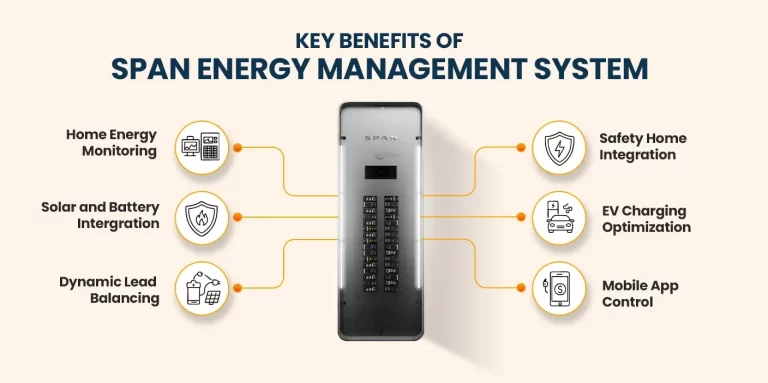
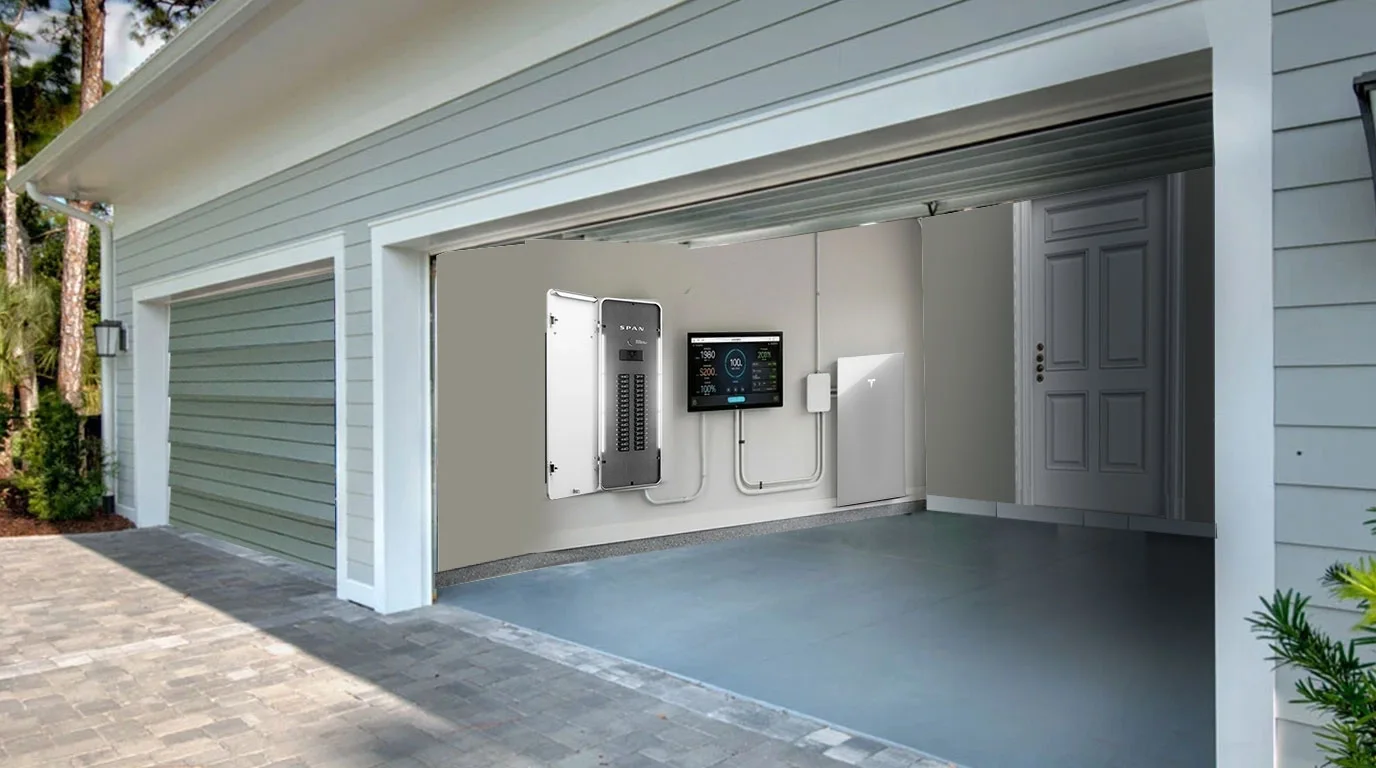
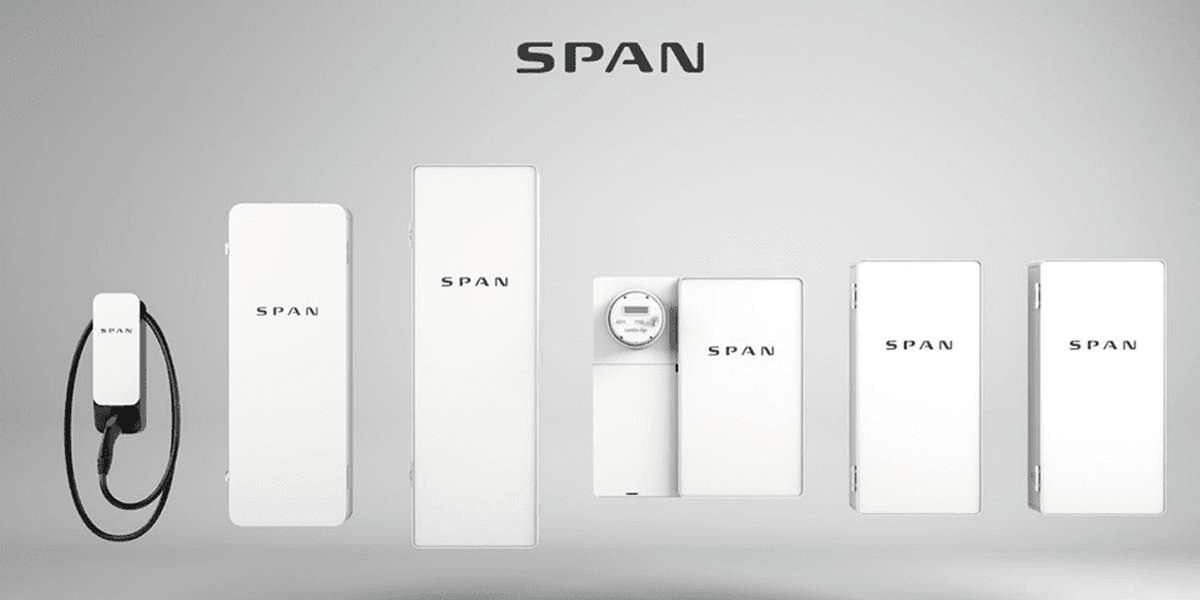
Whereas standalone monitors such as Emporia Vue 3 and Sense give you per-circuit information, a new device category is taking home energy monitoring to the next level: the smart electrical panels. The premier product in this category available in the U.S. market is SPAN Electric Panel. In essence, SPAN Electric Panel substitutes the standard electrical breaker box for an energy management system. Each circuit in your home has a CT sensor and a controllable relay, which means SPAN can monitor and control each circuit from its app. 

SPAN Electric Panel

The SPAN Panel worth it if you: 

  • Have or will install solar panels and/or battery backups
  • Will be getting an EV or currently have one
  • Need home backup power without adding a new sub-panel
  • Having an older or smaller electrical panel that requires replacing
  • Never want to miss any energy data

Concluding all, the solar revolution is sweeping across the United States. Residential solar has seen massive adoption rates, while global solar power generation surpassed wind power generation for the first time ever in 2025, growing 30% from the previous year to produce a total of 2,778 TWh.

With the above considerations, the home energy monitor is not only a smart device but the actual brain of an efficient house in America. The home energy monitor creates the bridge between the generation statistics and useful insights into consumption behavior. In an era where the cost of electricity in the country has been on the rise, and TOU billing spreading throughout utility territory, the homeowners who install home energy monitors are best positioned to handle the future.

Besides residential and commercial solar solutions, Solar SME helps in upgrading home electric panels. If you are planning to install solar, you can get FREE online estimate or contact us for upgrading to SPAN Panel. 

Related Articles:

Phantom loads, also known as energy vampires, are the sneaky electricity drains that work behind the scenes, causing homeowners' energy bills to increase every month. Reducing standby power is now a vital aspect of enhancing home energy efficiency. Explore How!
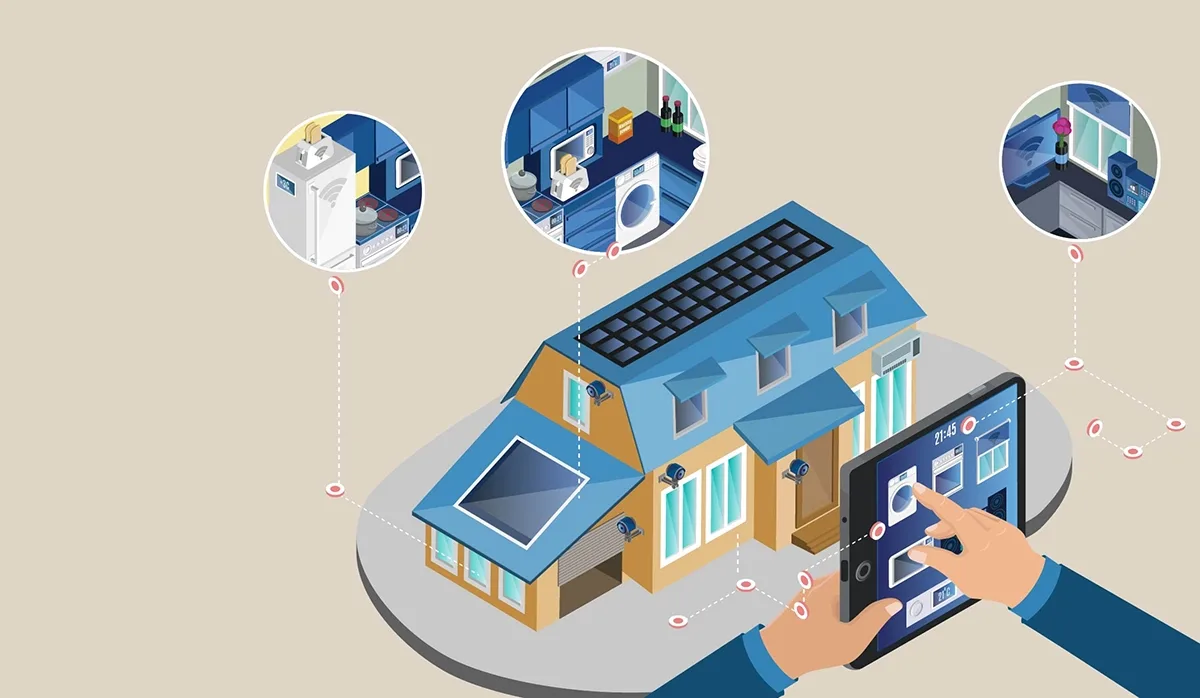
Smart home technology is revolutionizing the way of living by allowing homeowners to manage their power usage and making their home efficient. Ever imagine you can control all your home’s appliances by using your smartphone. Learn More!
With the growing trend of solar energy, people are now looking for more efficient ways of utilizing energy.

Scroll to Top