
SolarSME, Inc.
Solar for Churches & Houses of Worship
Lower Energy Costs. Strengthen Stewardship. Put More Resources Back into Your Mission.
Church buildings and houses of worship have a unique potential of transforming their structures into energy assets. They possess a distinctive energy need like you might need to power up a big building, classes, office space, kitchen, community center, or even run a daycare service but operate on donations and budget-controlled expenses. Solar for churches can allow you to lower the dependence of the electricity from utility companies, become more energy resilient, and save money from donations for the work of your church.
No matter whether your church functions just during Sundays or all week-long providing day care services, food pantry, office space, classes, or a community center, a properly engineered church solar panel system can be designed around your actual electricity usage.
Solar SME provides church solar installation and commercial solar solutions designed around your building, energy usage, budget, and long-term goals.
Why Are Churches Well-Suited for Solar?
Churches usually have high demand for electricity to support various activities, such as worship, office work, classrooms, and community projects. A church solar system can help control energy costs and contribute to good financial stewardship and the mission of the church.
1- Reduce Operating Costs on a Donation-Based Budget
Utility expenses can place pressure on a church’s donation-based budget. Commercial solar for churches can help reduce reliance on grid electricity by generating power on-site. A properly designed solar panel system for churches considers energy usage, available space, electrical capacity, building operations, battery needs, and applicable utility programs to support long-term financial stewardship.
2- Redirect Energy Savings Toward Ministry
For many churches, there are additional reasons to use solar power. It is a way not only to reduce costs of energy but also to allocate funds for outreach programs, feeding programs, youth work, education, charity, and other ministry programs. Thus, solar panels for churches makes solar for houses of worship a practical stewardship decision rather than simply a sustainability project.
3- Solar + Battery Storage Can Support Complex Energy Needs
Churches that hold evening events, multiple programs, critical electrical loads, or resilience goals should also consider analyzing the feasibility of a battery storage in addition to solar panel installation. While solar panels produce electricity during the day, solar batteries give you the ability to utilize stored energy later depending on the design. For churches that want more than electricity-cost reduction, solar + battery storage can become part of a broader energy strategy.
Does Your Church Have Enough Solar Potential?
One of the biggest mistakes in church solar planning is assuming that every house of worship uses electricity the same way. Your system should be designed around your actual load profile, operating schedule, utility rates, and available solar resources.
Sunday-Only Usage vs. Weekday Programs
If your church works only on Sundays, you have a completely different load than a church that runs a daycare, admin office, classrooms, food pantry, or other programs during the week. That’s why the design of the church solar system starts with an analysis of your energy consumption rather than just the available roof space.
Solar SME can evaluate your electricity usage and property characteristics to help determine whether solar generation, battery storage, or both are appropriate for your facility.
Understand the Value of Net Metering for Church
Your church may not consume all the electricity its solar panels produce at the exact time that electricity is generated. For example, solar production may be highest during weekday daylight hours while some of your largest building loads occur on Sundays or evenings.
Where it is available, net metering can help in balancing this situation through credits from the excess electricity sold to the grid under a particular utility’s program. Net metering value is specific to each church’s utilities and will depend on the program rules. Solar SME will assist in identifying how much it is worth as part of your solar church assessment.
Federal Solar Incentives for Churches: Understanding Direct Pay
The first thing that comes into the mind of a house of worship is:
“Is there any way of getting the federal solar incentive when our church does not pay taxes?” Yes, it is possible.
The Direct Pay/Elective Pay provision in Section 6417 can allow an eligible tax-exempt organization to get the benefit of the clean-energy incentive without the need of making a tax deduction. This is particularly relevant when evaluating nonprofit solar projects, because churches can have a different tax position from conventional commercial businesses.
How Direct Pay Works
If the project qualifies under certain criteria, Direct Pay can allow an eligible organization to obtain cash payments from a federal clean-energy tax credit. Therefore, Direct Pay is an entirely different process from a tax deduction in which the organization needs to pay taxes.
Solar SME can evaluate your electricity usage and property characteristics to help determine whether solar generation, battery storage, or both are appropriate for your facility.
What Qualifies?
The qualification of the process varies according to the specific clean-energy credit involved, the project type, project ownership, and construction or placement requirements among others. The qualifications also vary from project to project and include such considerations as domestic content, prevailing wages and apprenticeship requirements, energy communities, and other statutory requirements.
Important: Incentive rules can change. Your church should confirm current eligibility, credit amounts, deadlines, filing requirements, and project-specific requirements with a qualified tax professional and current IRS guidance before making financial decisions.
Financing Options for Church Solar Installation
Not every church will approach solar financing in the same way. The right structure depends on your organization’s financial position, capital plans, ownership objectives, and applicable incentive treatment.
1. Cash Purchase
The church can decide to buy the commercial solar system using cash payment. If the institution is qualified for Direct Pay, the institution’s financial advisor can analyze how the payment method works for this particular project.
2. Faith-Based or Denominational Financing
The institutions can look into the possibility of using faith-based funding in relation to denominational connections and programs. These will be different from one institution to another; therefore, the programs used need to be independently verified before incorporating them in the financial plan.
3. Church Capital Campaigns
Solar projects can be included in a capital campaign by the church to give the congregation a structured way to support a long-term facility investment. The clear proposal should contain reasons for the project, amount of power generated by the system, integration of the solar panel on the building, methods of financing the project, and any incentives applicable to the solar project. It should also indicate how the project fits the stewardship of the church.
4. Solar PPA and Lease
Depending on availability and project circumstances, churches may also evaluate third-party ownership options such as PPAs or leases. These should be compared with ownership based on the contract terms, energy rate, responsibilities, incentives, and long-term objectives of the organization.
What Your Church Board Should Know Before Approving Solar?
A church solar project isn’t simply a purchasing decision. It’s often a group decision. The board, building committee, finance committee, or congregation may need enough information to understand the project’s technical, financial, and operational implications.
Bring These Items to Your Board Meeting
- Energy Usage & Solar System Analysis
- System Design & Expected Solar Production
- Battery Storage & Backup Assessment
- Utility, Net Metering & Incentive Review
- Financing & Ownership Options
- Roof & Property Assessment
- Project Timeline & Installation Process
- Warranties, Maintenance & Long-Term Planning
Solar for Historic Church Buildings
Protect the Building While Planning for Its Energy Future
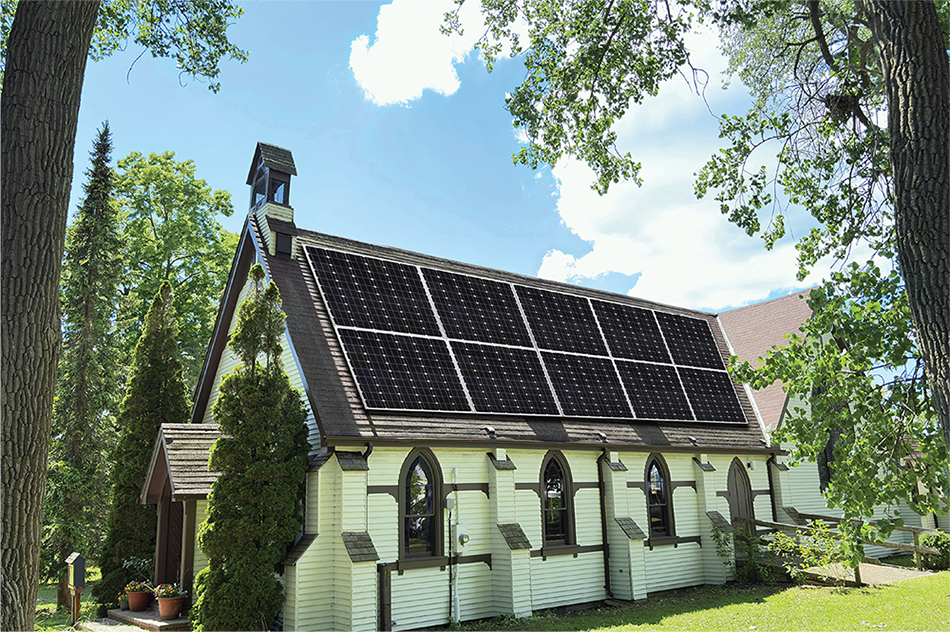
Historic churches can require a different approach to solar installation. Architectural features, preservation requirements, roof condition, structural limitations, and equipment visibility may all influence the project.
Evaluate Roof Condition Before Installation
Installing solar on an older church roof requires careful planning. Solar SME evaluates the roof’s condition, remaining service life, structural capacity, mounting approach, roof penetrations, drainage, equipment access, and future roof replacement plans. If significant roof work is already planned, coordinating the roofing and solar projects can help avoid unnecessary complications and ensure the installation is planned around the building’s long-term needs.
Work Around Architectural & Preservation Requirements
Historic designation, local preservation rules, architectural review, or other requirements may affect a solar project. The applicable requirements depend on the specific building and jurisdiction. Solar SME can evaluate the site and help identify project considerations, while churches should work with the appropriate preservation authorities and professionals where required.
Is Solar Right for Your Church?
There isn’t a universal church solar system. A good candidate may have a combination of:
- Significant annual electricity consumption
- Suitable roof or ground area
- A structurally appropriate installation location
- Favorable solar exposure
- Long-term plans to occupy the property
- An interest in controlling future electricity expenses
- A need for greater energy resilience
But the only way to know whether solar for your church makes sense is to evaluate the actual property and energy profile. Solar SME can help you move from a general idea to a project-specific feasibility assessment.
Commercial Solar Credit Calculator
FEOC. Domestic Content. 48E. See What Your Project Could Qualify For
Before you finalize your commercial solar project, see how equipment sourcing, domestic content, and project qualifications may affect your potential federal credit.
- FEOC Ratio
- Domestic Content
- Credit Impact
- Explore Your Project
- Equipment Sourcing
- project qualifications
- potential credit impact
Why Choose Solar SME for Church Solar Installation?
When you’re presenting solar to a church board, credibility matters. Solar SME brings more than a panel proposal. Our approach combines solar engineering, commercial installation experience, energy-storage solutions, and project-specific system design. Most importantly, Solar SME focuses on designing the system around the property’s actual requirements rather than treating every church as the same project.
Solar SME has:
- 10+ years of solar industry experience
- In-house installation teams
- Licensed and insured professionals
- Commercial and residential solar experience
- Battery storage capabilities
- Tier-1 solar equipment options
- Long-term warranty options
Ready to Explore Solar for Your Church?
Solar SME can help your team evaluate whether solar for churches makes sense for your property and prepare the information your board or building committee needs.
Frequently Asked Questions
The church can potentially own the system through a direct purchase or certain financing structures. A third party may also own the system through a PPA or lease. Ownership can affect incentives, maintenance, financial treatment, and contractual responsibilities.
That depends on the church's governance structure. Many projects involve a board, building committee, trustees, finance committee, or congregation. Solar SME can provide project information that can help decision-makers evaluate the proposal.
The best starting point is a feasibility assessment. Review your electricity bills, building characteristics, roof conditions, solar potential, utility program, financing options, and applicable incentives before making a decision.
The amount depends on the project's eligibility, applicable federal rules, project characteristics, and other requirements. Because incentive rules can change, churches should obtain a current project-specific assessment before including a specific amount in their financial planning.
A professional installer can properly evaluate the church’s roof, electrical system, energy usage, structural needs, permitting requirements, and long-term solar performance. Solar SME brings commercial solar expertise and site-specific system design to help churches build reliable solar and backup energy solutions.
Related Articles:
Rising utility prices and grid instability are changing how Americans power their homes. Explore why thousands of homeowners are investing in solar panels with battery storage to secure backup power, avoid peak electricity costs, and gain greater control over their household energy future.
Flat roof solar systems offer huge potential but only if optimized correctly. Learn how panel angle, albedo, and spacing impact performance. Discover how to design a high-efficiency PV system that maximizes output and delivers better long-term savings.
2026 is a game changer for solar energy as the U.S. accelerates its transition toward a sustainable future. Because of skyrocketing energy bills, persistent inflation, and increasingly frequent long power outages.