
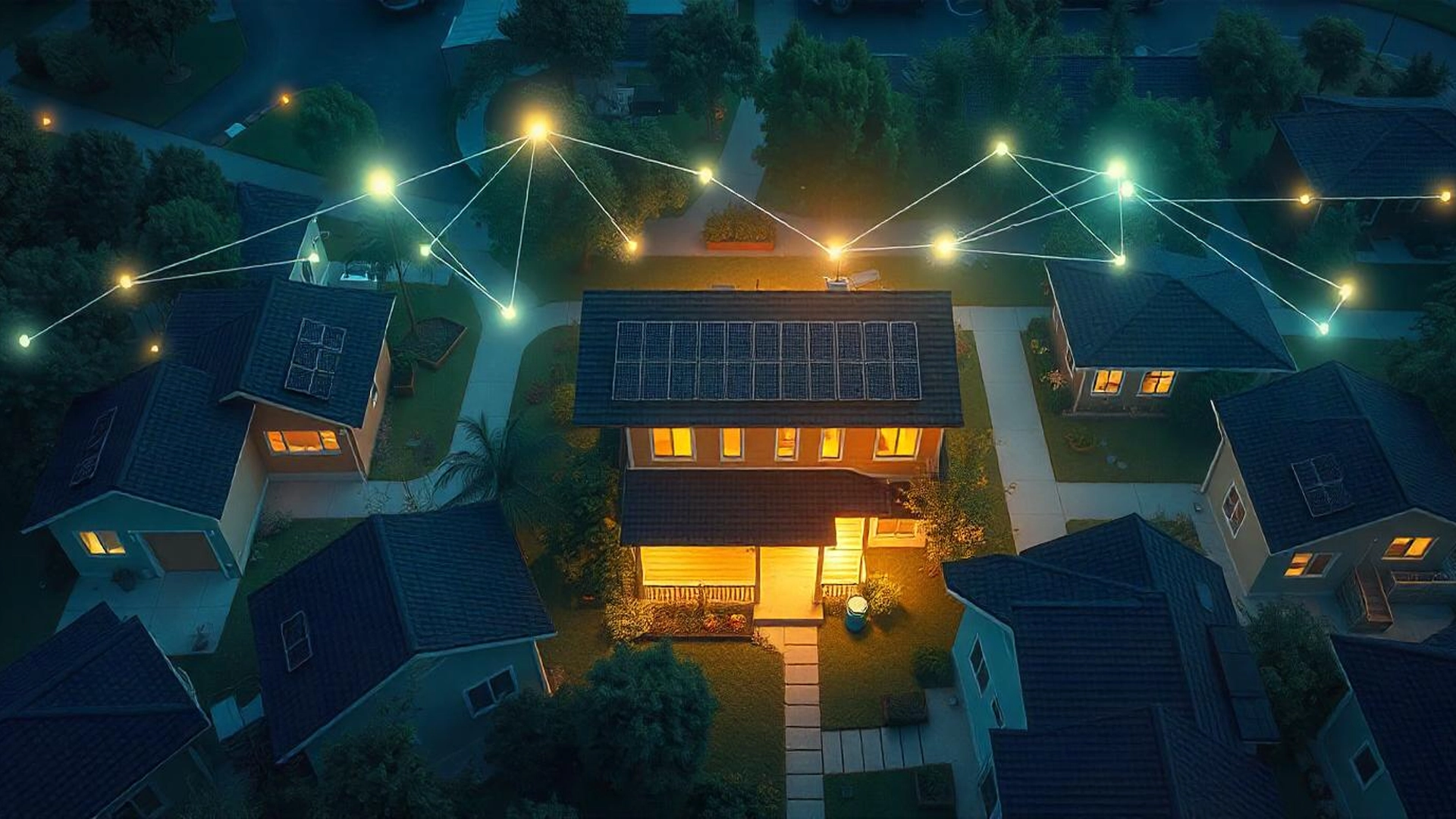
2026 is a game changer for solar energy as the U.S. accelerates its transition toward a sustainable future. Because of skyrocketing energy bills, persistent inflation, and increasingly frequent long power outages.
- Published On: May 01, 2026
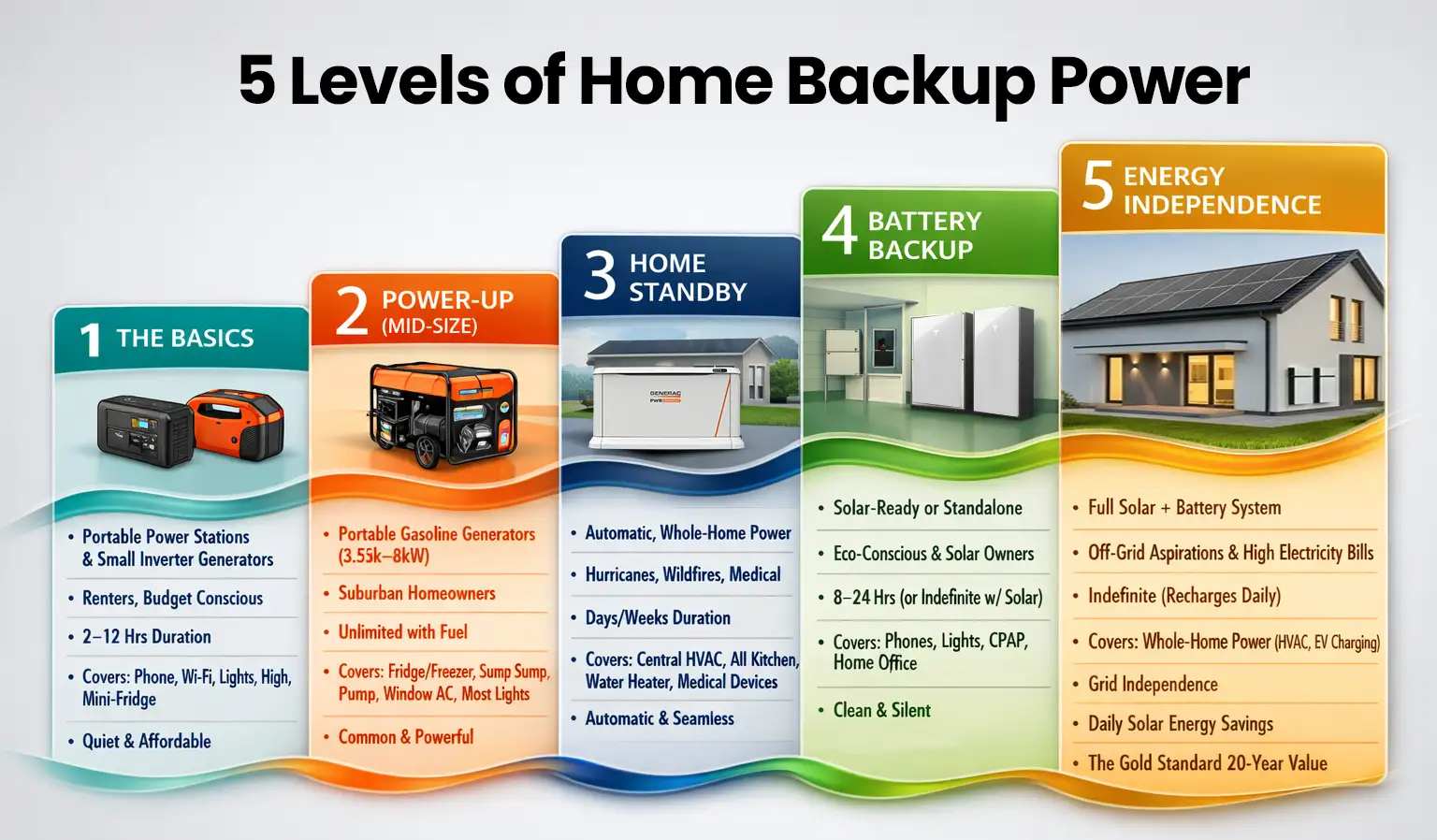
The 5 Levels of Home Backup Power:
How to Find Yours?
The power outage hits and It’s getting dark outside and inside too. Your refrigerator suddenly stops working. Your mobile battery is at 14%. You know the feeling! For millions of American homeowners who have had to endure a sudden power cut without warning. And, it is obvious how quickly “inconvenience” becomes an actual problem. According to the U.S. Census Bureau, almost one in four U.S. families reported having suffered at least one power outage within just one year. Also, the percentage of affected homeowners was much higher (28.3%) compared to renters (19.9%). At the same time, a groundbreaking research paper released by Oak Ridge National Laboratory showed that annual power outages have cost the U.S. citizens around $121 billion in 2025. This figure is double than what they did on average during the previous seven years (67 billion annually). In fact, during 2018-2024, the number of severe outages in the country rose by 29%. While their average duration increased from 9.6 hours to 11.8 hours. Grid failures are becoming more frequent, the weather is becoming harsher, and patience no longer solves anything. The good news is home backup power has never been advanced and cheaper!
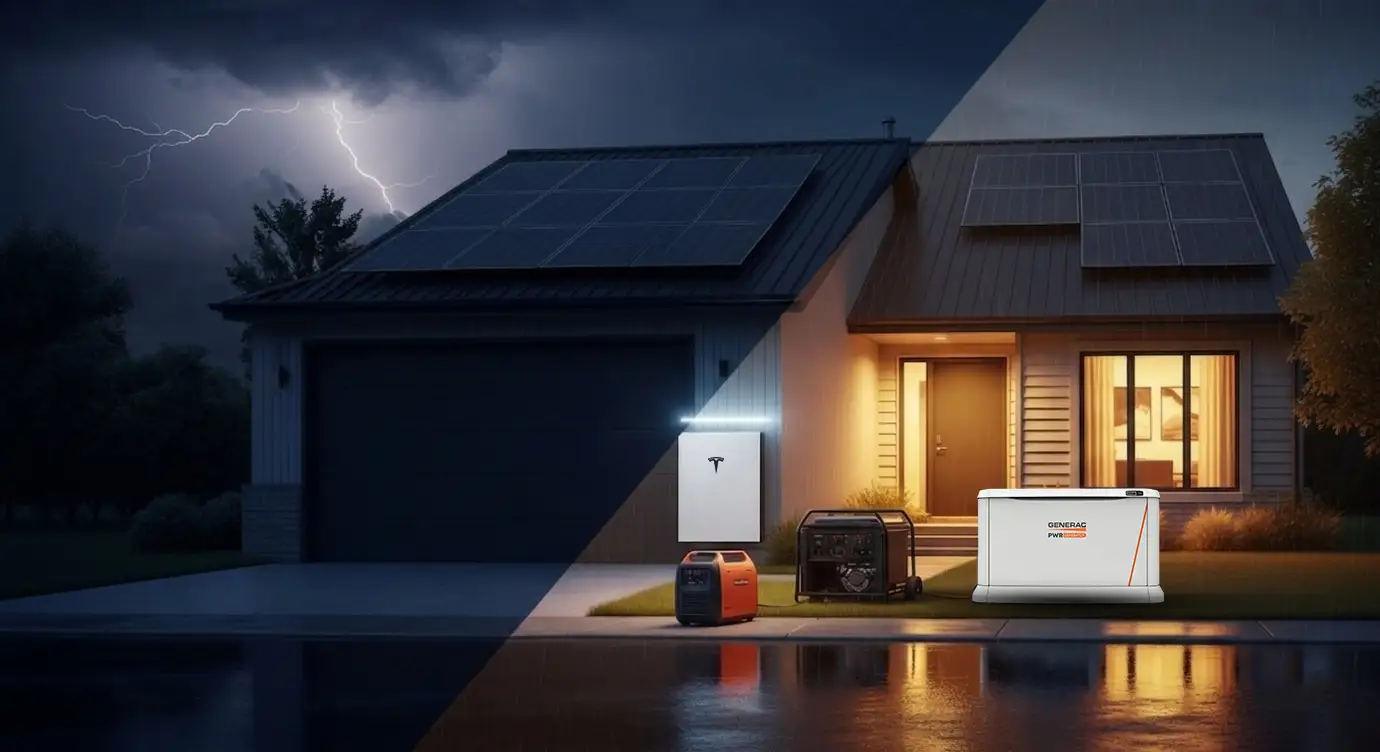
Whether it is an easy-to-use plug-and-play option or a fully self-sustained solution, we have got you covered, offering an affordable and reliable plan designed for every single household and zip code out there. This guide will give you a deep insight into five different stages, no guesswork involved!
Why is Home Backup Energy Essential in 2026?
First, let’s consider the condition of the current electrical power grid. According to the reports of the U.S. Energy Information Administration (EIA), in 2024, customers from South Carolina were experiencing power outages for about 53 hours, mainly because of hurricanes. Major event outages had become more than twice as long-lasting in 2025 than in the previous decade, according to EIA statistics. It goes without saying that operating under an isolated grid exposed to extreme weather, like in Texas, was costing the state almost $80 billion in cumulative outage costs between 2018 and 2024.
The residential backup power market is reacting to such trends. With an estimated worth of over $12 billion on a global scale by 2024, it will keep growing over the next ten years, with a greater share of American homeowners looking at backup power as essential rather than a luxury aspect. By 2025, there were 3.2 million households in the country who decided to use home batteries. And that number only increases every quarter.
The question for many homeowners is not about purchasing backup power systems. The problem is determining the right tier of backup power.
Check Your Solar Savings with our Smart Solar Calculator!
Start with a free tailored solar quote, compare brands and financing options, and explore your potential with zero obligation.
Level 1: The Basics - Portable Power Stations & Small Inverter Generators
Level 1 is a starting point, and it’s perfect for many American families. Solar generators from popular manufacturers such as EcoFlow, etc. are like battery packs equipped with an inverter. These generators will charge your smartphone and laptop, run a Wi-Fi router and modem, support LED lighting and a mini fridge.
On the other hand, small inverter generators are gas generators manufactured by Honda, Yamaha, etc. It’s another level up since they are more powerful and able to work non-stop as long as you have gas in the tank.
Level 1 home backup power systems can support cellphone and laptop charging, LED lighting, Wi-Fi router and modem, small fan or heater and refrigerator (with proper load management). However, this level cannot power a furnace/AC, water heater or medical devices.
So, if your home experiences short and rare power interruptions, usually under 12 hours long, and you only need to ensure that the basic necessities remain powered, Level 1 home backup systems will do the trick at an affordable price point. On the other hand, if you’ve got a home office, some medical equipment, or you’re dealing with multi-day storm events, then you should upgrade through the tiers.
Level 2: Portable Gasoline Generators (Medium, 3,500 – 8,000 Watts)
As the name implies, portable gasoline generators come in different sizes, but the middle range of 3,500 to 8,000 watts offers plenty of bang for your buck. These machines have the capacity to handle your fridge, one window AC, the lights, your Wi-Fi, and a sump pump all at once, giving you comfort in a 24 to 72-hour power outage.
Common models such as the Honda, Generac are trusted and readily accessible options. They work great when combined with a manual transfer switch, providing you with the ability to connect to certain circuits within your home without the risk of dangerous “suicide cord” hookup that causes carbon monoxide deaths every year.
Important Safety Warning: Portable generators should never be used indoors. Deaths from carbon monoxide poisoning occur annually from improper generator usage. It must always be operated outdoors and kept at least 20 feet away from any windows or doors.
Level 2 home backup solutions can power your refrigerator & freezer, window or portable AC unit, lights that have been assigned to critical loads, phone and device charging or small appliance circuit.
However, an appropriately home sized generator uses about 0.5-0.75 gallons of gasoline per hour of runtime operating at half capacity. Running for 72 consecutive hours could set you back up to $100 in fuel costs and potentially much more considering the challenge of acquiring fuel while a big storm hits and gas stations are often closed or clogged with lines.
Level 3: Home Standby Generator (Automatic/Whole-Home Power Supply)
Level 3 home backup power is all about the beginning of advanced solutions! An automatic standby generator system will give you the ability to have power automatically kick in at the flip of a switch whenever you experience an outage. Standby generators by Generac are just an example of what this would entail. The North American home standby generators market was worth over $3.5 billion in 2024, exhibiting an 8.2% compound annual growth rate, fueled solely by the ever-growing occurrence of weather-based outages.
System sizes and coverage:
10 – 13 kW: Essential circuits like refrigerator, lighting, outlets, and one AC unit
16 – 20 kW: Entire home coverage in a medium-sized house (1,500 to 2,500 square feet)
22 – 26 kW: Complete whole-home coverage with the central HVAC system and all household appliances (including EV charging)
Almost all stand-by generators utilize natural gas (preferred option and no need for fuel storage, lines remain under pressure even during most severe storms) or propane (500-gallon tanks can last about 5 – 7 days depending on load). Level 3 backup option provides full coverage central heating and air conditioning system, cooking appliances, electric water heater (if properly sized, home or office equipment and home security or alarm system.
But standby generators need an annual maintenance service by a professional, which includes an oil change, filter inspection, and a load bank test that generally cost $150 – $300. Even though the annual expense increases the total cost over 20 years.
Level 4: Home Battery Backup Systems (Solar-Ready or Standalone)
Home battery backup systems represent the most rapidly developing niche in the residential energy sector. The value of the home battery backup power systems market in North America stood at $2.36 billion in 2024 and will rise at a rate of 26.1% in 2034. Since 2022, prices have been reduced by almost 40%, and lithium-ion batteries make up over 85% of all residential battery installations today. Some of the best batteries on the market include the Tesla Powerwall 3, LG ESS Home 8, Fox ESS, Solax & Enphase IQ Battery 5P.
However, the combination of rooftop solar and battery is simply amazing because the battery charges itself from the sun by day and provides electricity by night, forming a perpetual loop that works even in case of long-term blackouts. During the 2021 Texas storm, houses equipped with solar + battery technology could survive without electricity for 3-5 days when those who used diesel generators faced freezing fuel lines and empty gas stations.
Advantages of the battery back-up system for the house includes:
- No sound: silently running during daytime and nighttime
- Immediate switch-on: batteries engage within 10-20 milliseconds, while the generator needs 10-30 seconds
- Emission-free: no exhaust gases and no threat of carbon monoxide poisoning
- Smart home compatibility: you control the consumption and scheduling of charging with an app
- Savings on electricity rates: charge in low-cost hours and use electricity in high-rate periods, which will save you $200-$800 per year.
Level 4 home backup systems can power fridge, lighting, Internet and cell phone charging all night. Also, the battery backups can support an Apnea machine (CPAP) or other small medical device, small air conditioner for windows (some hours) etc. But it cannot fully support some heavy appliances like central air conditioning (overload too much power required), electric range or dryer (at same time as others).
Level 5: Complete Solar + Storage Solution (Energy Independence)
Level 5 represents the pinnacle of home backup solutions, not just because it provides complete protection against blackouts, but also because it changes the way your home uses energy.
Whereas the average household in sunny areas such as Arizona, Texas, and Virginia can meet 80 – 100% of their energy needs with a right sized solar plus battery system, generate net metering savings, and enjoy true home backup even during most grid disruption events other than long-term regional disasters where a propane generator system acts as backup, Level 5 makes far more sense than ever before in terms of cost-effectiveness.
Over 20 years, it costs around $24,500 total to install and maintain a fully charged home solar plus battery system, compared to $26,400 or more for a similarly sized natural gas generator system that includes fuel costs and periodic battery replacement over the time.
A tailored residential solar with battery backup system can power your entire house including central HVAC system, all appliances, electric vehicle charging. Also, it provides full grid independence and cut electricity bills. Moreover, you can also benefit from utility’s demand-response programs with solar energy systems.
Example of proper system sizing:
- Moderate size house (2,000 square feet): 8 to 10 kW solar panels + two 13.5 kWh batteries = full coverage
- Big houses (above 3,000 square feet): 12 to 16 kW solar energy + 3-4 battery packs = complete energy independence
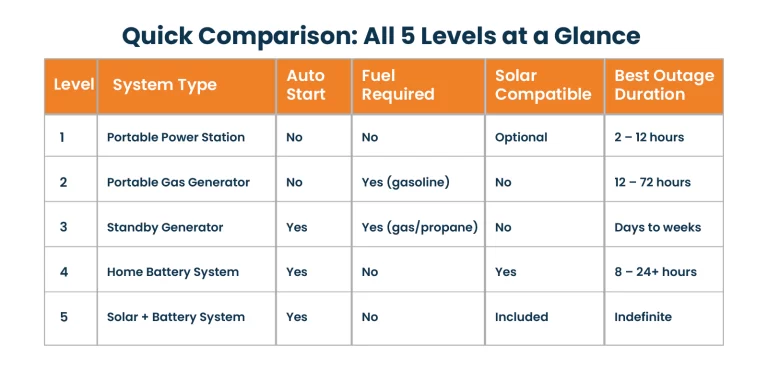
How to find the right level for your home backup power?
Selecting the appropriate power solution for your home can be relatively simple with these five questions:
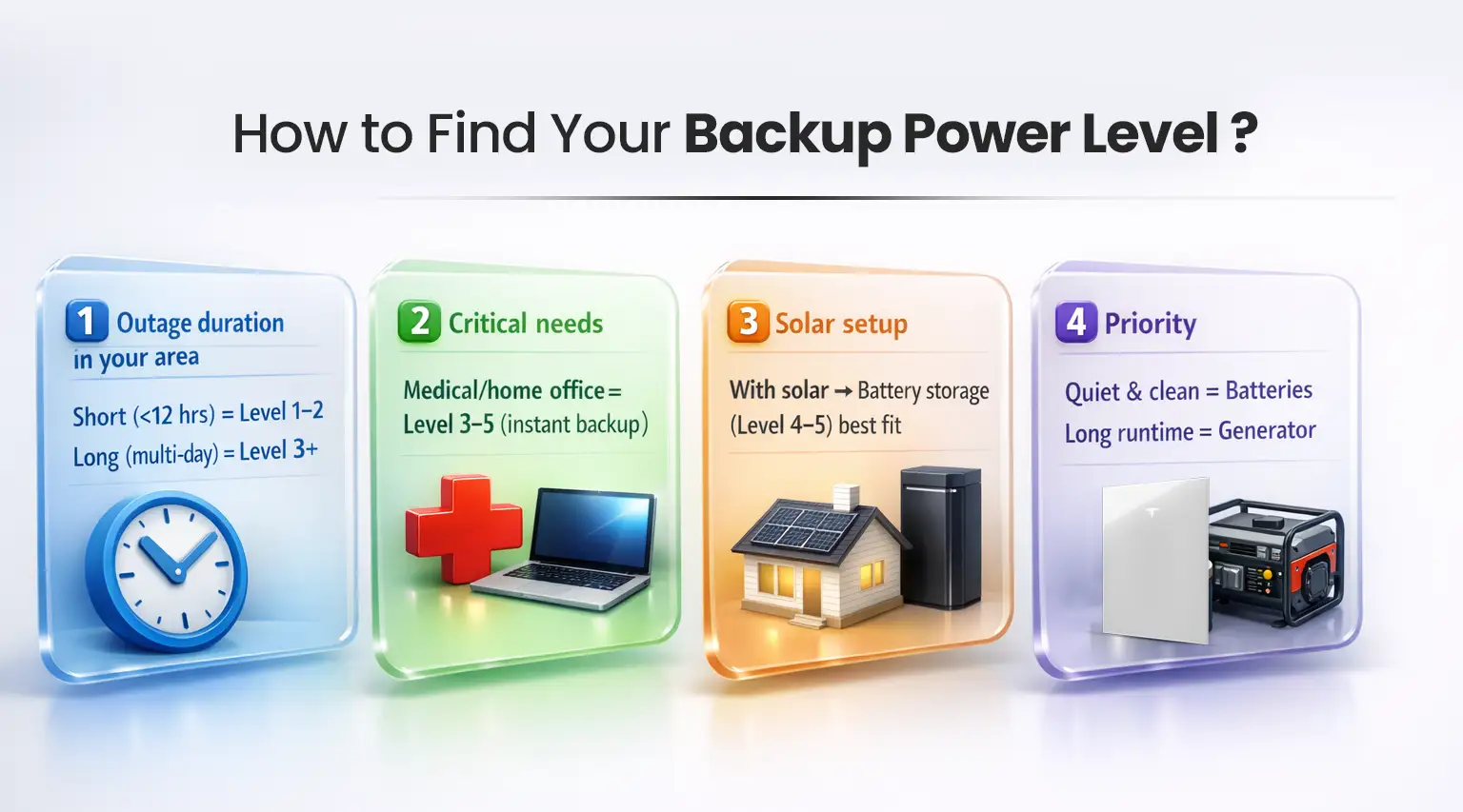
1. What is the typical range of an outage in my area?
With less than 12-hour outages, and those few and far between, you should choose Levels 1 and 2. For regions where multi-day outages happen, go for Level 3 and above.
2. Do I have critical medical equipment or a home business that cannot afford any disruption?
Any medical gear and critical equipment will require a standby generator system (Level 3), or even better, battery back-up (Level 4 or 5).
3. Am I using or planning to use solar energy in the future?
For anyone who already utilizes, or plans on utilizing solar energy in the future, a battery storage system (Level 4 or 5) is usually a more sensible investment.
4- What are your power preferences?
Among solar battery vs generator, batteries stand out in quietness, emission levels, and complete automation. Generators excel in raw runtime as long as there’s fuel available and cost efficiency per kilowatt of capacity is concerned.
In conclusion, home backup power systems are no longer considered rarefied products designed for people who live off-grid and can afford luxury technologies. Given the estimated $121 billion in annual losses caused by blackouts in America in 2024, a 29% increase in blackouts in just six years, and the current state of the national electric grid under increasing pressure due to its age and extreme weather conditions, all Americans have a strong reason to reconsider their home backup options immediately.
From a portable power station to an advanced solar and battery-powered system, the five tiers covered in this guide will cater to any budget, any household size, and any type of blackout. Which tier suits you best is determined by where you live, what threats you face at home, what level of energy independence you seek, and your long-term economic plans.
Solar SME is a trusted solar installation company near you. Whether its Level 2-3 generators or advanced home backup power solutions, we help you to choose best according to your needs. And, if you are planning to go solar or upgrading to a battery storage, get a FREE Online Estimate now!
Check Your Solar Savings with our Smart Solar Calculator!
Start with a free tailored solar quote, compare brands and financing options, and explore your potential with zero obligation.
Related Articles:
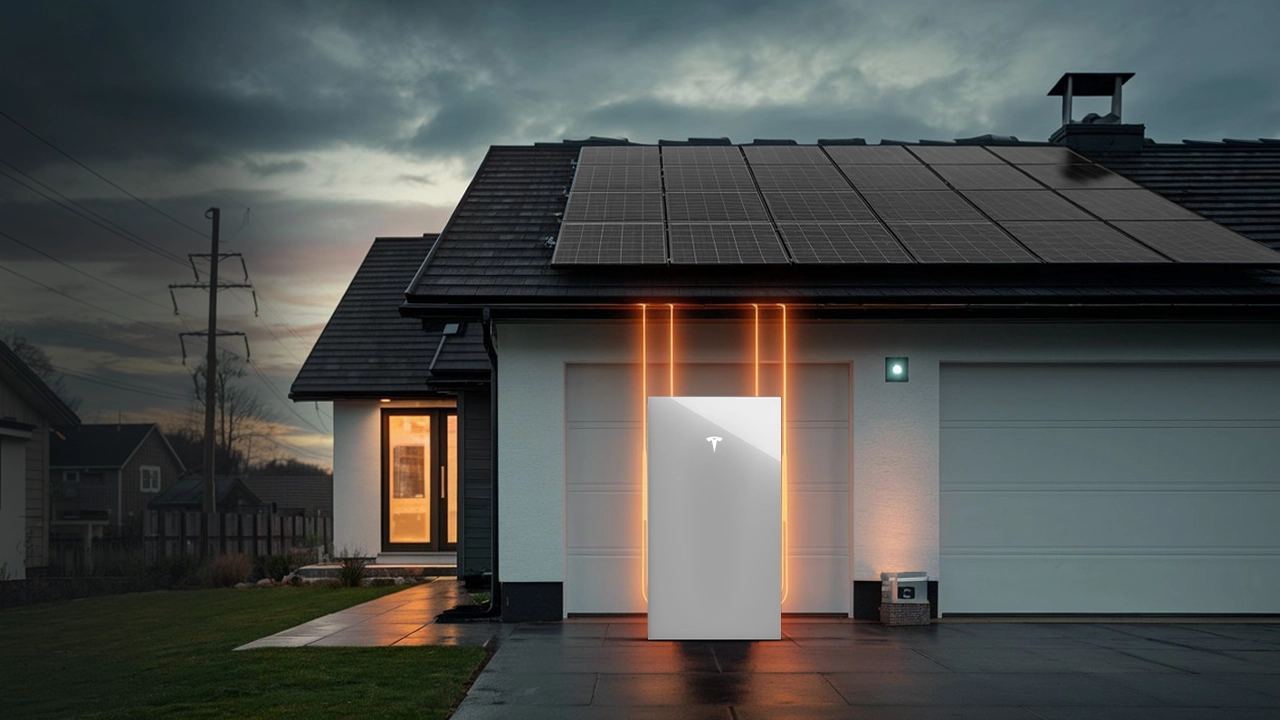
With frequent long power outages in the United States due to bad weather conditions and grid failures, homeowners are now seeking solutions to protect themselves and reduce their reliance on the power grid.
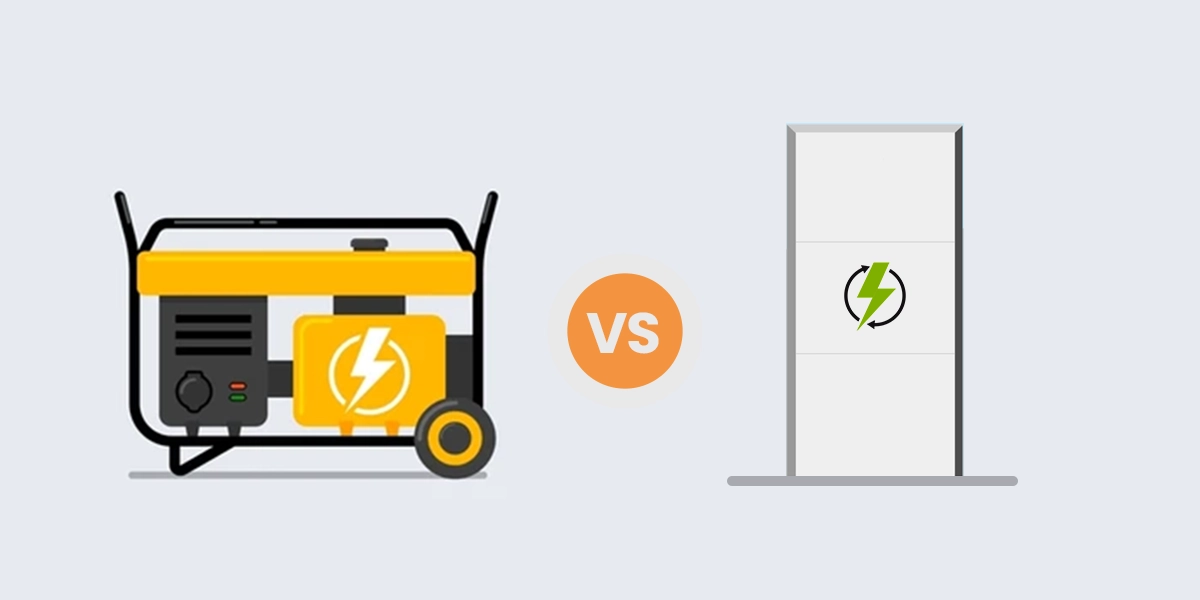
Due to this growing issue, people now look for alternative power sources. But the common dilemma is solar battery vs generator: which one is best for you? Explore the pros and cons of both options and analyze both on the basis of some major factors!