Get Solar Qualified With Our Smart Calculator!

GET FREE ESTIMATE!

$0 Down, No Debt & No Payments for 12 Months, Power Up Smarter with New Solar Lease!

Plug-In & Balcony Solar Panels:
Are They Worth It in 2026?

After the 30% residential tax credit expires, full rooftop solar ownership becomes expensive and out of reach to millions of people in the United States. If you are a tenant in an apartment building, or simply cannot afford to pay such a cost for a solar system at once, plug-in and balcony solar panels are a good option for you to mitigate high energy bills. Such small-scale and mobile photovoltaic systems enable you to produce your own electricity simply by plugging 1 to 3 solar panels into an ordinary electrical outlet on the wall, without a roof, without professional installation, without permits (except for some states), and without any significant expenses in five figures

Balcony Solar Panels

. On average, an 800-watt plug-and-play balcony solar installation will reduce your monthly bills by $15-$50. Also, you can assemble it within two hours. Considering a rise of almost 30% in electricity rates from 2022, as well as several new state laws allowing the use of such devices, 2026 seems to be a breakthrough year for balcony solar panels in the USA. In this article, we will explain everything about plug-in solar panels. We will explore how they work and what are the benefits of having balcony solar panels. We will also highlight how plug-in solar panels can help you to mitigate your high electric bill up to 10-15%. 

What are plug-in or balcony solar panels?

Plug-in solar panels, which can also be referred to as balcony solar panels, micro solar, or plug-in photovoltaics (PIPV). These are portable solar panel kits comprising one to four panels in addition to a microinverter. In contrast to normal rooftop solar that delivers power back to the electrical network using complicated interconnection procedures, plug-in solar resembles home appliances. 

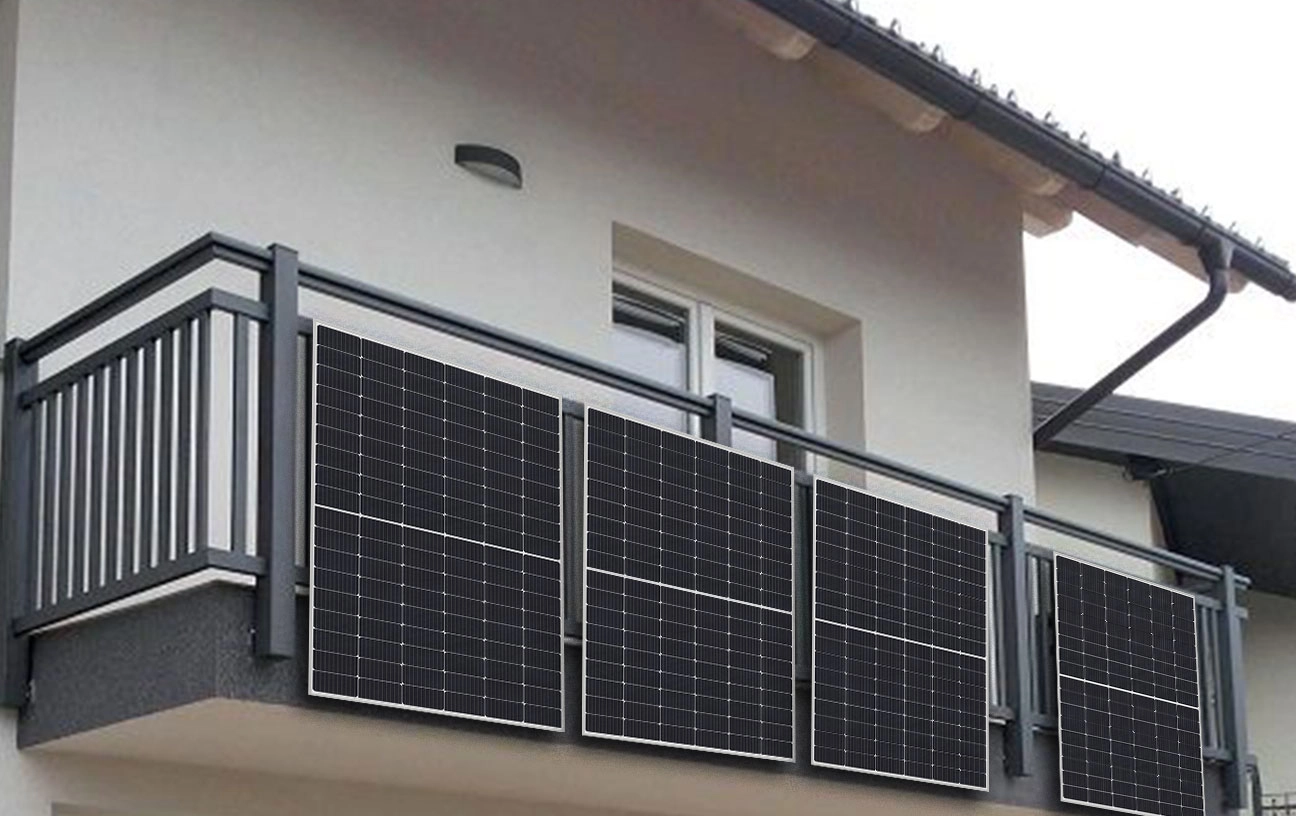
You simply mount the panels on the railing of your balcony, fence, patio, or even backyard. Once the microinverter converts the DC produced by the panels to AC (alternating current, similar to what is used inside your home), it gets fed back into your home via the electrical outlet and hence reduces your power consumption from the electrical grid. 

Advantages of Pluggable/Balcony Solar Panels

Pluggable or balcony solar panels constitute one of the easiest methods to access solar power without the hassles involved in installing rooftop systems. Here are some of the top benefits of balcony solar panels. 

Advantages of Pluggable/Balcony Solar Panels
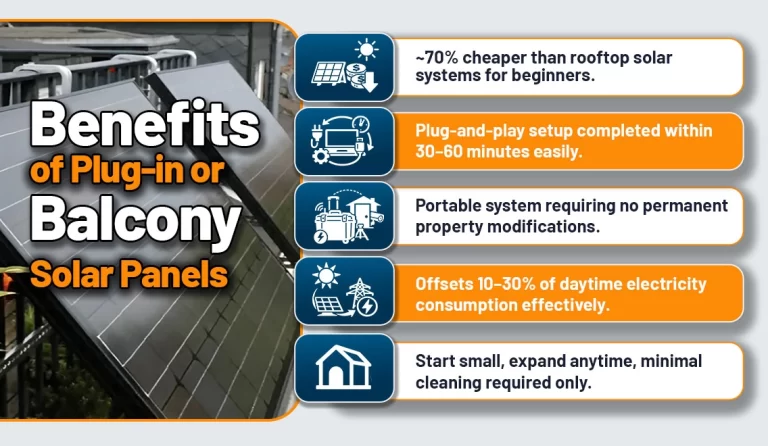
  • Cheaper Route to Solar Power Generation: While conventional rooftop solar systems are costly to install, plug-in solar panels are relatively inexpensive, making them perfect for people trying out renewable energy solutions for the first time.
  • Simple Installation Process: There is no need for complicated wiring and constructions. Such systems are easy to assemble within an hour without the services of an electrician.
  • Suitable for Tenants: Being portable, such solar panels can be installed easily by people residing in rented premises.
  • Quick Reduction of Electricity Bills: It doesn’t have to be a huge setup for users to notice significant decreases in their electric utility bills because even smaller setups are able to cover their daylight energy demands.
  • Minimal Maintenance: The initial setup can be done starting from one unit, while expansion is easy. Since there are no moving parts in the process, maintenance becomes a simple task requiring little more than regular cleaning. 

How much of your electricity bill can the balcony solar system save?

Usually, an 800W balcony solar system covers between 15%-25% of the monthly energy bill of a standard apartment building. This percentage seems too modest at first glance. But considering that a monthly utility bill costs an average tenant $120, savings worth 20% come down to $24 each month. 

Balcony Solar System

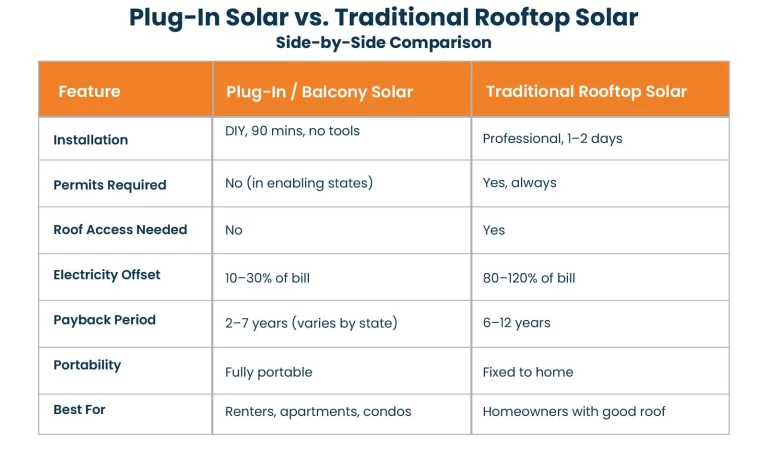
Comparison shows quite explicitly that plug-in balcony solar and rooftop solar are not competing technologies. Rather, they cater to two entirely different markets. If your house has an ideal south-facing roof and you are able to bear the upfront solar cost, then there is no doubt that you will be saving more money with rooftop solar in the long run. However, considering the fact that there are around 44 million tenant families in the United States alone, plug-in solar seems like a great choice. 

Who can benefit from using plug-In & balcony solar panels?

Plug-in and balcony solar panels are recommended for renting tenants and apartment tenants who have balconies or patios that receive adequate sunlight (preferably at least four hours per day). These solar panels would work for people living in condos and wish to harness solar energy without having to make any long-term modifications to their homes. For homeowners who may not be able to afford the complete solar system for their roofs, these could prove to be beneficial as well in reducing monthly electric bills. The plug-in or balcony solar panels are highly recommendable for mobile homes who change locations often, as they are portable and easily installed at other places. However, balcony solar is inappropriate for those with no outdoor areas or heavily shaded properties. 

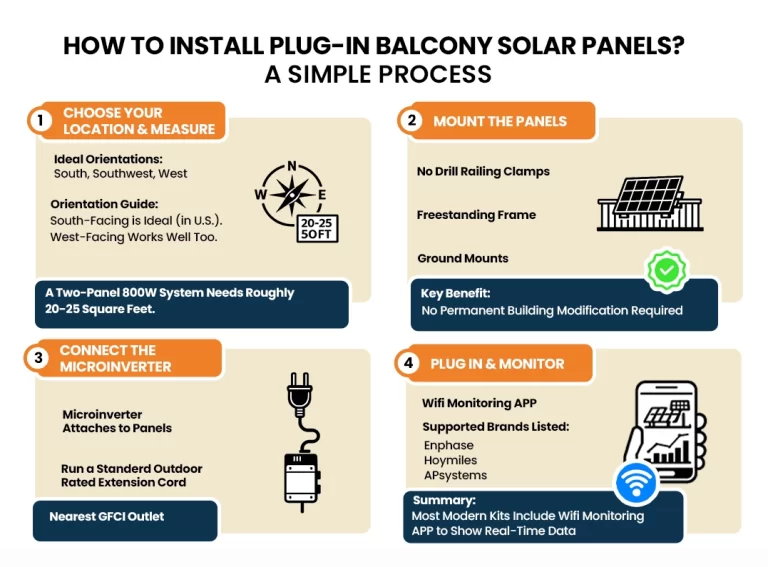
How to install balcony solar panels?

One of the advantages of balcony solar is how easy it is to install. Users usually do it in less than two hours without any additional tools for railing-mounted units. 

Install Balcony Solar Panels

Step 1: Selecting Location:

In the U.S. Southwest, south orientation is optimal while the west side works just as well. Space should be measured: for example, two panels of 800 watts need 20-25 sq ft.  

Step 2: Installing Panels:

Almost all kits come with no-drill railings, freestanding supports or ground-mounted panels. There will be no need to make any changes to the building structure. 

Step 3: Connecting Micro-Inverter:

Micro-inverter is attached to the back of the panels while an extension cord runs to the closest outlet protected by GFCI. 

Step 4: Plugging in and Monitoring:

Modern kits usually come with mobile apps (Enphase, Hoymiles) that show generation statistics in real time. 

Weight plays a significant role in balcony installation considerations. A typical 400W panel weighs around 40 to 50 pounds. You must always verify the weight-carrying capacity of your balcony with building management before installation.

What are the limitations you should consider before installing plug-in solar panels?

Balcony solar panels may seem attractive but they are not a substitute for rooftop solar. And, it is important that you know what to expect. 

  • Limited Power Output: Balcony-mounted panels provide power between 300W and 800W, far from sufficient to power your whole household. They are best viewed as a supplement to your grid supply, not a full replacement.
  • High Dependence on Weather: Their performance is greatly reduced during cloudy days and winter months, as well as in case of any shade on the balcony. An uncovered and south-facing installation site is a must.
  • Regulation Barriers: Depending on the state, certain grid connection and safety requirements may prevent their use. Check whether there are any legal barriers beforehand.
  • No Battery Backup. No storage means no backup at all. Your electricity can be used only while there is sun, and you actually operate any appliances.
  • Slow Payback Period compared to Rooftop Solar: While savings are real, they are limited. It will take a few years to recover from the initial cost. 

Are balcony solar panels worth it?

For the millions of Americans that cannot access solar energy due to renting, not being able to afford a roof-top installation, moving frequently, or just simply not having the ability to bear the upfront solar cost, plug-in solar panels or balcony solar panels are absolutely worth it for them in 2026.

Like, if you live in an area where electricity costs $0.25/kWh or more and the solar panel will get enough sunlight, you can earn back your initial cost of $1,000 in 3 to 5 years, while making free electricity for an additional 20 years.

Are they better than rooftop solar? Absolutely not. Rooftop installations offset 80–100% of monthly electricity bills, while balcony installations only offset 10–30%. However, they’re not trying to be better; they just want to help those who don’t even have a chance at rooftop solar.

With 30 states actively working to legalize these systems, new UL 3700 safety standards in place. Also, prices continuing to fall and the momentum is real. Balcony solar is no longer a curiosity; it’s a practical, affordable, and portable entry point into clean energy for anyone willing to plug in.

Balcony solar is a good option, but it can only lower your bills by up to 15%. However, a customized solar panel rooftop or ground mount system offers long-term savings and maximum grid independence. Solar SME is a local solar installation company offering reliable solar and backup solutions, along with affordable financing options, to make renewable energy accessible to everyone. You can get a FREE Online Estimate of your savings with our smart solar calculator. 

Related Articles:

2026 is a game changer for solar energy as the U.S. accelerates its transition toward a sustainable future. Because of skyrocketing energy bills, persistent inflation, and increasingly frequent long power outages.

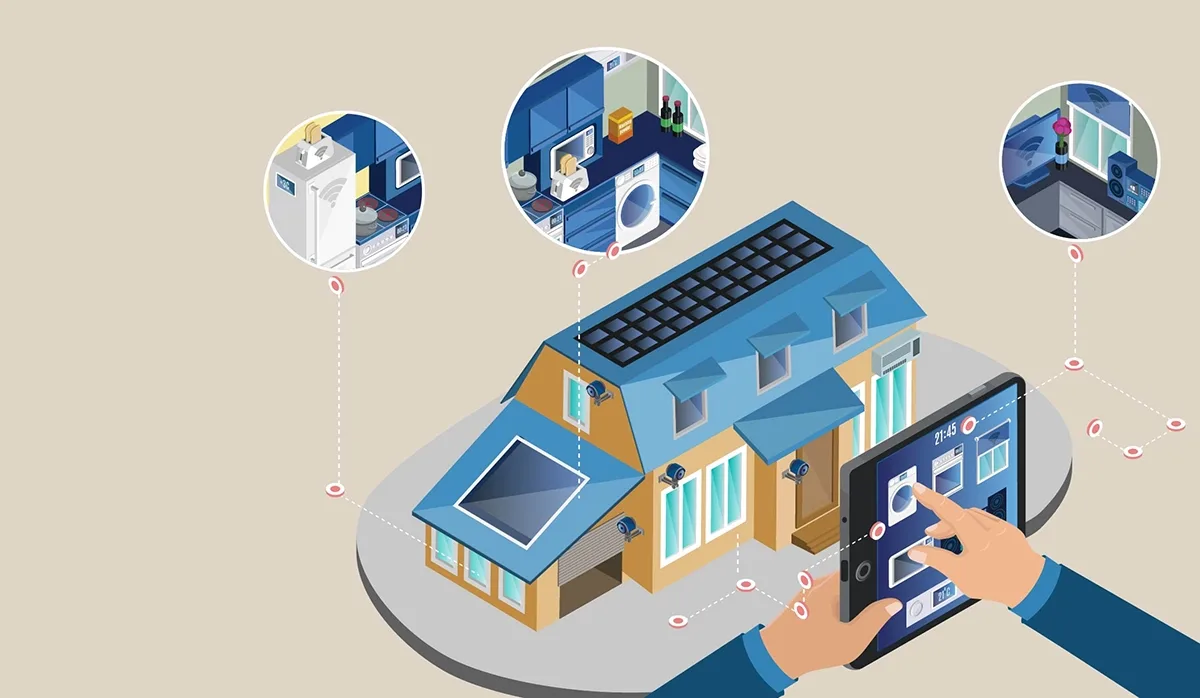
Smart home technology is revolutionizing the way of living by allowing homeowners to manage their power usage and making their home efficient. Ever imagine you can control all your home’s appliances by using your smartphone. Learn More!

Solar panel technology is entering a new era, driven by innovative breakthroughs transforming the energy landscape.

Scroll to Top