Get Solar Qualified With Our Smart Calculator!

GET FREE ESTIMATE!

$0 Down, No Debt & No Payments for 12 Months, Power Up Smarter with New Solar Lease!

Maximizing Flat Roof Efficiency: How to Optimize PV System for Maximum Performance?

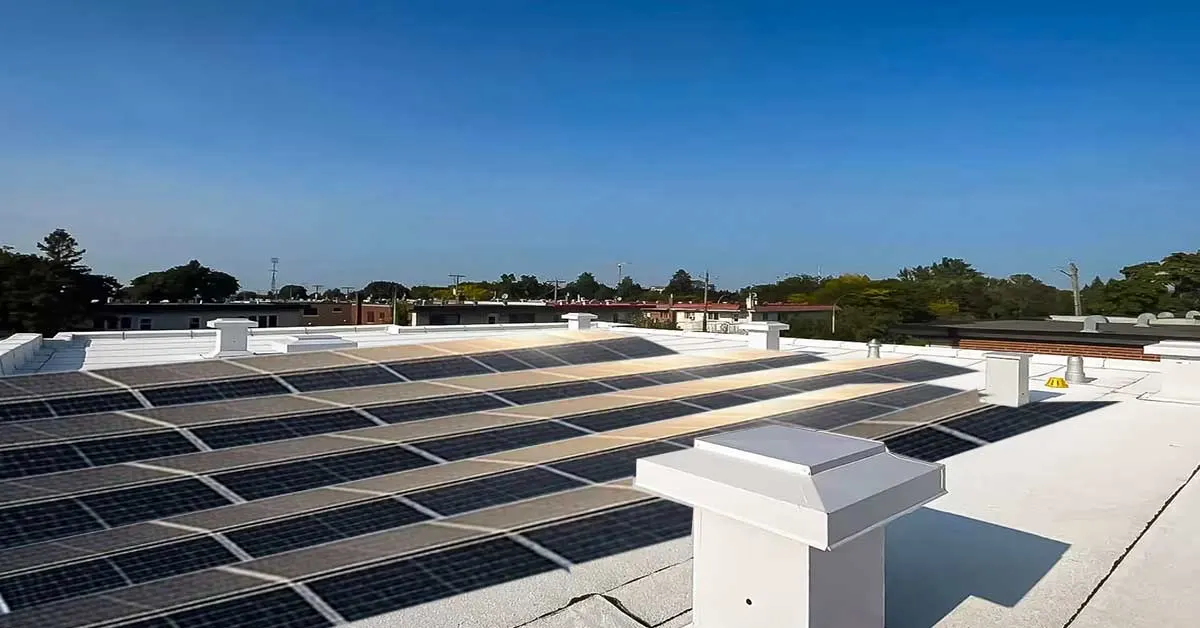
Flat roofs are quickly turning into one of the most valuable assets of modern commercial and residential buildings for solar panels installations. Flat rooftop systems give unparalleled flexibility regarding panel positioning, tilting, and mounting, making them the best platform for efficient energy production through solar panel systems. With energy prices rising and people’s desire to explore alternative and renewable ways of producing energy increases, a flat roof solar system becomes a must-have asset for any building owner. 

Flat Roof

There are many ways to increase efficiency on flat rooftops, but none will be effective without proper preparation and design. The optimal tilt angles, reflective materials used, specialized mounting equipment, and the technology of solar cells are all vital for a system’s productivity. Albedo, shading, wind load, and inter-row spacing all influence efficiency in one way or another. Research has shown that a well-planned flat roof system will perform much better than any improperly designed solution. 

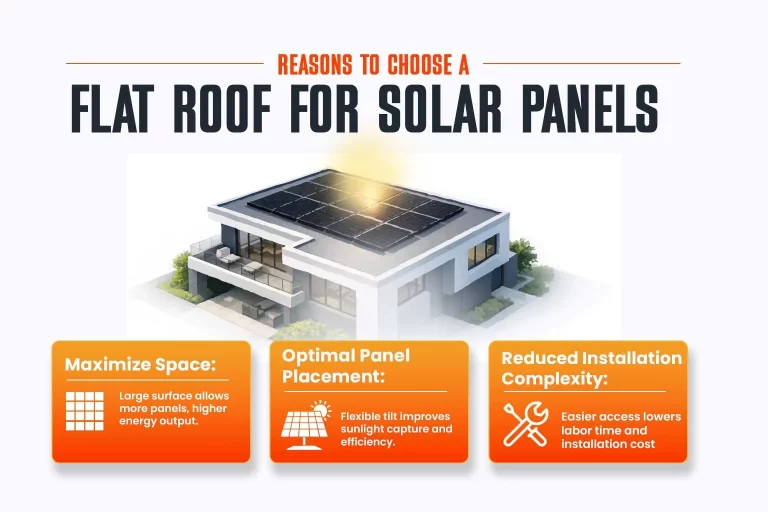
Why choose a flat roof for solar panels?

The flat roof is considered as the best roof to install solar panels. Flat roofs provide several benefits over sloped roof alternatives that make them perfect for solar panels.  

flat roof for solar panels

1. Maximize Space:

You can install more solar panels and increase energy output because flat roofs offer a big, unobstructed surface area. A flat roof can often accommodate more panels than a slanted roof of the same size. 

2. Optimal Panel Location:

You may simply change the tilt and position of your solar panels with flat roof installation. Because of this versatility, you may maximize energy efficiency and optimize solar panel performance based on your unique location and sun exposure. 

3. Less Installation Complexity:

Installing solar panels on a flat roof is less complicated than on a sloped roof, which lowers labor costs. Flat roofs often have easier access. 

What are the key factors to maximize flat roof efficiency?

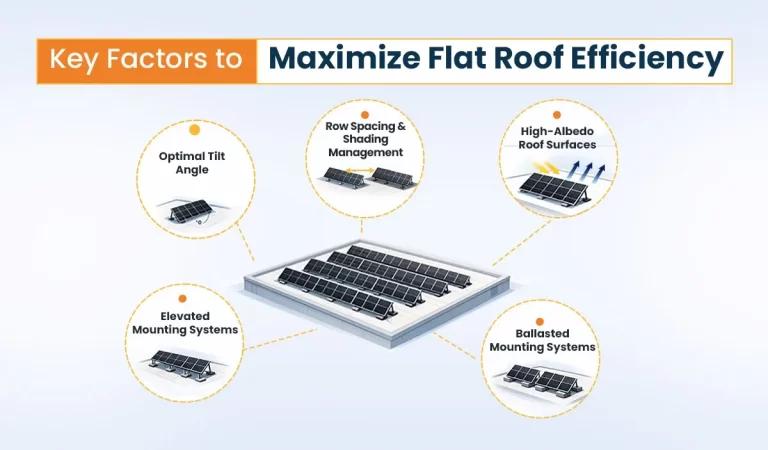
Efficient flat roofs require well-planned and well-calculated decisions, as maximizing their effectiveness depends on factors including optimal angle of panels, their distance from each other, proper solar mounting technique and regular maintenance. 

key factors to maximize flat roof efficiency

1. Optimal Angle for Solar Panels:

Solar panels on a flat roof are installed at a tilt, which varies from 10° to 30°. Although flat roofs are completely horizontal, this tilt maximizes the amount of direct sun rays a solar panel receives. This not only increases solar output but also keeps panels clean by minimizing dust deposition due to gravity. In addition, rainwater flows through tilted panels, keeping them clean.  

2. Row Spacing and Shading Management:

Row spacing in flat roof solar systems plays an essential part in avoiding any shadows that may develop due to improperly spaced solar panels, primarily in the morning and evening periods when the sun is low on the horizon. Failure to properly space rows can result in a huge reduction in energy generation, even for the most efficient solar panels. Properly spaced rows ensure uniform exposure of all the panels to the sunlight throughout the day. 

3. High-Albedo Roof Materials:

The reflectivity factor of the roof material, referred to as albedo, has a great effect on how efficient the solar systems perform. Especially those of advanced types such as bifacial modules. Bright-colored or reflective roofs reflect light back towards the panel, increasing their energy generation capacity. Dark-colored roofs are less reflective and hence less efficient in solar energy generation. This is an easily applicable method to increase efficiency for solar roof systems. 

4. Elevated Mounting Systems:

In elevated mounting systems, the solar panels are positioned above the surface of the roof, allowing room for airflow and reflection of light. Such systems ensure proper ventilation that keeps the solar panels cool as high temperatures negatively affect their efficiency. The installation of the elevated structures enables the reflection of light from the roof and absorption of it by the panels from below. That is why elevated racking systems are often used in commercial solar arrays that are installed on flat roofs.  

5. Ballasted Mounting Systems:

Ballasted mounting systems can be installed on flat roofs using ballast (weight) to fix the solar panel structure. Such installation method ensures no penetration in the roof and prevents damage of its waterproofing, preserving its integrity. Besides, it is faster to install and maintain such racking systems as they do not need any screws or similar components for fixing. Therefore, ballasted mounting systems are popular among homeowners. 

Bifacial vs Traditional Solar Panels: Which PV panel type is best for a flat roof?

Selecting the right type of solar panel is one of the factors that will contribute to the maximization of the efficiency of solar energy on flat roofs. Owners and installers must choose whether to go for bifacial or conventional solar panels because this is a determinant of energy generation capacity, efficiency of installation, as well as profitability in terms of ROI. The use of flat roofs allows property owners and installers to leverage the benefits offered by bifacial panels by maximizing panel spacing and the reflective nature of the roof. 

1. Power Generation:

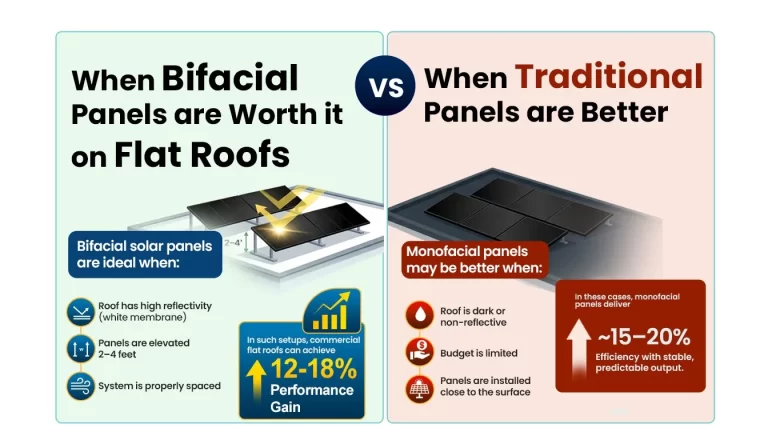
Bifacial solar panels can generate an additional 5 to 25% of electricity depending on the reflectivity of the roof. In cases where the roof material has a high reflectivity, such as reflective coating and white surfaces, the bifacial solar panel can generate 20% more electricity than the conventional panel. Since the monofacial solar panel generates power from direct light, it cannot generate maximum energy levels from reflection of sunlight. This makes it less favorable in flat roof installations with high ROI objectives. 

2. Efficiency:

The efficiency of bifacial panels is around 22% to 27%, due to their ability to utilize additional light that falls on the back surface of the module. Monofacial panels have an efficiency of about 15% to 22%, as they use only light from the sun. Thus, the difference in efficiency allows bifacial panels to produce more electricity and reduces the number of modules needed. For reflective roofs, efficiency of bifacial panels might be significantly better. 

3. Installation Requirements:

To maximize benefits of bifacial panels, some installation requirements are necessary. Like, an elevated structure for the installation to allow sunlight to reach the rear side of the panel. Also, appropriate spacing between rows of the panels to avoid shadowing from other rows. If such conditions are not met, they might fail to fulfill the expectations in terms of increased production. In contrast, monofacial panels need no such requirements for installation. 

4. Cost Comparison

Bifacial panels generally cost 5-15% more up front than standard monofacial panels. But when they are mounted in ideal circumstances on reflective roofs that are spaced and elevated properly, bifacial panels could offer better financial returns due to their increased electricity generation. Although they are relatively cheaper to install initially, monofacial panels generate comparatively lesser amounts of electricity, making them more expensive over time. 

What are the future trends in flat roof solar?

Flat roof solar systems are constantly improving thanks to innovations in technology, the quest for increased efficiency, and system improvements. Knowing what these trends are can help you optimize your results from the installation. 

1. Increase in the Use of Bifacial Solar Panels

Bifacial solar panels are becoming a common trend in commercial/industrial flat roof solar installations. Using panels that capture the light energy coming from both the front and back sides of the panel can boost energy production considerably compared to regular monofacial panels. 

2. Smart Solar System

Solar system installation and AI-based monitoring technologies have brought about new ways of maximizing flat roof efficiency. By using smart solar system installation, solar panel performance can be monitored in real time to determine whether the installation is performing well or not. With such measures, any necessary maintenance can be done at an optimal time to ensure maximum energy output. 

3. Reflective Roofing

The integration of reflective roofing material in solar panels can help boost their efficiency and effectiveness. Reflective roof materials reflect sunlight back to the back sides of the panels to enhance energy output. This technology is especially helpful for bifacial panels and can be used in future installations. 

4. Energy Storage & Grid Integration

Solar systems on flat roofs are also becoming increasingly integrated with battery storage systems and innovative grid integration methods. The storage capacity enables extra energy to be stored, thereby decreasing reliance on the grid network and providing improved energy resilience. Alongside smart monitoring, it guarantees that generated energy is used at maximum potential levels, thus making solar systems on flat roofs more efficient, resilient, and economically profitable both for residences and businesses. 

Overall, the efficiency of flat roof systems mainly depends on their design and technologies. The greatest advantage of solar arrays located on flat roofs is the ability to adjust all aspects of system installation to ensure maximum efficiency. When deciding whether to go with bifacial panels or with conventional monofacial ones, one should consider that while bifacial panels are more energy-efficient and yield greater ROIs, monofacial panels remain the most cost-effective solution.  

Solar SME is your trusted solar partner for choosing the right solar energy system according to your roof type and energy requirements. You can get a FREE online estimate with our smart solar calculator. 

Related Articles:

As businesses seek reliable, cost-effective energy solutions, commercial solar emerges as a powerful alternative. Beyond reducing monthly utility bills, solar offers energy independence, protection from rising rates etc. Learn about top reasons and benefits!
If you are planning to go solar, the first thing you would think about will be your roof. Rooftop installations are very common – compared to ground mount.
Every solar homeowner wants to maximize the benefits of a home solar system by producing excess electricity and gaining a high return on investment.

Scroll to Top