Get Solar Qualified With Our Smart Calculator!

GET FREE ESTIMATE!

$0 Down, No Debt & No Payments for 12 Months, Power Up Smarter with New Solar Lease!

The Hidden Cost of AI: How Artificial Intelligence Is Driving Up Your Energy Bills in 2026?

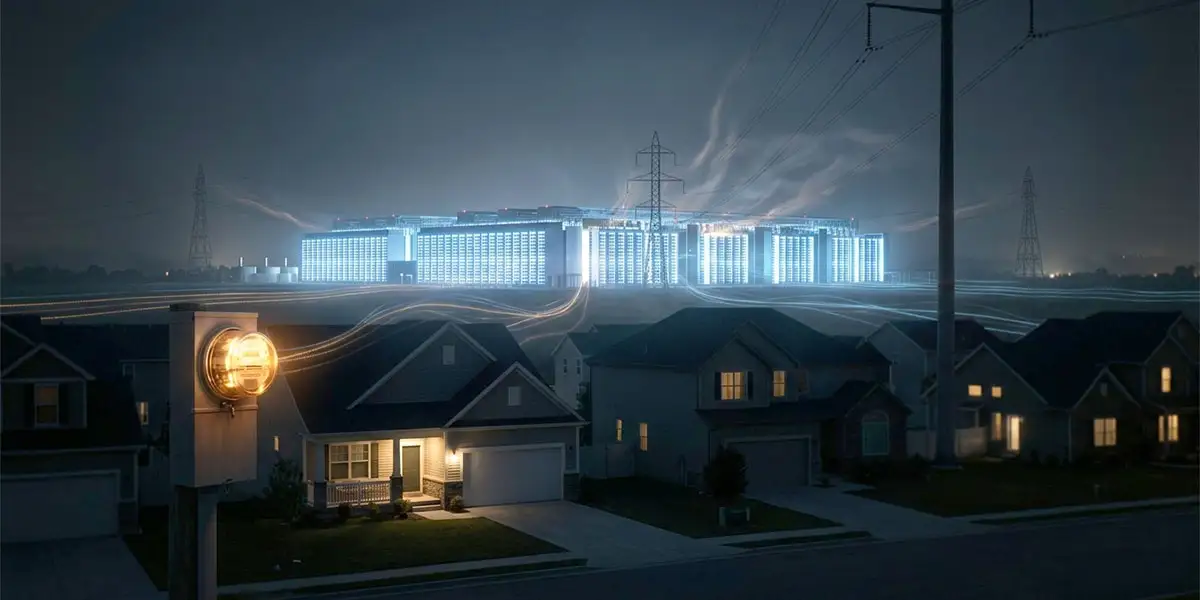
Artificial intelligence is changing everything from the way Americans browse online to the functioning of corporations. But the fast-spreading energy crisis that underpins this technological revolution remains a mystery to most householders who bears monthly high electric bills. The proliferation of artificial intelligence software including chatbots, large language models (LLMs), automation tools, and cloud-based applications has resulted in an extraordinary spike in electricity usage in the U.S. Gigantic data centers supporting AI technology are consuming electricity at a level similar to that of whole cities or even states. Hence, putting strain on an electricity network which wasn’t initially built for such purposes.

impact of ai on power bills

While big tech companies enjoy their profits and innovations, the price tag for developing infrastructure, modernizing the electric grid, and constructing more power plants is ultimately being paid by people who did not participate in any decision-making processes. In this article, we will explore how artificial intelligence is impacting energy infrastructure. Also, what are the practical solutions to mitigate the Ai impacts on your power bills. 

Impact of AI on Energy: Why is the demand for power exploding?

AI systems do not operate using software only. They utilize electricity. Each and every AI response, image generation, model training relies on high-powered computing machines. These devices constantly operate within sprawling data centers non-stop and consume electricity. Not only for computations but also for cooling needed to avoid server shutdown due to overheating. The extent of this energy consumption in 2025 and 2026 is beyond anything forecasters estimated just three years back. 

As per the groundbreaking report entitled “Key Questions on Energy and AI,” released by the International Energy Agency (IEA) on April 24, 2026, total electricity consumption of data centers worldwide will approach 1,050 terawatt-hours (TWh) at the end of 2026. And, it will become one of the most significant energy-consuming sectors on Earth. 

And that’s precisely why the impact of AI on energy consumption is now not a problem, it is becoming a critical issue for every home connected to the national power grid. 

How AI is raising your electric bills?

It may not seem apparent right off the bat, but there is a definite link between artificial intelligence technology and your electric bill that has been steadily getting more expensive. According to the EIA’s Electricity Monthly Update from April 2026, the average cost of electricity in the United States now sits at 17.45 cents/kWh, marking an increase of 9.5% year-over-year, with projections suggesting an additional hike to 18.02 cents/kWh by the year’s end. That marks a jump of 31.38% since 2020 and 42% since 2019. Here is exactly how AI is driving that number higher every single year:

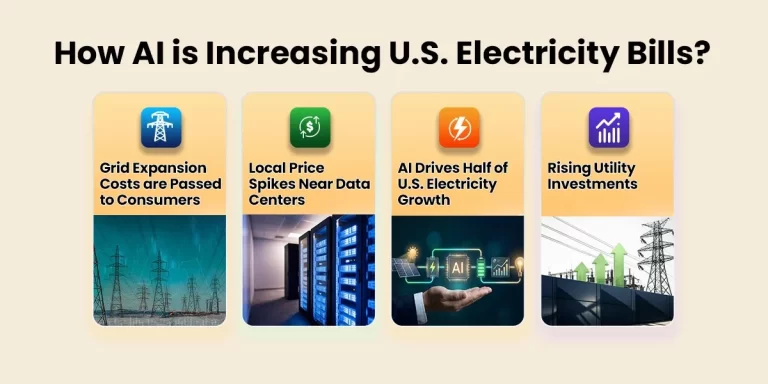
How AI Is Raising Your Electric Bills?

1. Grid Expansion Costs Are Passed to Consumers:

In their quest to satisfy the growing demands of AI data centers, utilities are making investments of hundreds of billions in new infrastructure projects. These investments includes transmission lines, substations, transformers, and new energy production facilities. In the case of the regulated utility industry, these costs do not fall on the companies responsible for the rise in demand. Instead, they get transferred to customers via higher electricity bills. Regardless of whether or not the consumer utilizes AI services. For instance, in 2025, utilities made more than $31 billion worth of requests to increase electricity charges. This figure is twice the number of requests in the previous year. According to Goldman Sachs, AI data centers will raise core inflation in the U.S by 0.1% in 2026 and 2027. 

2. High Local Prices Around Data Centers:

The most affected areas are those that are closest to data center complexes. As reported by Bloomberg News based on an analysis of 25,000 grid nodes, wholesale prices for electricity are up in some regions near major data centers compared to just five years ago. In Virginia, which hosts the world’s biggest concentration of data centers, Dominion Energy sought its first-ever rate increase since 1992 in February 2025. This leads to monthly bill hikes by about $8.51 from 2026 onward. According to the Virginia General Assembly Research Commission, residents could end up paying between $14 and $37.50 extra per month just because of data center power demands. 

3. AI Fuels 50% of Growth in U.S. Power Usage:

About 50% of total electricity consumption growth was attributed to data centers in 2025. This is according to the IEA study in April 2026. To put things into perspective, 50% of all electricity growth in the United States is not used for lighting up homes, powering manufacturing facilities, or charging up cars, it powers AI servers. 

4. Growing Utility Spending on New Generation Capacity:

The utilities are increasing generation capacity at an unprecedented rate to accommodate surging AI consumption. This includes the resuscitation and extension of fossil fuel-powered plants. For example, the PJM electrical market has recorded an estimated $9.3 billion rise in pricing driven by data centers in the capacity market for 2025-26. 

How does solar and battery storage mitigate AI energy expenses?

With the continued impact of AI on Energy pushing electricity prices skyward every year, increasing numbers of Americans are moving towards renewable solar and energy storage solutions. Not for environmental reasons, but purely because it makes sense financially. Amid rising energy prices and projections of another 40% increase until 2030, having a source of self-produced electricity is mandatory. 

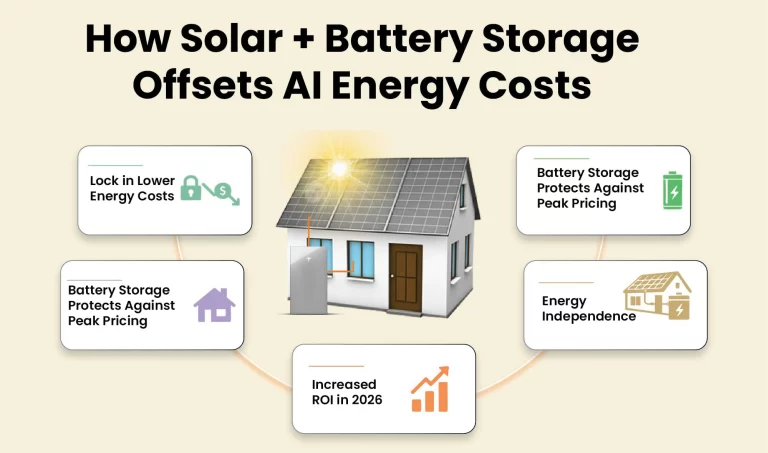
How Does Solar and Battery Storage Mitigate AI Energy Expenses?

1. Secure Lower Electric Bills:

There is one unique quality about solar that the utility companies will never be able to offer. It provides you with a guaranteed rate for electricity. Once you start producing electricity with the  rooftop panels, there will be no more prices hikes. On average, the US homeowners manage to save roughly $61,000 on energy expenses within 25 years after installation, according to Energysage 2025 Marketplace. However, the life-time savings varies by location, system size, and cost of electricity. The more that grid-based electricity becomes expensive due to AI systems, the bigger the difference will be between solar owners and their non-solar neighbors. And that difference continues to grow every year. 

2. Home Batteries Offer Protection from High Rates During Peak Hours:

The idea of energy arbitrage uses home battery storage for storing solar electricity produced during daylight hours. And using it during peak hours – usually between 4 PM and 9 PM, when grid-based electricity rates are highest. This way, homeowners can save $900-$1,200 annually when using time-of-use rates. When battery storage is added to a pre-existing solar installation, it enhances the self-consumption of solar energy to 30% to 40% to between 70% and 85%. Thus increasing the return on investment from the entire system. With the adoption of Virtual Power Plant in places such as Texas, utility companies can temporarily access the battery storage of participating homes during peak periods of demand in exchange for discounts on their bills. This can  reduce their payback period by another 2 or 3 years. 

3. Energy Independence:

If appropriately sized, a solar and battery storage system offers protection from the grid instability. If the price of wholesale electricity skyrockets when data centers get congested, a homeowner with a solar and storage system relies on his or her own supply and does not have to purchase at peak prices. Also, if the grid becomes unstable, causing blackouts, homeowners with battery backup will continue to have electricity. 

4. Higher ROI in 2026:

The ROI of solar energy and storage in 2026 more than ever before specifically due to increased rates driven by AI. The higher the price of  grid power, the higher the relative value of each kilowatt-hour of solar power. The prices of solar installation have become much more stable. Without the 30% federal tax credit on residential systems that expired on December 31, 2025, the payback period is about 6.1 years on a 25-year roof solar system in a high-priced area. Businesses still qualify for up to 30% ITC from their investments in solar power. 

The Future of Artificial Intelligence and Your Electricity Bills

AI is now an inevitable part of the future. Just like its energy consumption. With more data centers opening, electricity bills for homeowners will continue to rise. Higher than the inflation rate, more than the wage growth, and higher than any other utility service.

Knowing how AI affects your energy usage is step one. Taking action is the next step.

Solar panels and batteries were considered eco-friendly upgrades in previous years. In 2026, they are becoming necessities for anyone who seeks to save money while protecting themselves against the increasingly unpredictable grid system. The grid will be changing. So. those who will have solar and battery storage systems will not only pay less for energy but will also be protected against these changes. 

Upgrade your home with clean energy solutions with Solar SME, a trusted local solar installer near you. You can get a FREE Estimate with our smart solar calculator!   

Related Articles:

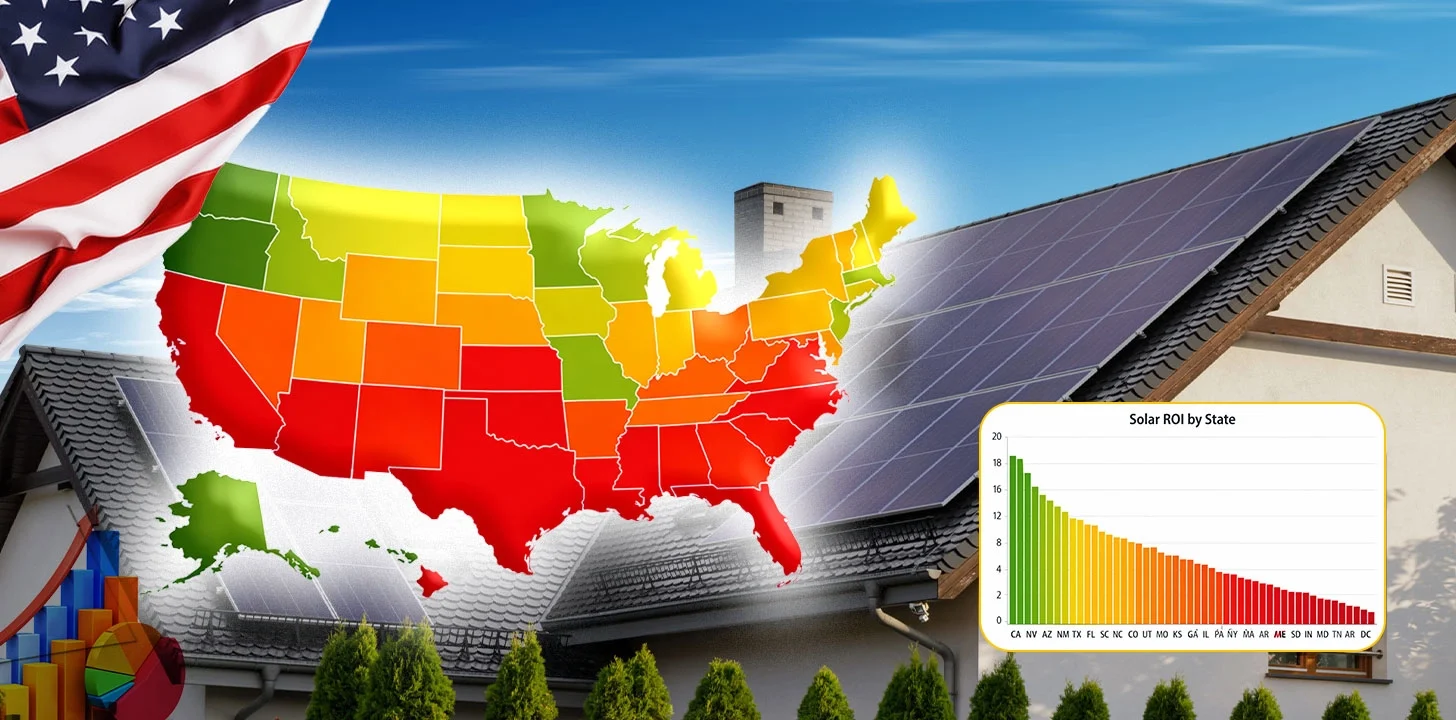
Looking for the best solar investment opportunities in 2026? This complete guide compares Solar ROI across U.S. states, covering incentives, electricity rates, payback timelines, and SREC benefits to help you identify where solar remains most profitable today.
The future of AI depends on resilient energy systems. Explore how solar photovoltaic systems combined with battery storage help data centers manage peak demand, lower emissions, enhance uptime, and strengthen ESG performance.
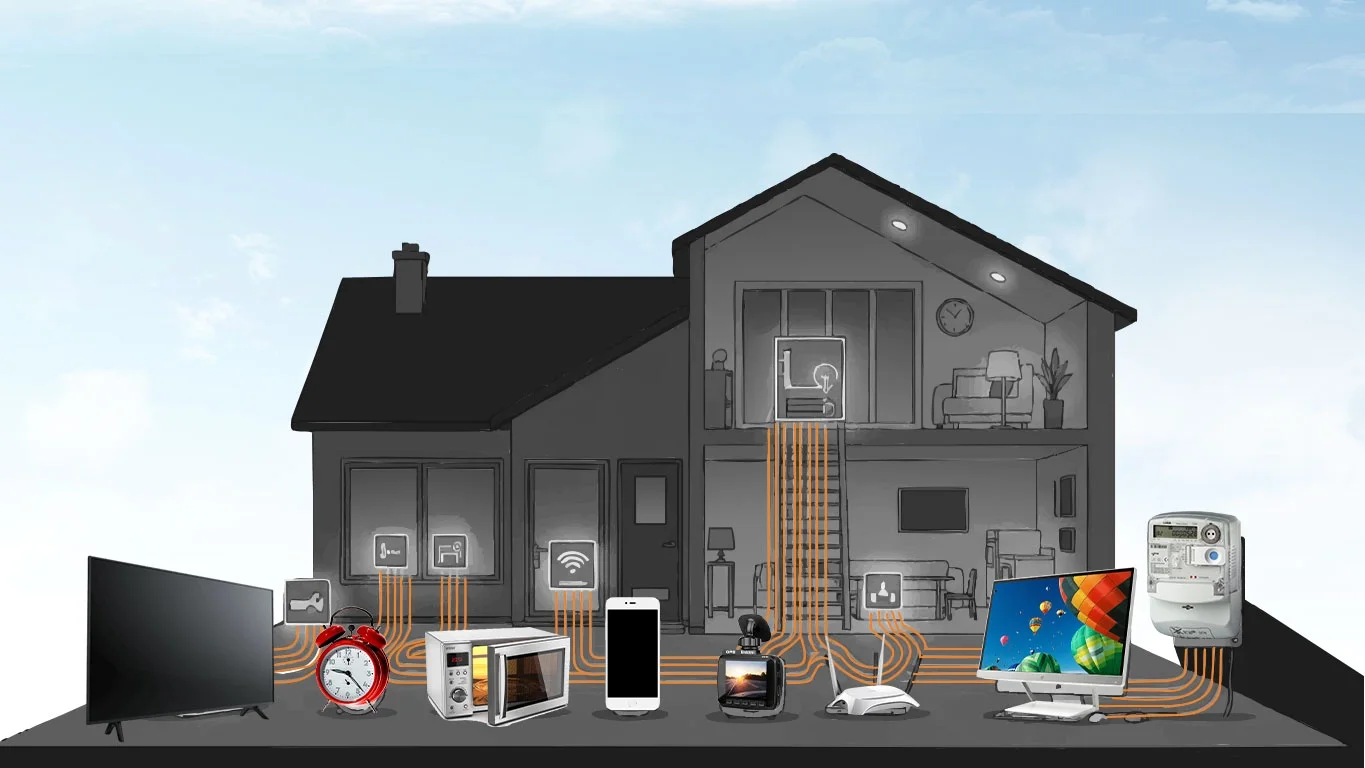
Energy vampires, are the sneaky electricity drains that work behind the scenes, causing homeowners' energy bills to increase every month. Reducing standby power is now a vital aspect of enhancing home energy efficiency. Explore How!

Scroll to Top