Get Solar Qualified With Our Smart Calculator!

GET FREE ESTIMATE!

$0 Down, No Debt & No Payments for 12 Months, Power Up Smarter with New Solar Lease!

Incentivizing the Climate Economy: How Sections 48 and 48E Are Boosting Clean Energy Investments?

The transition to clean energy is no longer just an environmental goal, it has become one of the biggest economic opportunities of the decade. Companies all over the U.S. are searching for opportunities to lower their energy expenses, increase energy independence, and capitalize on the fast-growing climate economy. Yet, there is one obstacle that has always been present: clean energy initiatives require large initial investments.
investment tax credits

This is where clean energy tax incentives can help businesses. The Sections 48 and 48E of the Internal Revenue Code are assisting in overcoming financial obstacles through rewarding those who invest in renewables, energy storage, and innovative clean technology solutions. In other words, these incentives are converting the clean energy initiatives into financially viable projects. 

From solar arrays and energy storage solutions to clean power technology, such tax credits will inspire innovation and generate new opportunities for American businesses. However, it is vital to understand how these tax credits work before starting your energy initiative. 

The Growing Importance of the Climate Economy

Climate economy represents sustainability, technology, and economic growth with the focus on companies engaged in renewable power generation, energy efficiency, electrification, energy storage, and other low-carbon technologies. The growth of this sector is due to several factors: growing demand for electricity in the US, higher prices for utilities, increased sustainability ambitions on the side of companies, growing concerns about energy security, and a variety of incentives to promote clean energy at the federal and state levels. In turn, clean energy projects are seen not only as environmental measures, but also as an effective way to boost cash flow, save money in the long run and ensure better energy stability and reliability. Federal clean energy policies that have been adopted recently contributed to the acceleration of the trend by making technology-neutral incentives available to a greater variety of energy projects. Incentives of Section 48E became available for qualifying clean electricity generation facilities and energy storage systems placed in service after 2024. 

Check Your Solar Savings with our Smart Solar Calculator!

Start with a free tailored solar quote, compare brands and financing options, and explore your potential with zero obligation. 

Understanding Section 48: The Energy Investment Tax Credit

What is Section 48?

Section 48 or Investment Tax Credit (ITC) has been one of the most significant federal incentives in promoting the use of clean energy technologies in the US. While production incentives provide financial gains depending on the amount of energy produced from the system, the Investment Tax Credit gives tax credit depending on the cost incurred in installing qualified energy property. This tax credit has significantly contributed to the growth of commercial solar in terms of cutting down the cost of projects and improving their economic feasibility. 

How Section 48 Helps Businesses Improve Cash Flow?

It costs high initial investment to start a clean energy project. The cost of starting the project could prevent some businesses from investing in such projects. The Section 48 tax credit helps the business to see things differently. 

For example:

A manufacturing facility invests $2 million in a solar and battery storage project. 

Without incentives:

  • The company bears the full project cost.
  • Payback periods may be longer.
  • Financing may be more challenging.

With available tax incentives:

  • The effective project cost may decrease.
  • The return on investment can improve.
  • The company may achieve energy savings sooner.

This combination of reduced costs and long-term energy savings is one reason clean energy investment has gained momentum among commercial property owners and developers.

Why was Section 48E Created?

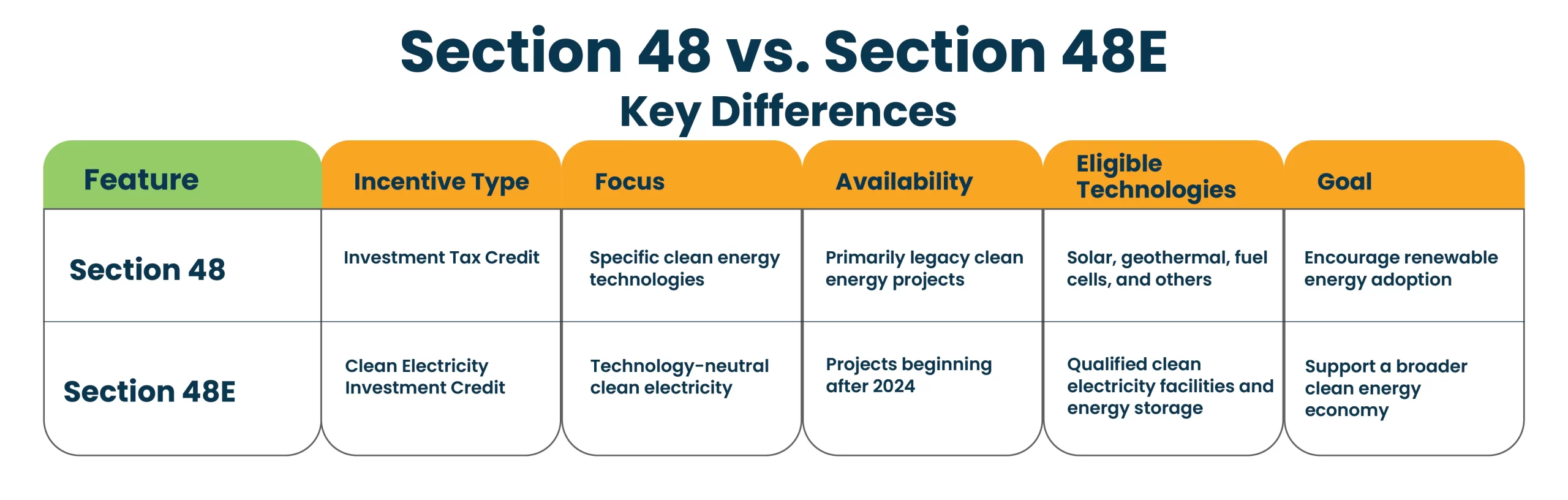
Energy technology is changing rapidly. There are new solar technologies apart from the traditional solar and wind technologies, such as energy storage, zero-emissions technologies, and other power solutions. To address these trend changes, there was a need to enact provisions that would facilitate investments in clean energy technology. The Inflation Reduction Act introduced the Clean Electricity Investment Credit in section 48E. 

To calculate these credits, Section 48 and 48E provide a base credit of 6% or, if the increased credit amount requirements are met, the credit percentage increases to 30%. Additionally, there are bonuses for using domestic content, being located in an energy community, and being allocated a low-income community bonus. The domestic content and energy community bonuses are an additional 10% each if the prevailing wage and apprenticeship requirements are satisfied, or if one of the exceptions are met. Otherwise, these bonuses are an additional 2% each. The low-income community bonus is an additional bonus of either 10% or 20% depending on the location or the type of qualified project. Once the percentage is determined, it is applied to the cost basis of the qualified energy property. 

Section 48 and 48E

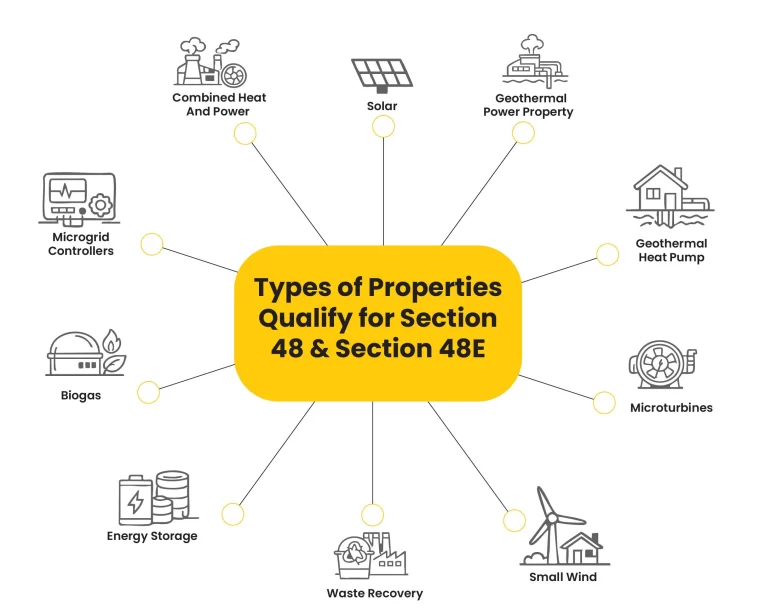
What types of properties qualify for Section 48 and Section 48E?

Qualifying energy properties for Section 48 include property that generates or uses electric or thermal energy from, and if beginning of construction occurred prior to December 31, 2024: 

What types of properties qualify for Section 48 and Section 48E

Qualifying facilities for Section 48E include facilities that generate electricity, have greenhouse gas emissions of less than zero, and use energy storage technology. 

What Changed Under the One Big Beautiful Bill (OBBB)?

The tax policy regarding clean energy became quite different in 2025. The One Big Beautiful Bill Act (OBBBA) was passed into law in July 2025 and reversed some aspects of the IRA. If you are assessing a timeline of a project, you should pay close attention to these changes: 

Phase-out Accelerated for Solar/Wind

This may be the most significant change as the projects based on solar and wind have a specific deadline for construction. If construction begins after July 4, 2026, the facility must be placed in service by December 31, 2027 to claim the Section 48E credit. Miss that window, and the project loses eligibility, there’s no extension available simply by demonstrating an early construction start after that date. 

However, other technologies of clean electricity (geothermal, hydro, nuclear, and fuel cells) are exempt from this accelerated solar/wind deadline requirement. 

Restrictions on Prohibited Foreign Entities (PFEs)

The OBBB enacted restrictions against Section 48E credits for a Prohibited Foreign Entity (PFE), an entity that is effectively controlled by a PFE, and a project which uses material assistance of a PFE. For a project, this means that its supply chain and ownership structure will have tax implications: 

  • The PFE restrictions will be effective for tax years starting after July 4, 2025.
  • The material assistance restrictions will be effective for facilities where the construction starts after December 31, 2025.

This provision is not retroactive, so no projects that had started before this period will be affected, but it creates additional due diligence for projects with international partners. 

Direct Pay and Domestic Content

For tax-exempt entities electing direct pay under Section 6417, projects greater than 1 megawatt will have to satisfy domestic content requirements to get a credit in 2026 and onward. 

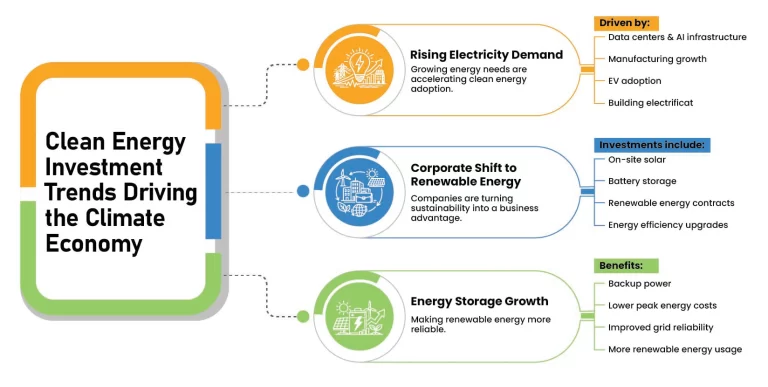
What clean energy trends are driving the climate economy?

The U.S. clean energy industry is seeing explosive growth due to higher energy consumption, advancements in technology and government policy support. Clean energy has ceased being seen as just an environmental issue because now it serves the purpose of cutting expenses and securing energy supply for enterprises and enhancing their competitiveness. There are several tendencies which are contributing to this trend and causing the companies to invest more into renewable energy projects. 

clean energy trends driving the climate economy

Rising Electricity Demand:

Energy demand in America is rising at a pace that has not been seen in decades. Growing demand from data centers, artificial intelligence, high-tech manufacturing, EVs, and building electrification is putting extra strain on the nation’s power grid. These industries need constant electricity supply and make energy supply important for businesses. 

With the increase in energy use, companies are looking for a way to minimize their utility costs while ensuring reliability. The installation of renewable energy on site in the form of solar and batteries allows companies to generate their own power, become less reliant on the grid, and get better control over their future energy expenses. The tax credits such as Sections 48 and 48E further make these projects cost-effective due to the decrease in initial project costs. 

Growing Corporate Demand for Renewable Energy:

Corporate sector in the U.S. has been taking an active part in the development of the green energy sector. Companies from all industries are making investments in renewable energy to help them meet their sustainability standards and decrease their costs while meeting the ever-growing demands from stakeholders. 

In order to accomplish these goals, companies are making use of on-site solar generation, using battery storage, signing up for renewable energy purchasing contracts, and implementing energy-efficient technologies in their facilities. While this helps them reduce greenhouse gas emissions, it also ensures them predictable energy costs, increased resilience to changes in utility rates, and greater efficiency overall. 

Growth in Energy Storage:

Energy storage solutions have become one of the most rapidly developing areas in the clean energy sector. The development of modern and smart batteries has helped companies make the process of storing energy more efficient, effective, and affordable, thus maximizing the benefits derived from renewable energy generation. Instead of using only generated solar power, companies can store any additional energy for future use. 

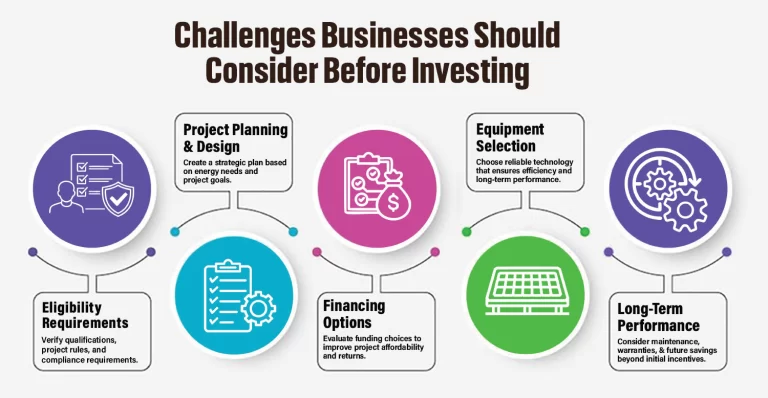
Challenges Businesses Should Consider Before Investing

Although clean energy incentives provide significant opportunities, businesses should carefully evaluate several factors before starting a project. 

Challenges Businesses Should Consider Before Investing

Understanding Eligibility Criteria:

Eligibility for tax credits under sections 48 and 48E is not limited to the installation of renewable energy property alone. There are various criteria used to determine whether one qualifies for tax credit benefits. These include the nature of the project, when it is placed in service, labor laws compliance, equipment specification, among other factors. In addition, there are also various projects that are eligible for extra bonuses depending on how they are set up. 

As tax rules are dynamic and vary from time to time, it is advisable for companies seeking such benefits to consult professional tax consultants, attorneys, and experienced clean energy developers. 

Strategic Project Planning and Design:

A successful clean energy project begins with thorough planning. A well-executed clean energy project is built on a comprehensive plan. No two companies have the same energy needs, operations, and sites, and therefore a customized approach must be taken to ensure success. Prior to choosing any equipment or executing the project, one must examine current electricity usage, future energy requirements, installation space, solar financing plans, and interconnection policies of the utilities company. By carefully selecting the best combination of technologies like solar panels, batteries, and others that qualify for clean energy projects, one can boost energy production and profit from the project.

Evaluating the Long-Term Performance of a Project:

Although federal tax credits can substantially reduce upfront investment costs, the long-term success of a clean energy project depends on its ongoing performance. Businesses should look beyond the initial financial incentive and consider factors such as equipment quality, manufacturer warranties, expected maintenance requirements, projected energy production, system lifespan, and future electricity price trends. 

High-quality equipment and proper system maintenance help ensure consistent energy generation and lower operating costs throughout the life of the project. By combining available tax incentives with reliable technology and thoughtful long-term planning, businesses can achieve greater financial savings, improve energy resilience, and maximize the overall return on their clean energy investment. 

Monetizing Sections 48 and 48E Credits:

A taxpayer is able to monetize the credit by either reducing its federal tax liability or electing to transfer the credit under Section 6418 for cash consideration. A tax-exempt organization can monetize the credit by electing direct pay under Section 6417. The Section 6417 election treats the credit as a payment towards the organization’s tax liability. However, in the case of a taxpayer electing the credit under Section 6417, meeting the domestic content requirements is mandated for projects over one megawatt in order to receive a credit beginning in 2026. For tax-exempt organizations, the election treats the credit as refundable. 

Why Sections 48 and 48E Matter for the Future of Clean Energy?

The clean energy transition is entering into a new phase where sustainability and economic growth are becoming increasingly connected. Businesses are no longer investing in renewable energy only because of environmental commitments, they are investing because clean energy can deliver measurable financial advantages.

Incentives such as Section 48 Investment Tax Credit (ITC) and Section 48E Clean Electricity Investment Credit are helping accelerate this transformation by making renewable energy projects more accessible, predictable, and financially attractive.

These incentives are creating opportunities across industries, from manufacturers and commercial property owners to energy developers and technology companies.

As electricity demand increases and energy reliability becomes a growing concern, clean energy investments supported by federal tax incentives will continue to play a critical role in building a stronger and more resilient U.S. energy economy.

Solar SME is a certified local commercial solar installer near you, helping many businesses mitigating growing energy challenges and reducing operating costs with customized solar solutions. Get a FREE Quote and take the first step towards making your business ready for the future!

Check Your Solar Savings with our Smart Solar Calculator!

Start with a free tailored solar quote, compare brands and financing options, and explore your potential with zero obligation. 

Related Articles:

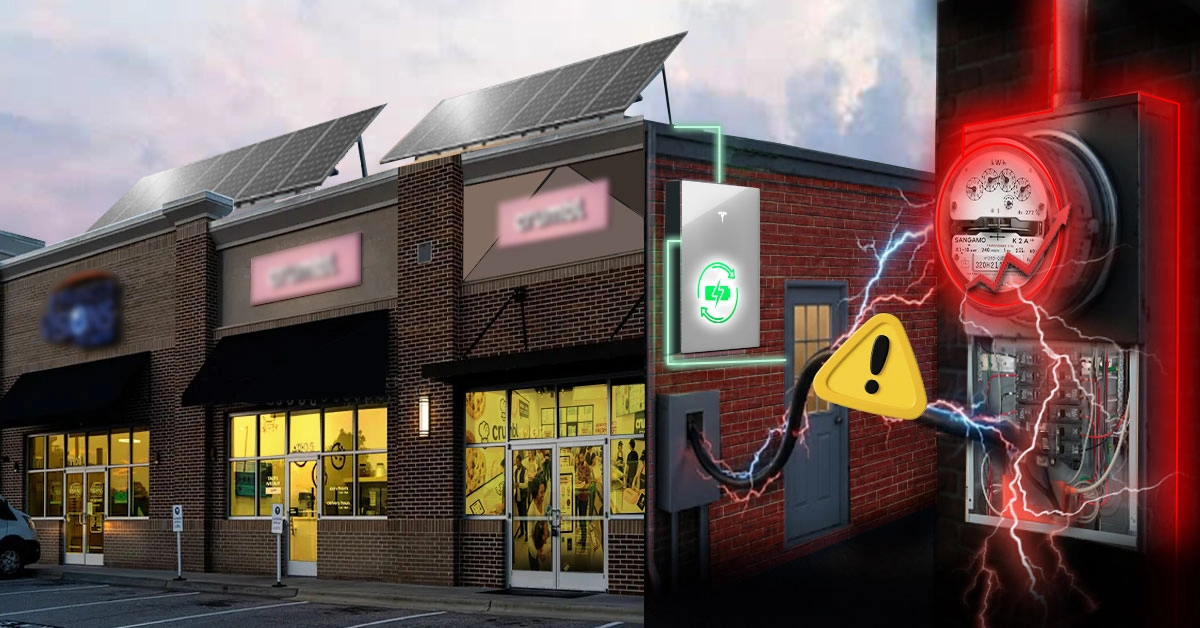
Small businesses face increasing demand charges that impact operating costs. Learn how combining solar panels with battery storage can reduce peak demand, optimize energy usage, and create a more reliable, cost-effective power solution for commercial properties.
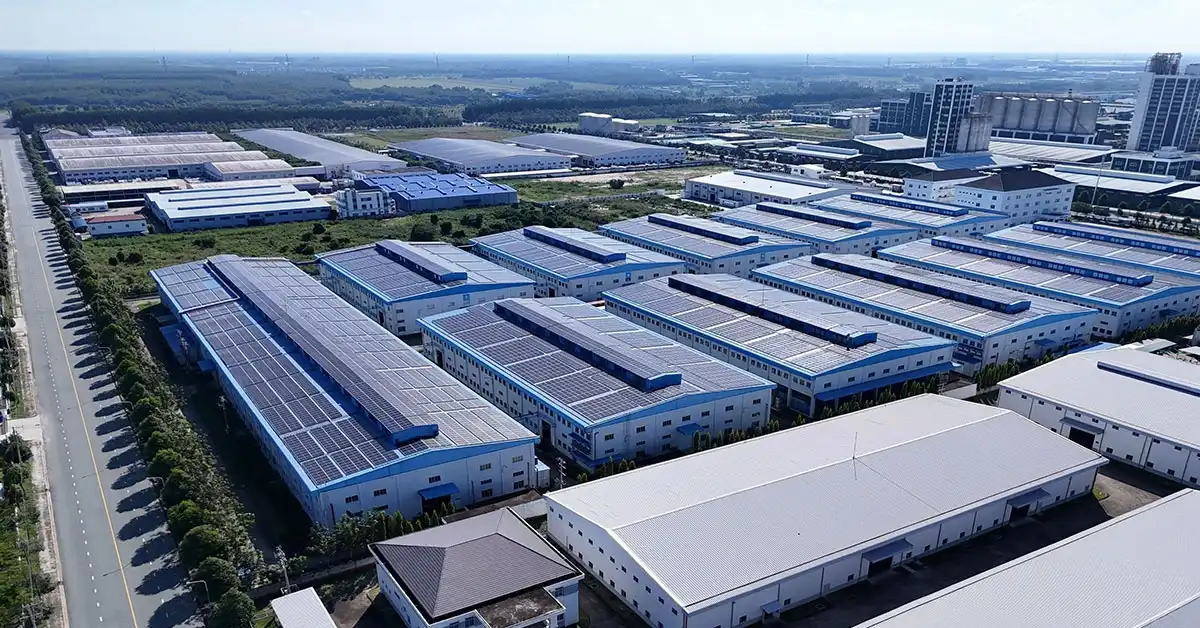
Big Tech is bypassing the grid with on-site solar to overcome transmission delays and rising costs. Learn how commercial solar financing, PPAs, and tax equity make on-site solar accessible and profitable for large-scale operations in 2026.
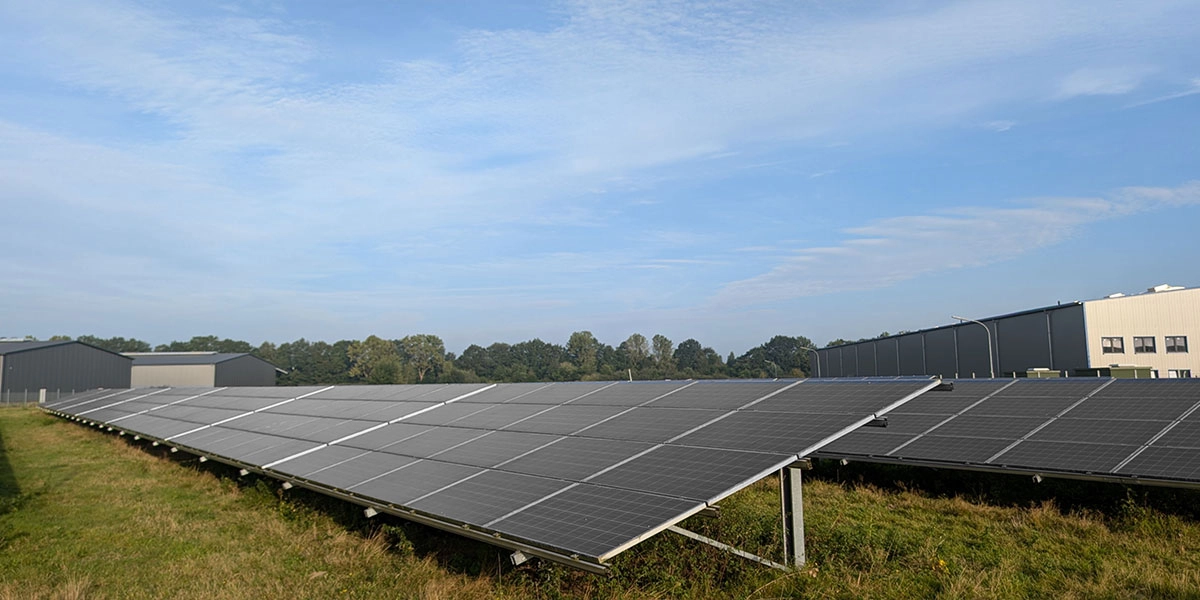
OBBBA brings critical updates to Solar ITC Safe Harbor in 2026. Discover IRS construction requirements, new enforcement on continuity, and essential deadlines developers must meet to secure tax incentives and avoid costly project delays.

Scroll to Top