- Published On: April 08, 2026
Uninterruptible Power Supply (UPS) System: Everything You Should Know
In the U.S, increasing long power outages are becoming a challenge for homes and businesses. A blackout can shut down critical business operations, render expensive equipment useless, result in loss of data, and even put lives at risk. For homeowners, it means spoiled groceries, disrupted work-from-home setups, and inconvenience in bad weather. Hurricane Helene is a recent example of the debilitating impact of prolonged outages in the United States. Over 5 million homes and businesses were left without power. In some areas, homes were without electricity for days, with hospitals postponing treatment of patients, clinics closing, and families scrambling to get essentials like refrigeration, lighting, and heating. In such a case, an Uninterruptible Power Supply (UPS) system is not only useful, but a necessity.
Unlike generators, which take hours to set up, a UPS provides immediate power backup, protecting sensitive electronics, medical devices, and servers the moment an outage is sensed. It also protects against surges and voltage dips that are normal during storms. As storms like Helene become more frequent and intense, UPS is among the good solutions against the destruction during blackouts.
In this article, we will describe all about an Uninterruptible Power Supply (UPS) system, including its benefits, drawbacks, and how to select the most appropriate UPS system. Also, we will suggest an alternate solution for maximum grid independence.
What is an uninterruptible power supply (UPS)?
When the primary power source, such as the utility grid, fails, whether it’s a power outage, a surge, or a drop in voltage, a UPS, or backup power supply kicks in. An Uninterruptible Power Supply system is necessary to maintain the continuous operation of mission-critical applications and equipment due to its instant switch. Also, when electrical equipment is susceptible to power outages or problems with power quality, such as fluctuations in voltage output, it shields the equipment from damage. In environments involving computer systems, data servers, or industrial equipment, or mission-critical equipment, like laboratory and medical systems, the UPS system plays a vital role.
The primary power source may not always be reliable, which is why a UPS system is necessary. Data loss and communication outages may occur due to periodic failures of the input power supply. Additionally, issues such as noise, harmonic distortion, voltage sag, and voltage spikes can impact mains power quality. An uninterrupted power source can be a reliable guarantee to safeguard device security and guarantee operational effectiveness. There are multiple techniques for storing energy. The most popular are rechargeable batteries. The more capable a battery is of storing power, the longer the backup power will be.
What are the vital parts of an uninterruptible power supply (UPS) system?
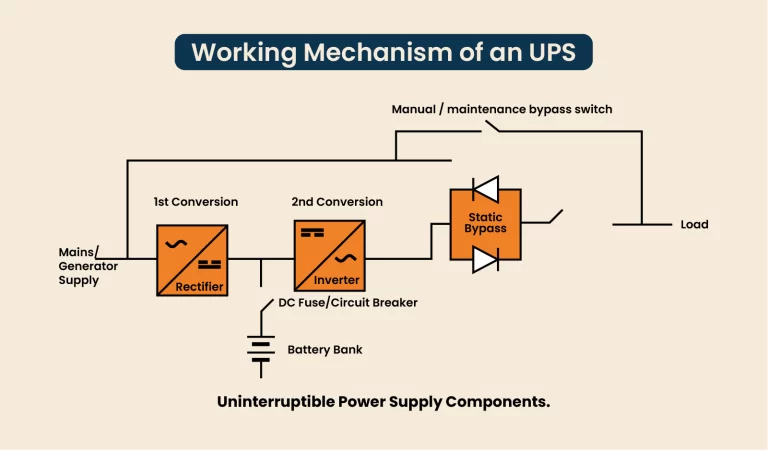
A UPS is actually a form of battery that fits between the outlets and the devices that require power. It usually looks like a small box with receptacles to plug in multiple loads. It tracks the input power and immediately powers the essentials during unstable electricity conditions like power outage, voltage fluctuations or any erratic surge. The battery-operated UPS works in following steps:
Rectifier
A rectifier converts the AC into DC to store it in the batteries. This direct current flows in an inverter for AC conversion to power the essential devices as most appliances use AC power.
Inverter
The working of a power inverter is in the opposite direction of the rectifier. It sends DC power from the rectifier or battery during power failure and converts it into AC power to keep your devices running.
Rechargeable Battery
During AC power failure, the UPS can quickly provide DC power from the batteries to keep your devices working. You can also easily change these batteries without needing to purchase the entire system. Lead-acid, nickel-cadmium, and the more durable lithium-ion batteries are among the various types of batteries available in the market.
Safety Switch
This switch ensures that your connected devices continue to get the AC power if a UPS fails. When all of these components are in sync, your UPS protects your devices from excessive power surges and keeps them operational when you need them most.
Which type of Uninterruptible Power Supply (UPS) is right for you?
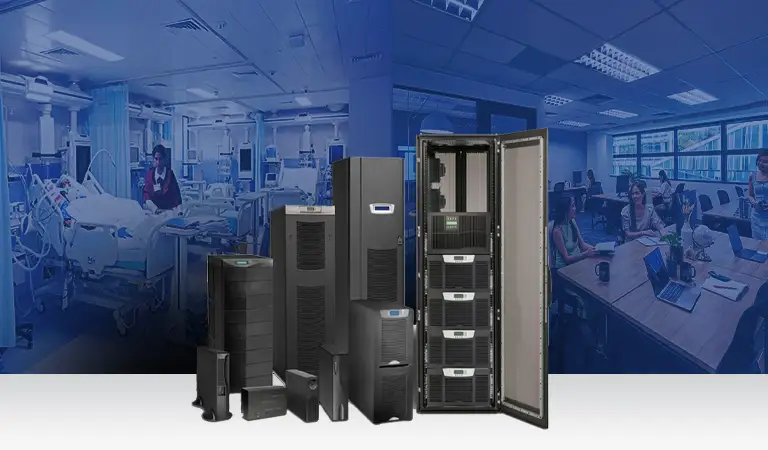
Typically, according to different working principles, there are three types of UPS, including offline, line-interactive, and double-conversion UPS.
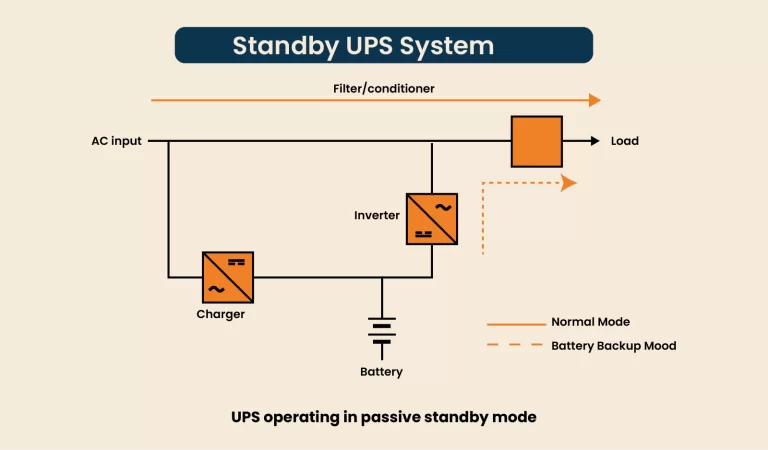
Standby UPS System
The key elements of the standby UPS system are battery backup and surge protection. As a result, the cost is significantly cheaper, and the power supply is insufficient. Within a transfer time of less than 10 MS, the inverter and battery assure a continuous power supply to the load when the utility power fails or performs poorly. Standby UPSs are good options for powering devices that aren’t sensitive to voltage fluctuations, such as personal computers, and have low power ratings of below 2kVA for use.
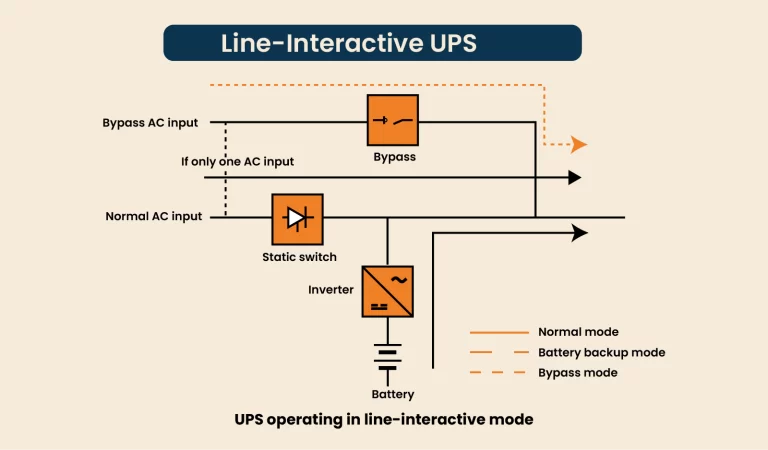
Line-Interactive UPS
The standby UPS and the line-interactive UPS function almost in the same way. A transfer time of less than 10 MS is also necessary when using it for battery backup. The addition of a bypass mode, however, can improve the quality of its power supply by transferring the load to the bypass AC input if one UPS function fails.
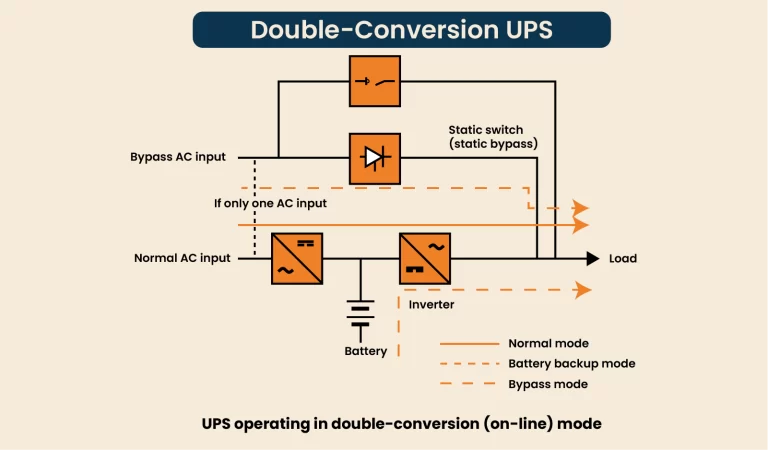
Double-Conversion UPS
Regardless of the input of utility power, the online UPS delivers a pure, high-quality source of power at all times. As the batteries are linked to the inverter, it can provide backup power to the load without requiring a transfer time, and it can resolve all issues with the mains supply when compared to a standby UPS and a line-interactive UPS. However, double-conversion systems are more expensive than the other two types. Online UPSs are more appropriate for devices with high power supply requirements, like data centers. They can be used with power ratings of more than 1kVA.
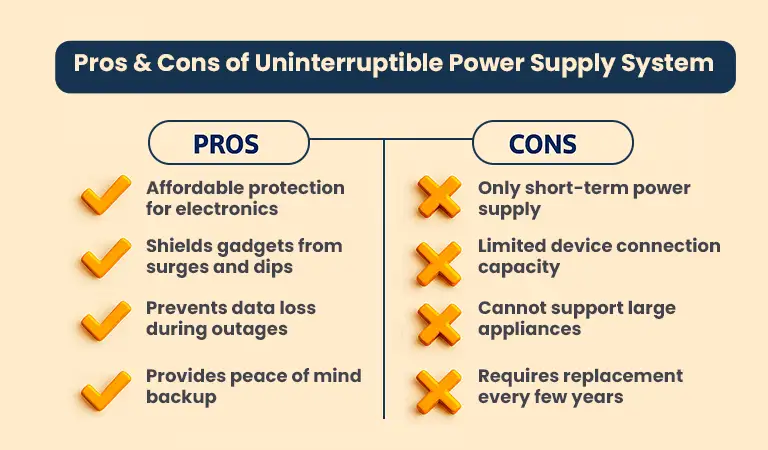
What are the pros and cons of an Uninterruptible Power Supply system?
For critical devices, a UPS plays a vital role during outages or power fluctuations. Apart from many benefits of the system, there are a few limitations too. Also, it is vital to choose the right option according to the energy needs. Here are some notable pros and cons of a UPS:
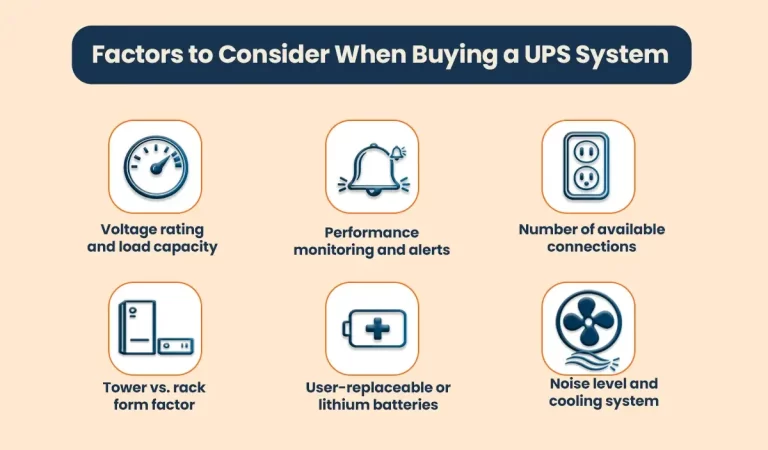
What are the factors to consider while buying a UPS system?
In addition to the three typical UPS power supply types, the following factors must be taken into account when making a purchase.
- The maximum load that a UPS can bear is its voltage rating, which often ranges from 300 VA to 5000 kVA. Purchasing a UPS with a voltage rating that is 1.2 times more than the required total load is advisable.
- To prevent major malfunctions, UPS performance monitoring continuously scans for warning indicators such as declining performance or an overheating battery. When problems arise, it sends out real-time notifications.
- Typically, home-use UPS batteries have 5 to 8 outlets. Some are utilized for device protection, while others are used for power supply backup.
- Tower/Freestanding and rack-mounted types are the two primary form factors. The tower-type is more suitable for basic home/office configurations and is smaller. Rack-mounted systems are larger and commonly used for more complex commercial operations.
- By selecting replaceable batteries, you can prevent the need to replace the entire UPS system if the battery fails. Purchasing longer-lasting lithium-ion batteries can also be a cost-effective option.
- While a bigger UPS often requires fans for cooling, smaller UPSs typically don’t. A UPS without a fan is a preferable option for silent operations.
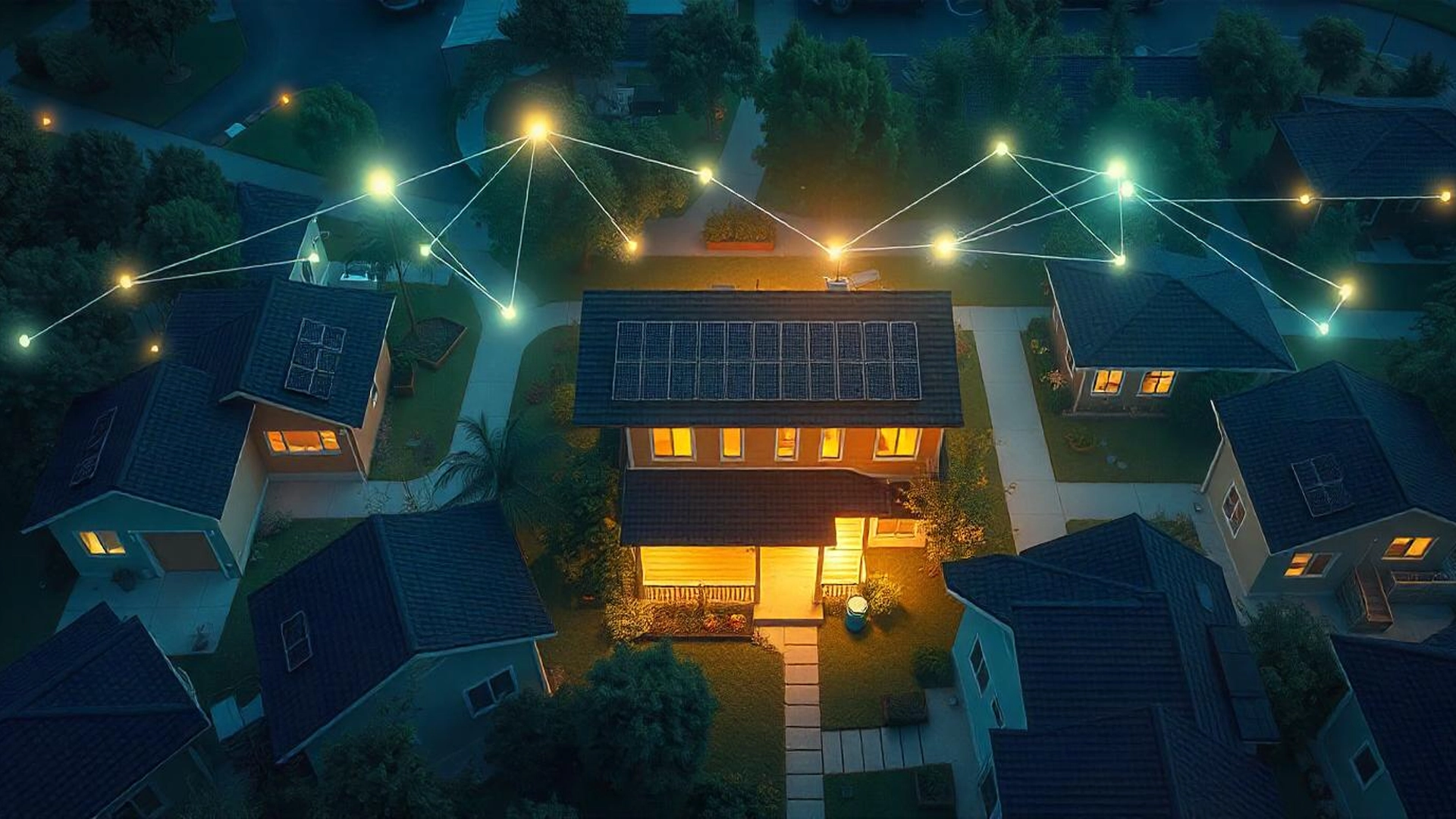
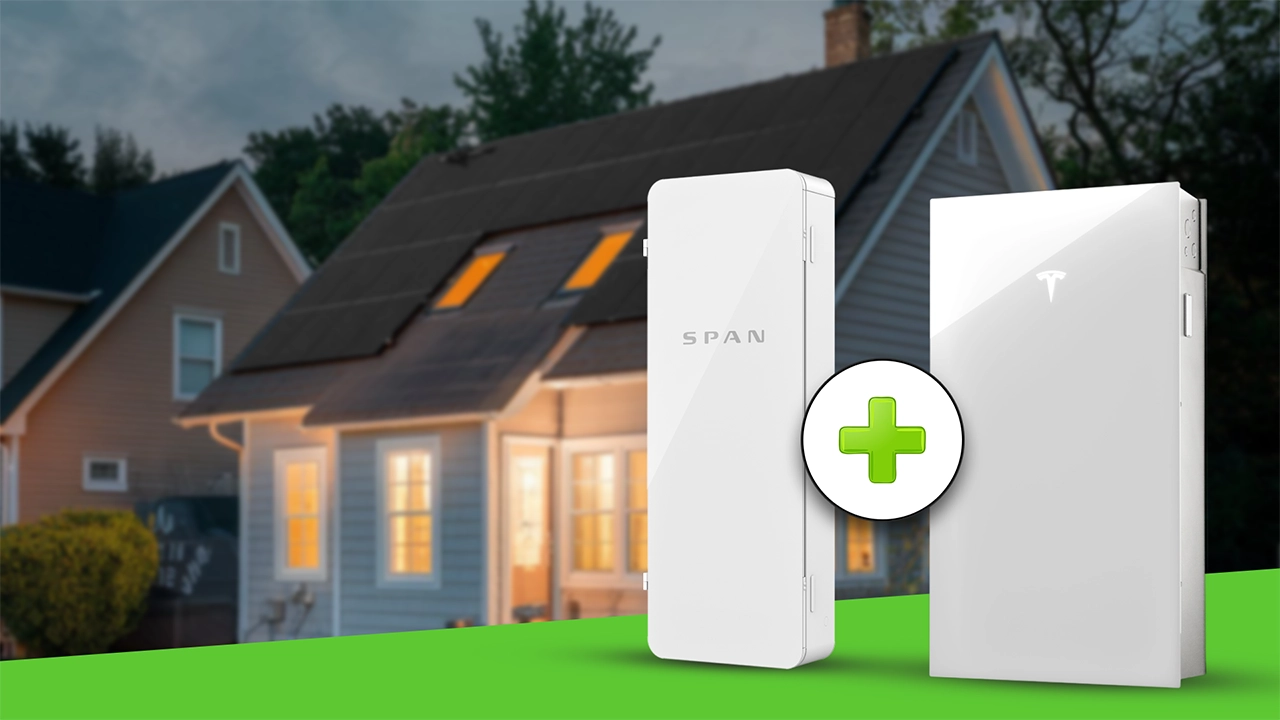
In conclusion, an uninterruptible power supply (UPS) is a great way to protect sensitive equipment and unsaved work during short power outages, but it’s only a temporary fix. For instance, it ensures that businesses don’t lose power before a backup generator comes online. However, it may not be a sufficient backup solution for your home as it won’t keep your air conditioner running or your televisions and fridge on during a prolonged power outage. For homeowners or businesses, it is a smart move to invest in solar battery storage instead of noisy generators. Solar batteries keep you protected during long power outages for the future. Furthermore, solar with battery backup is the best way to maximize grid independence, low electric bills, and many more benefits. Even if the upfront cost is your concern, you can consider financing options like a prepaid solar lease to take advantage of the tax credit.
Solar SME is a trusted local solar installer near you. We offer affordable and tailored solar and backup solutions for your home or business. Get a FREE Quote with our smart solar calculator.
Related Articles:
The trend of energy efficient smart homes is booming in the U.S. as residents are more conscious towards power independence and energy management.
2026 is a game changer for solar energy as the U.S. accelerates its transition toward a sustainable future. Because of skyrocketing energy bills, persistent inflation, and increasingly frequent long power outages.
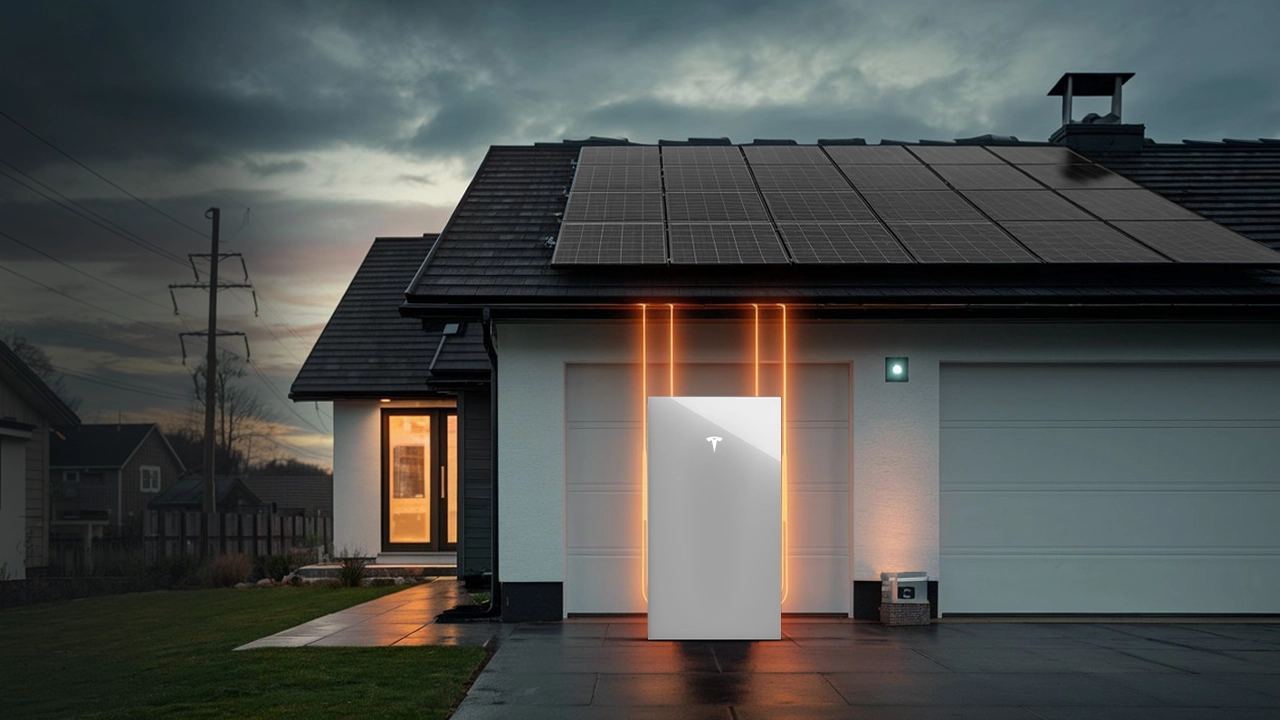
With frequent long power outages in the United States due to bad weather conditions and grid failures, homeowners are now seeking solutions to protect themselves and reduce their reliance on the power grid.