Get Solar Qualified With Our Smart Calculator!

GET FREE ESTIMATE!

$0 Down, No Debt & No Payments for 12 Months, Power Up Smarter with New Solar Lease!

Gas Prices Are Surging: How Much Do Electric Vehicles Save Drivers in 2026?

Gasoline prices are on the rise again, and all the drivers in the country are experiencing the negative effects of that when refilling their vehicles. Due to global oil market volatility, supply chain interruptions, seasonal changes, or geopolitics; higher gasoline prices are affecting the finances of consumers. For many Americans, transportation has been a major cost factor to consider each month. 

However, at the moment, EVs seem to be a more affordable option nowadays. Advancements in battery technology, increased availability of charging stations, as well as reduced costs associated with maintenance, have made Americans think about the change. Statistics suggest that the current interest in EV charging technology is very high. Indeed, the number of requests for home charger installation has boomed by 37% within only 23 days after the latest global energy market crisis. 

Electric Vehicles

But how much can electric cars save drivers in 2026? And is it worthwhile switching? In this article, we discuss what the actual numbers are and compare gas-powered and electric vehicles. We will find out how much you will save by choosing to drive electric in the long term. 

What are the major reasons for the rise in gas prices in 2026?

Historically, the price of gasoline has been affected by a number of interconnected factors that affect its cost. These include the price of crude oil on a global scale, refinement capability, increasing seasonal demand, transportation and distribution expenses, international conflicts, trade disruption, and inflation. 

gas prices trends 2026

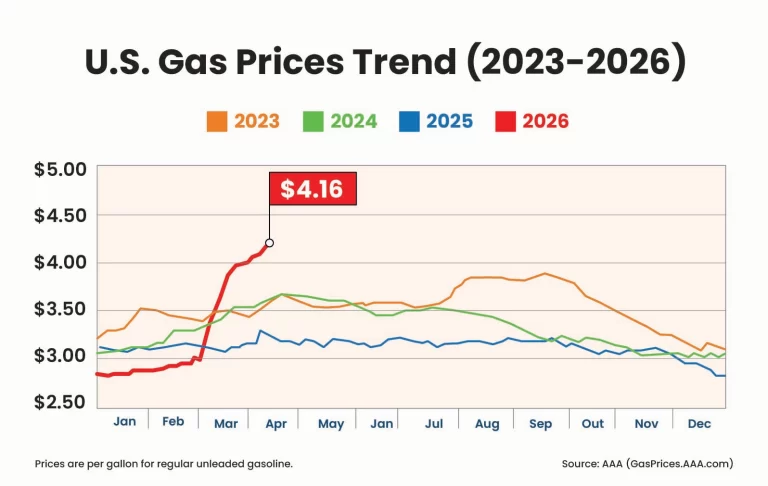
In 2026, most of the states in the United States are seeing an increase in their fuel prices. As stated by AAA, the national average price is around $4.11 per gallon in April 2026. This is 30% higher than what was seen in the same month of the previous year. 

For instance, a driver who covers 15,000 miles yearly in a car that averages 25 miles per gallon. At $3.00 per gallon, this driver will use up to $1,800 in gas each year. At $4.00 per gallon, the price rises to $2,400, a difference of $600 each year simply because the market changed. For a family with 2 or more cars on the road, the consequences could be far more severe.

Check Your Solar Savings with our Smart Solar Calculator!

Start with a free tailored solar quote, compare brands and financing options, and explore your potential with zero obligation. 

Why are Electric Vehicles trending in the U.S.?

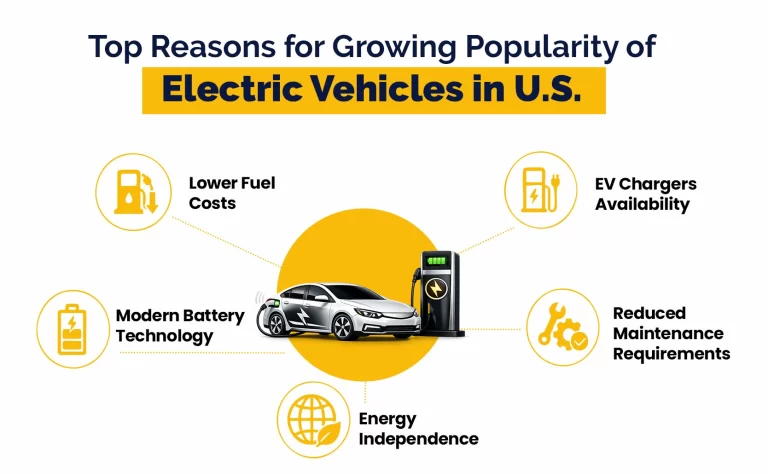
Electric vehicles are not just a luxury anymore. They have transformed into viable alternatives of transport for every driver. There are several reasons why electric cars have reached great popularity during 2026. 

Why Electric Vehicles are trending in U.S.?

Lower Fuel Costs:

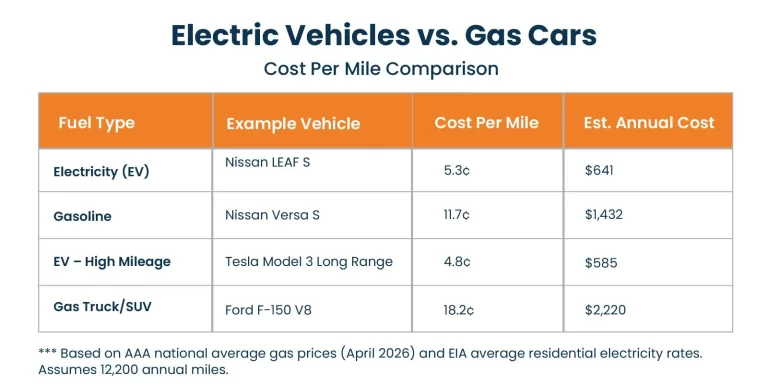
One of the biggest financial advantages of electric vehicles is their comparatively lower per-mile energy costs. Unlike gasoline vehicles that rely on expensive fuel, EVs run on electricity. It is generally much cheaper and more stable in price. For instance, a typical gas-powered car costs around 11–18 cents per mile for fuel. While an EV charged at home often costs just 4–6 cents per mile. Over the years, this difference can save drivers even more, making EV ownership a more cost-effective long-term transportation solution. 

Increased EV Charging Availability:

Public charging stations are expanding nationwide, and homeowners can conveniently charge their vehicles overnight at home using a standard Level 2 charger. This eliminates the weekly gas station trip entirely for most daily commuters. 

Modern Battery Technology:

Modern EV batteries offer longer ranges and improved durability compared to earlier models. Many 2026 EVs deliver real-world ranges of 250 to 350+ miles per charge. This effectively eliminating range anxiety for the vast majority of driving scenarios. 

Reduced Maintenance Requirements:

Electric vehicles contain far fewer moving parts than internal combustion engines. There are no oil changes, no spark plugs to replace, no timing belts, and no exhaust system repairs, resulting in lower lifetime ownership costs. 

Power Independence:

Owners of EVs experience much less volatility with regard to gasoline prices and changes in oil markets. During peaks on global energy markets, gas car owners have to deal with it at the pump, but EV drivers who charge their vehicle via an electrical connection at home have nothing to worry about. 

Comparing the Cost Per Mile for Electric Vehicles and Traditional Fuel Cars

One of the main benefits of electric vehicles is the low cost per mile of operating an electric car.

With the fuel efficiency equal to 25 MPG and $4.00 per gallon, the cost per mile will be $0.16. Thus, driving 15,000 miles a year will result in total annual expenses of $2,400. 

Electric Vehicles VS Traditional Fuel Cars

With an Electric Vehicle and energy efficiency level of 3.5 miles/kWh and the price per kWh being equal to $0.16, the cost per mile will drop to merely $0.046. Thus, annual expenses for charging an EV will come down to $690. 

By using the $1,710 of annual savings from the above analysis, a driver of an EV will save $8,550 within five years and $17,100 in ten years, without considering the savings from the reduced maintenance costs. 

How home EV charging can help drivers in maximizing savings?

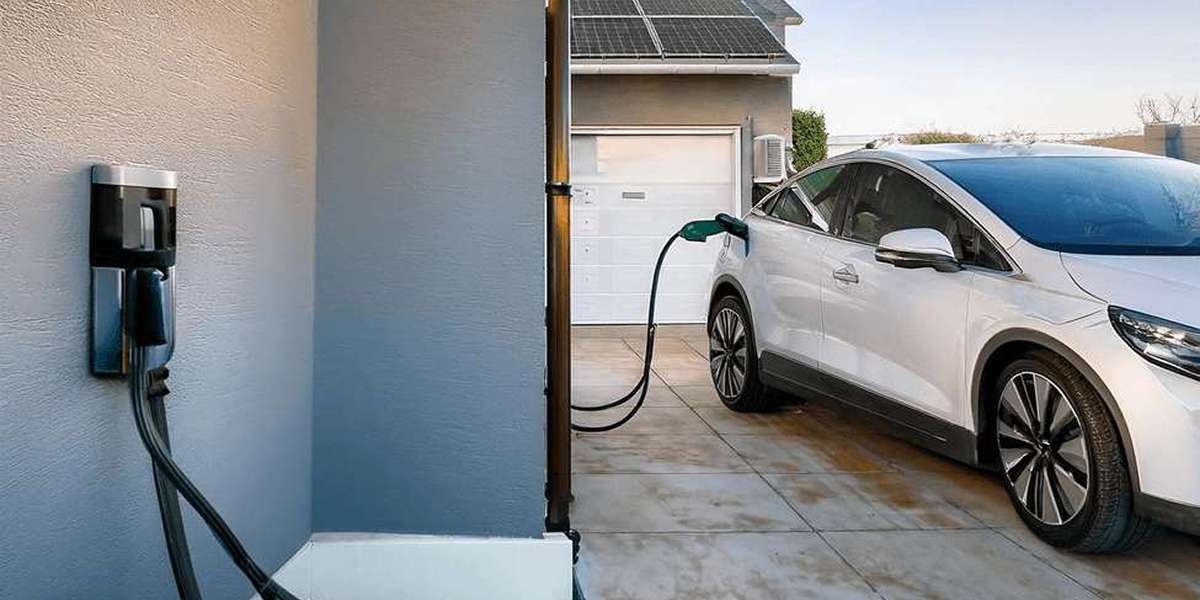
Home EV charging is among the main reasons why people who own homes make the right decision of purchasing an electric vehicle. They can simply charge at home instead of having to visit the gas station two or three times a week. 

There is more to charging at home than mere convenience. As utility companies have time of use (TOU) charges, home-based EV charging during off-peak hours can save you much more on your bills. In such cases, the prices of electricity could go down to as little as $0.08-$0.12 per kilowatt-hour, which would make home charging even more cost-efficient compared to the national average. 

Bidirectional Charging for EVs: Turning Your Car into a Source of Energy at Home

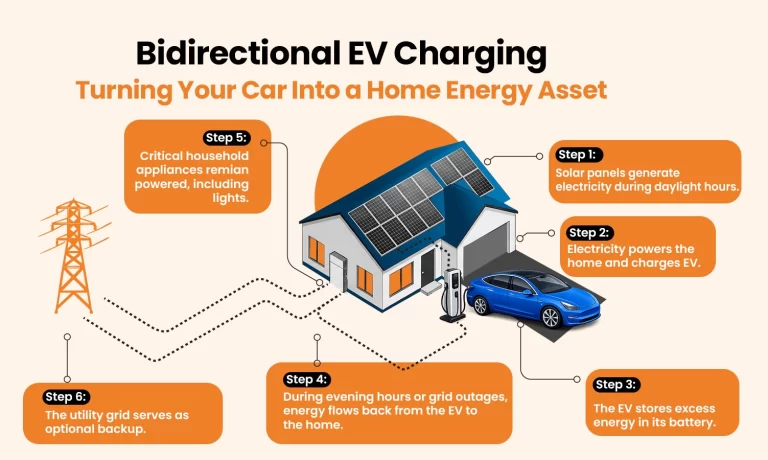
Another very exciting feature of today’s electric vehicles is their capability of bidirectional EV charging. Such capabilities turn the car from a source of transportation to an energy storage facility. 

bidirectional EV charging

Also, Vehicle-to-Home charging enables the use of a fully charged EV battery to provide necessary electrical power to household devices during power outages or when power demand exceeds production capacity. Depending on battery capacity and domestic energy consumption, one full charge could run essential systems from 1 to 3 days. Therefore, for residents living in areas exposed to extreme conditions, hurricanes, or blackouts, a fully charged EV serves as an excellent backup source of energy without additional investment in a home battery system.  

Pairing Electric Vehicles with Solar Energy:

Among the worthiest investments for homeowners in 2026 will be to pair electric vehicles with a solar panel array for their home. By generating their own electricity, individuals could greatly reduce and potentially even eliminate the cost associated with charging their EVs. 

Electricity from the solar panels will cover up the day’s requirements for EV charging, especially in cases where homeowners can charge their cars while it is still daytime or have stored power in a residential battery for EV charging in the evening. It will also be a good protection for rising electricity rates in the coming years because the homeowner will not have to pay for electricity depending on what the grid charges but create own fuel at a fixed cost. Moreover, EV charging at home also increases the ROI of the residential solar system. 

As a result, homeowners who combine solar, home battery storage, and a bidirectional-capable EV operate with independence from fossil fuel markets and utility pricing cycles.

What is the future of Electric Vehicles in the U.S.?

The transition toward electrified transportation is accelerating across every segment of the market. Expanded public charging networks are reducing range anxiety for longer trips. Battery costs continue falling as production scales and technology improves. 

Also, the integration of EVs with home solar systems, battery storage, and smart home energy management system like SPAN is booming rapidly. Bidirectional charging standards are becoming more widely supported, utility V2G programs are expanding, and software platforms are enabling homeowners to automate charging around the cheapest rate windows automatically. 

Is it worth it to buy Electric Vehicles in 2026?

As oil prices and fuel costs are rising, it is time for U.S. drivers to evaluate their transportation costs to find a solution that will provide them with both relief and stability. One way out of this situation would be the adoption of electric vehicles that will bring not only lower energy costs but also a certain stability as far as fuel costs go.

Solar SME is a trusted solar and EV charger installation company near you. If you are considering an EV, solar EV charging at home can maximize your savings. Contact us for a custom-designed solar energy system and a reliable solar EV charger.

Check Your Solar Savings with our Smart Solar Calculator!

Start with a free tailored solar quote, compare brands and financing options, and explore your potential with zero obligation. 

Related Articles:

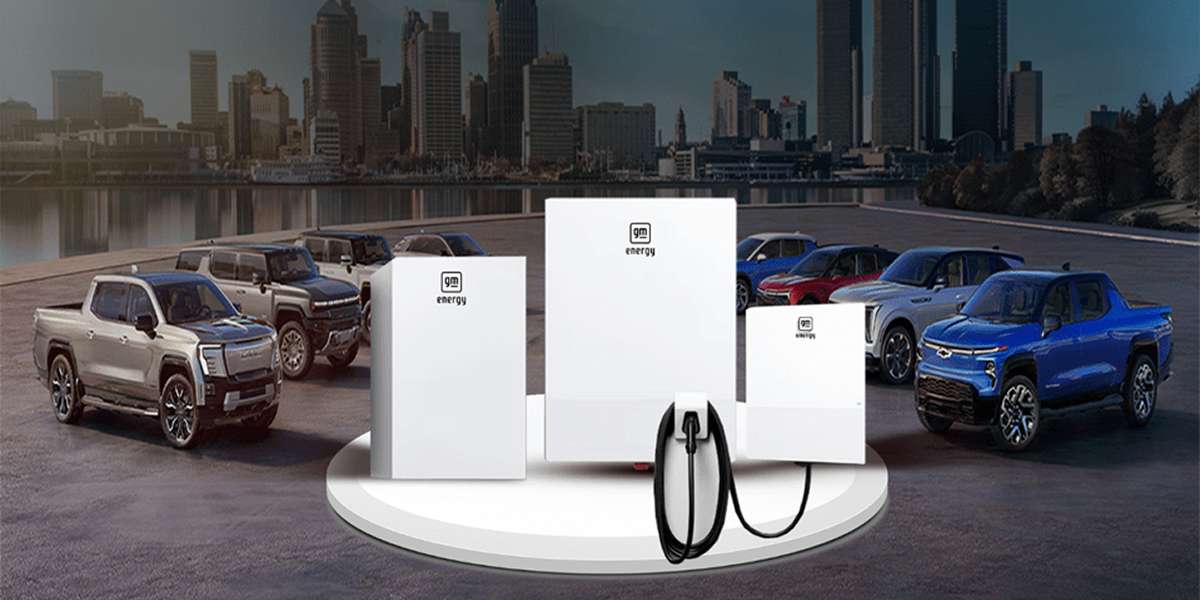
With the increasing trend of using EVs, GM Energy V2H (Vehicle-to-Home) charging system is also gaining popularity.
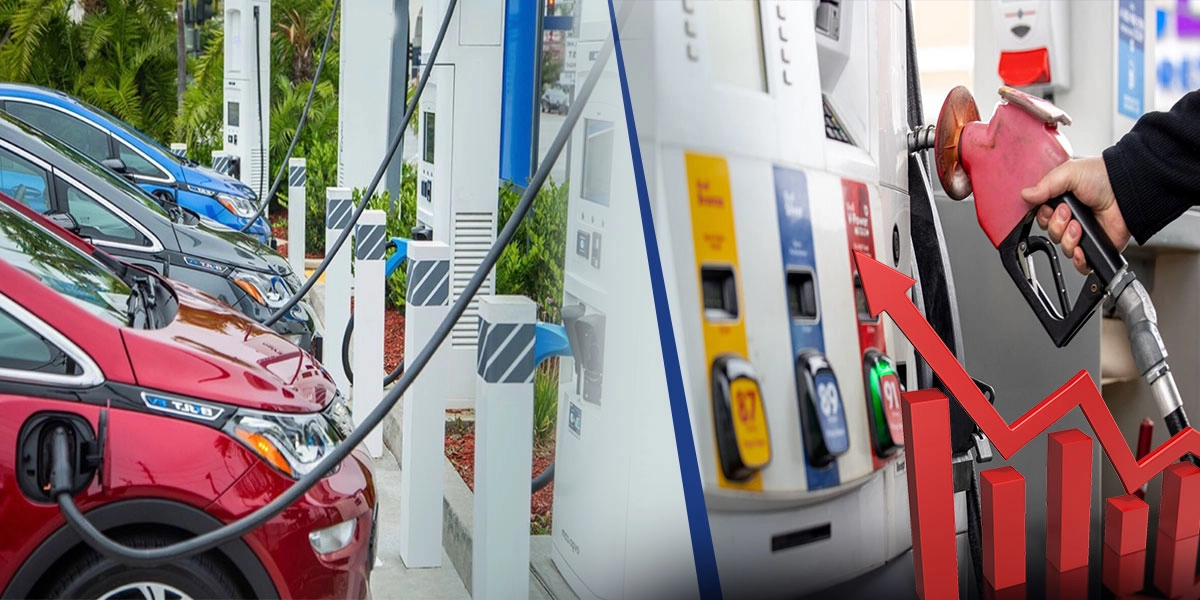
The trend of electric vehicles is booming in the U.S. as an EV offer more sustainable and cleaner source of transportation.
What if your car could power your home during blackouts? Or, supply excess energy to the grid during peak hours?

Scroll to Top