Get Solar Qualified With Our Smart Calculator!

GET FREE ESTIMATE!

$0 Down, No Debt & No Payments for 12 Months, Power Up Smarter with New Solar Lease!

Global Conflicts Are Impacting U.S. Homeowners: Smart Solutions You Should Know

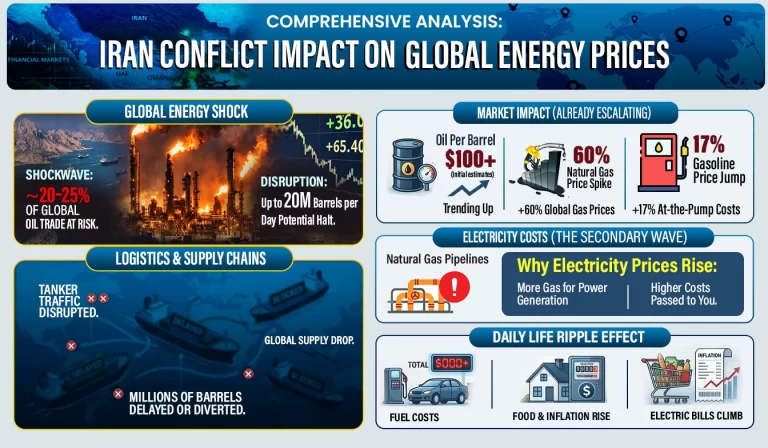
The ongoing 2026 global conflict between the U.S. and Iran has shaken the entire energy sector of the global market. This geopolitical dispute that erupted in February has quickly evolved into what the IEA termed “the greatest energy security challenge in the history of the world” after disruptions to vital export channels like the Strait of Hormuz. This strait had transported almost 20% of the world’s crude oil and significant volumes of natural gas in the past. According to expert analyses, this disruption alone has removed around 1/5 of global crude and liquefied natural gas (LNG) shipments from circulation. This immediately affected prices in various energy segments. Brent crude oil prices surpassed the $100 per barrel threshold at the peak of the conflict. And their volatility remains high in an energy market defined by worries of prolonged unrest. 

US Iran war energy crisis

Although the discussion typically revolves around fuel prices at filling stations, the underlying truth is that higher crude oil and natural gas prices directly affect the cost of power, transportation, and many necessities worldwide. But here’s the bright side: the current situation highlights glaring weaknesses in the traditional energy industry. Also, it urges the economic need for renewable energy sources, increased energy efficiency, and better energy management at home. With this guide, you will have all the necessary tips to protect yourself against the soaring cost of energy. This will help you to fight back against increasing energy prices. 

What role does the global conflict like Iran war play in rising energy prices?

Global conflict like U.S.-Iran War is one of the worst disruptions to energy markets in recent times. 20% of the world’s oil supplies transport through the Strait of Hormuz under certain restrictions. As both oil and natural gas trade internationally, any disturbance automatically leads to higher prices. There are several reasons why we’re seeing a continued increase in energy prices right now: 

U.S. and Iran War and rising energy prices

• The Strait of Hormuz Disruption - A Global Supply Shock:

Approximately one-fifth of the daily global production of oil travels through the Strait of Hormuz. In the event of war, when travel routes become insecure, the movement of tankers decreases, leading to an instant spike in crude oil and natural gas prices. Even those nations that do not import any oil still experience these problems. Oil and gas are commodities traded globally; a reduction in the supply anywhere around the globe will cause prices to increase. The result of rising fuel costs reflect in electricity prices, which depend on natural gas. 

• Fossil Fuels Dependence Results in Vulnerability:

There are many points of vulnerability in the energy production process. Many factors may impact prices by causing shocks to the system. War, economic sanctions, weather disruptions, and problems with infrastructure can all result in sudden price increases, making electricity and fuel highly sensitive to global crises. 

• Pre-existing Pressure on Energy Prices:

Previous research proves that prices had already started rising due to increased demand, insufficient grid capacity, and outdated infrastructure even before the most recent war. Therefore, even before the U.S. and Iran war, the energy prices were already booming. But now, customers might see a “double whammy” with long-term upward pressures and crisis-related peaks. 

How does the increase in energy prices affect a homeowner’s budget?

The impact of the recent global rise in energy prices after the Iran crisis are becoming clearer as it is impacting a household’s expenditures directly. In recent years, the energy prices have already increased by approximately 5.4%. Moreover, 242+ utilities have already submitted applications for increasing prices in the next two years from 2026 to 2027. Due to the increase in prices of fuel and natural gas, prices of utilities have also been increased, causing expenses to boom for all households. 

Based on the data as of March 2026, the average cost of electricity in the US is 18.05¢/kWh. This cost is based on the market value of wholesale electricity and the tariff rates that the utilities set. An increase in the price of natural gas can cause an increase in the tariffs charged by utilities using natural gas for power generation, which adversely affects their customers. Further, increases in the price of oil directly affect gasoline and heating oil. Moreover, the rising price of energy affects inflation because the rising cost of utilities and fuel is linked with the cost of goods and services. 

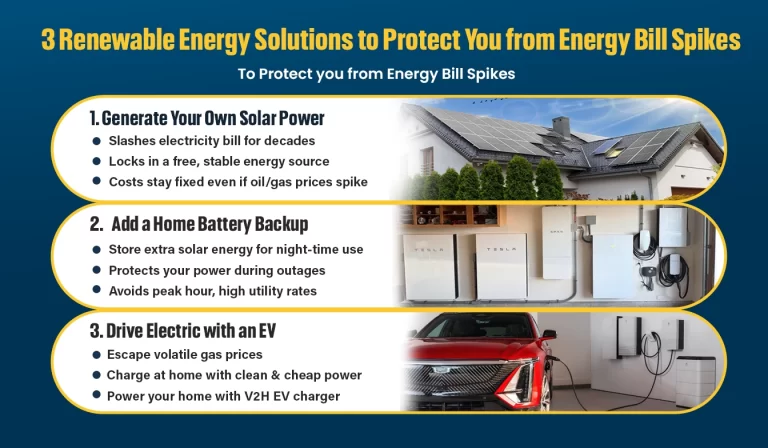
3 Renewable Energy Solutions to Protect You from Energy Bill Spikes

In essence, renewable energy operates differently. Pipelines are not a conduit for sunlight. Tankers don’t affect wind. Military conflict cannot stop the energy stored in batteries. Every morning, the sun just appears, and the wind is always blowing. Also, on sunny days, we can store that energy for later use. That’s the foundation of a home energy independence, built on three layers of solar technology. 

3 Renewable Energy Solutions to Protect You from Energy Bill Spikes

1- Solar Panel Installation: Generate your own power with sun

In practical terms, solar panels are small power plants installed on your roof or in your backyard. Additionally, the “electricity” is free after they are installed. This means that the price of your solar electricity doesn’t change whether the price of oil or natural gas rises due to a conflict, a storm, or a political decision. Additionally, solar energy works well with other house electrification improvements. Moreover, your whole house can run on sunlight when it is solar-powered. However, solar energy alone isn’t a complete solution because the sun doesn’t shine all day, which is where the need of adding battery storage comes in. 

2- Backup Storage Solutions: Store that energy with a home battery

The primary benefit of using a battery with solar panels is storing electricity for later use. Here’s an amazing fact: Earth receives more energy from the sun in an hour than it uses in a year. However, It has always been challenging to capture and store this excess power. That is exactly what a house battery accomplishes, storing the excess solar energy generated during the day and making it accessible at night or during periods of cloud cover. When you combine solar energy with a battery, you can be free from fluctuating oil and petrol prices. This means that a homeowner can achieve energy independence and avoid price changes by adding a reliable battery storage like Tesla Powerwall 3 with solar. In addition, solar batteries are becoming increasingly popular as they help power major household appliances during blackouts that occur more frequently due to adverse weather conditions. 

3- Electrify Transportation: Long-term fuel cost savings with EVs

The majority of households are still connected to unstable fuel markets by their cars, even if they have solar panels and a home battery. The only major way that global energy shocks affect the budget of many families is through fuel. One week you’re paying a fair price at the gasoline station, and the next you’re seeing prices rise above $4 or even $5 per gallon. The average American household spends between $2,000 and $3,000 annually on fuel, even during down periods. That expense can be eliminated with an electric car.  Additionally, you can fuel your car with electricity produced directly from your roof if you combine EV with solar panels and a home EV charger, which makes travelling much more predictable. 

Bidirectional charging, which enables power to flow both ways, is a feature that some more recent EV models are incorporating to further advance technology. This implies that your car serves as both a vehicle and a sizable battery for your house with V2H charging technology. Your EV can power essential appliances or perhaps your entire house in a power outage or if you just want to avoid paying for pricey electricity during periods of high demand. 

To conclude, for years, energy security was in the hands of the government. There was nothing that individuals could do to protect themselves from international events affecting the market. That is about to change. International tensions and wars, such as the one currently being fought in Iran, illustrate the vulnerability of energy sources dependent on fossil fuels. Solar panels, batteries, and electric cars together enable individuals to produce, store, and use energy at home. Through decreasing dependence on unstable energy markets and making an investment in renewable energy sources and optimizing its consumption, people will ensure financial stability despite rising prices. 

Solar SME is a local solar installation company providing complete solar, battery storage and EV charging solutions at affordable prices. You can get a Free Quote for estimating your savings with solar power. 

Related Articles:

2026 is a game changer for solar energy as the U.S. accelerates its transition toward a sustainable future. Because of skyrocketing energy bills, persistent inflation, and increasingly frequent long power outages.

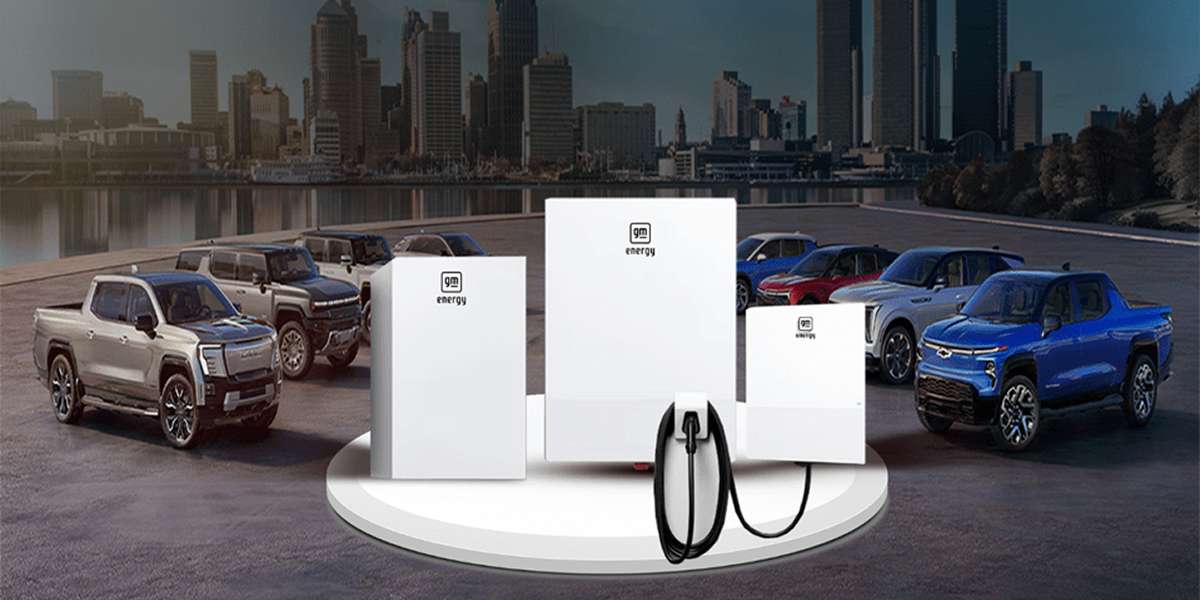
With the increasing trend of using EVs, GM Energy V2H (Vehicle-to-Home) charging system is also gaining popularity.
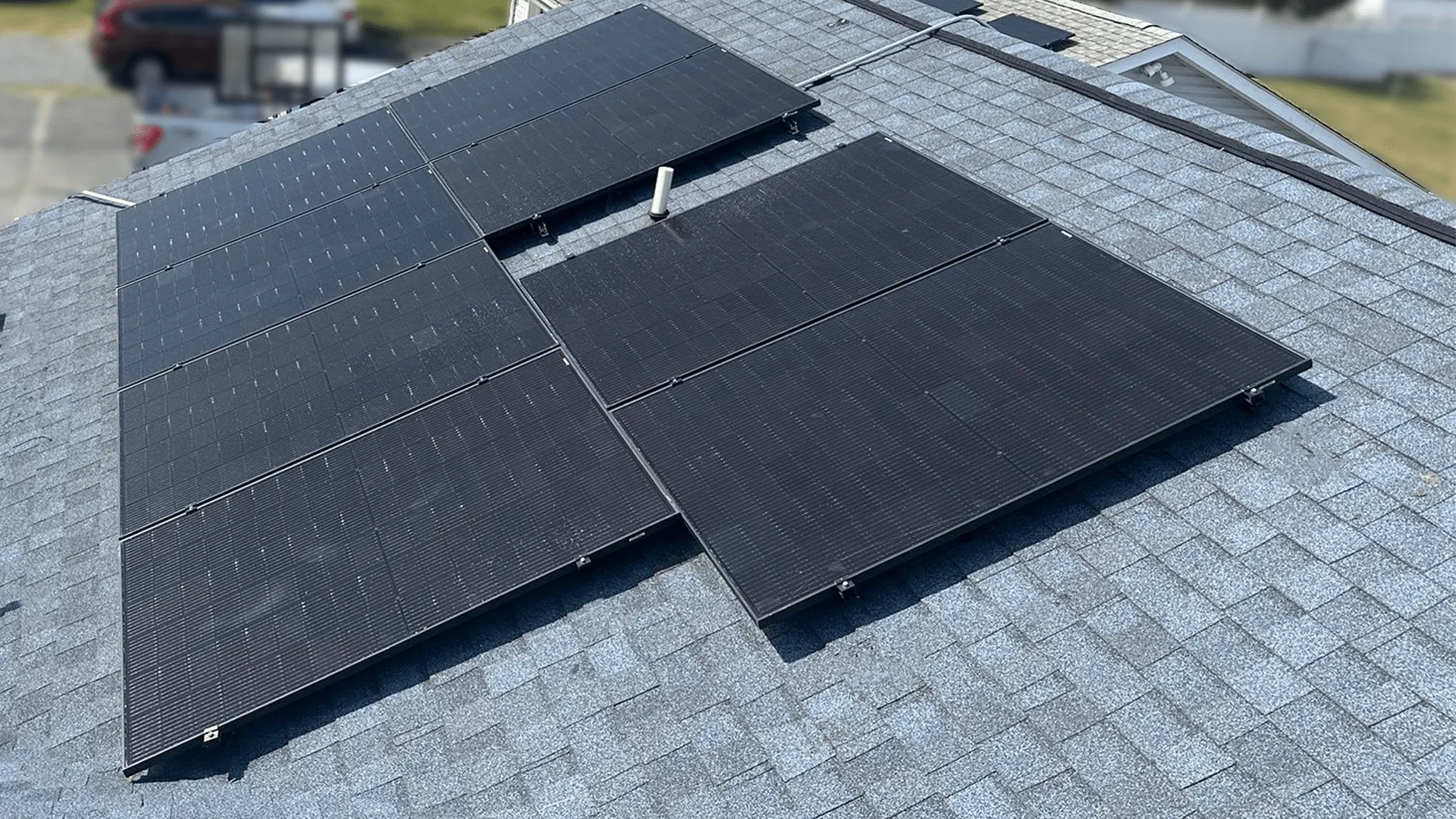
Are you tired of soaring energy bills and booming inflation? A solution is right above you – literally! Solar panels are an eco-friendly, cost-effective solution to control your energy costs.

Scroll to Top