
Get Solar Qualified With Our Smart Calculator!

GET ESTIMATE!

$0 Down, No Debt & No Payments for 12 Months, Power Up Smarter with New Solar Lease!

The AI Energy Demand: How Solar with Battery Storage Powers the Future of Data Centers?

In today’s scenario of rapid technological evolution, data centers have come up as the backbone of the digital economy. Whether it is cloud computing or AI, it is the data center that processes and stores an huge data. However, with the growing demand for data centers, the energy required to power them also increases. The U.S. electrical grid was developed decades ago. It is not able to handle the constant and massive energy demand of the present data centers. 

Solar with Battery Storage

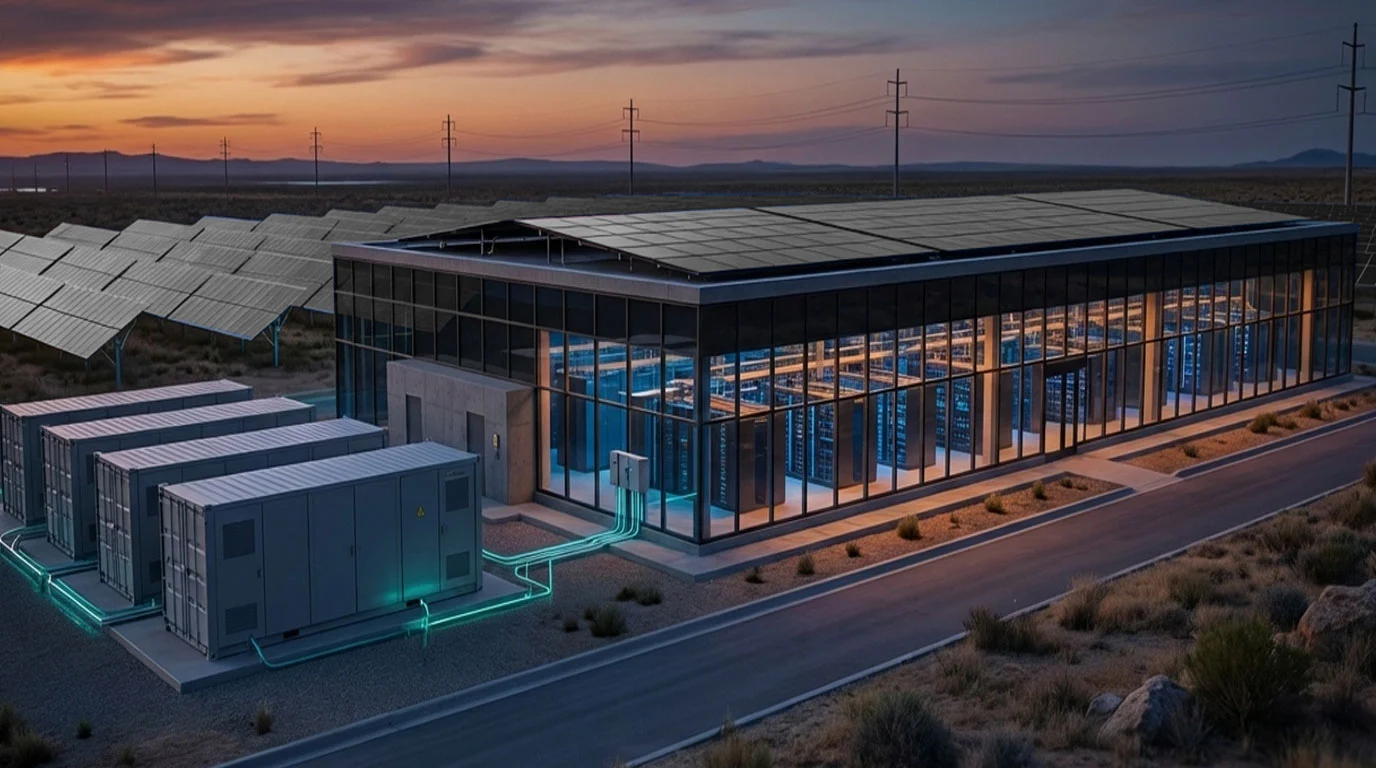
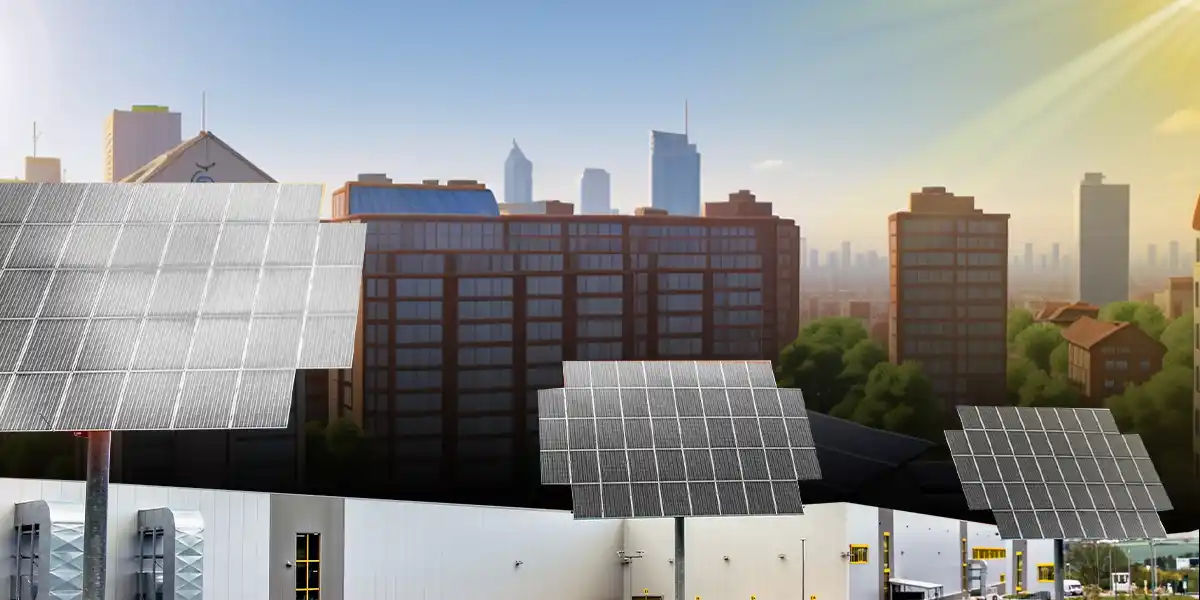
Solar with battery storage is a technology that is a revolution. Data centers use energy and lower carbon emissions. With PV panels and battery technology, organizations can generate clean energy in-house. Also,  they can store it effectively and utilize it during peak hours. This not only helps in reducing dependence on the grid but also satisfies the corporate sustainability strategy.

Why AI is driving explosive energy demand?

Artificial intelligence systems require massive computational power. The processing of large language models, inference engines, and real-time data analytics requires energy in GPU clusters that operate 24/7. In contrast to traditional enterprise IT loads, AI workloads are high-density, continuous, cooling-intensive, peak-demand amplifying, and location-flexible but constrained by grid capacity. The major cloud players such as Microsoft, Google, and Amazon are building hyperscale data centers across the nation. However, the waiting lists for grid connections are growing, and utility upgrades are taking years. This rising demand creates a need of the installation of solar with battery storage systems to overcome the challenges of grid infrastructure. 

How solar with battery storage powers AI Data Centers?

Continuous power supply for AI data centers to enable the processing of GPU computing clusters. They can overcome these power challenges through the installation of solar photovoltaic systems along with advanced battery technologies. The solar panel systems provide clean and uninterrupted power to the systems, especially during the daytime. The battery system stores any surplus of electrical power, which data centers can utilize during peak hours or at night. 

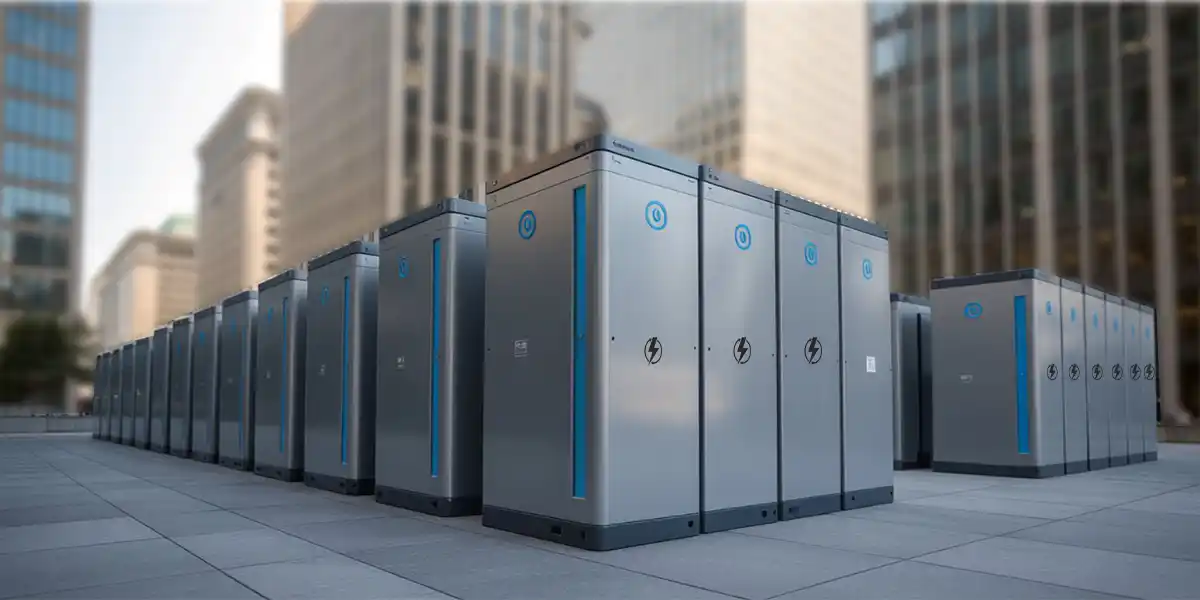
Utility-scale solar energy systems like Tesla Megapacks and Fluence batteries are used to power hyperscale AI campuses, and AI-powered energy management software can be used to manage battery charging, discharging, and load balancing. This will make the AI data center less dependent on the grid, reduce operational costs, and enhance environmental sustainability. 

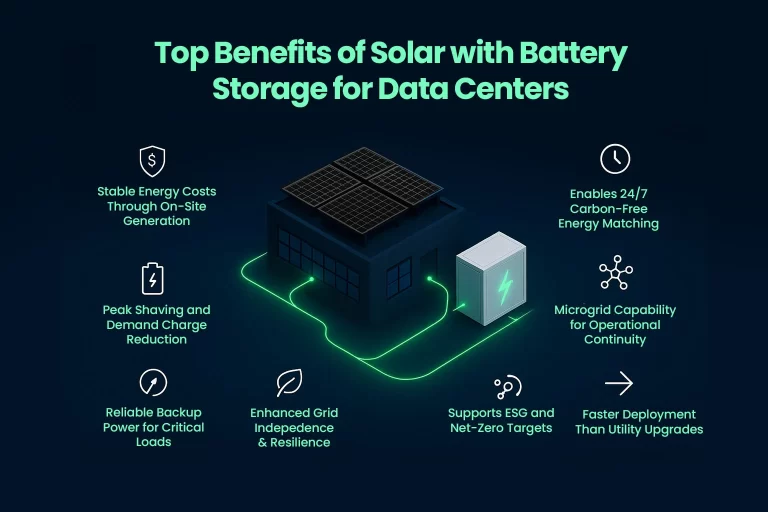
Key Benefits of Solar with Battery Storage for Data Centers:

Solar with battery storage offers several key strategic benefits to AI-based data centers. The key benefits are:  

Key Benefits of Solar with Battery Storage for Data Centers
  • The cost of energy is highly volatile due to fuel cost fluctuations, inflation, and grid upgrade costs. Solar with battery storage solutions can help stabilize the cost of energy by generating power on site, peak shaving, and demand charge management, which can help save millions of dollars annually on the cost of energy for high-energy AI data centers.
  • Also, data centers can achieve the capability to operate in an island mode, independent of grid outages, using solar with backup storage systems.  Also, it is important for data centers located in areas with high natural disasters.

  • Solar with battery storage solutions provide data centers achieve direct scope for carbon emissions reduction and net-zero targets, to achieve sustainability leadership.
  • Moreover, The clean power options support data centers deploying faster, unlike utility grid upgrades, which take a longer time, helping hyperscale data centers deploy faster into the market. 

How solar microgrids are revolutionizing Data Center energy?

Data centers are no longer limited to the conventional model of being grid-dependent. Solar microgrids with battery energy storage systems are leading this transition. These microgrids provide data centers with the reliability, sustainability, and efficiency that are necessary for the high-demand AI workloads. Here is how microgrids play their role:

1. Microgrids: A Localized Energy Solution for Data Centers

Microgrids are a localized energy solution that can be developed with solar photovoltaic cells, battery energy storage systems, and conventional backup power generators. Also, they are helpful for AI data centers as they function in autonomous way in a grid outage. This is especially important for data centers that handle latency-sensitive workloads. Also, microgrids help data centers to produce, store, and distribute power inside the data center itself by integrating solar energy with battery energy storage systems. This reduces the dependence of data centers on the old and congested utility grid.

2. AI-Optimized Energy Management Systems (HEMS)

The modern microgrids are Ai optimized and use Energy Management System for achieving maximum efficiency. These systems such as Smart Panels like span can detect on peak times, control the backup storage charging and discharging patterns and loads of data centers. 

Also, latest solar microgrids use AI-optimized energy management systems to achieve maximum efficiency. The energy management systems forecast peak demand, manage battery charging and discharging, minimize degradation, and manage data center loads in real-time. Companies provide intelligent energy management system solutions that incorporate renewable energy sources into data center infrastructure, ensuring that solar microgrids are economically feasible, environmentally sustainable, and highly available.

The Economics of Solar with Battery Storage for AI Data Centers:

While the capital may be high, financial graph over the long term depicts the potential for high ROI in the reduction of peak demand charges, interconnection costs to the grid, energy arbitrage, tax credits, and accelerated depreciation. Also, the Investment Tax Credit for storage in many states of the US has improved the financial feasibility. The Levelized Cost of Energy for solar is constantly coming down, and hybrid solar technologies are now equal to natural gas plants, without the price volatility of fuel costs. 

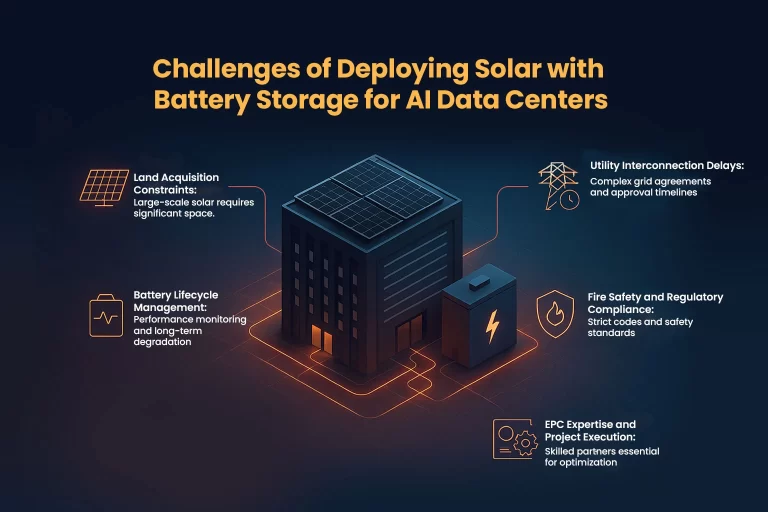
What are the key challenges of implementing solar with battery storage for AI Data Centers?

Although the implementation of solar with battery storage is highly beneficial, there are some challenges that need to be addressed with careful planning and management: 

Challenges of Implementing Solar with Battery Storage for AI Data Centers

As the energy consumption of AI data centers continues to accelerate, simply counting on centralized grid expansion is no longer feasible. Solar energy combined with battery storage is now more resilient, financially stable, and environmentally sustainable than ever before. 

Solar energy storage systems are now more robust, financially sound, and environmentally sustainable. Whether it is a commercial solar installation or a microgrid solar energy solution for data centers, solar energy storage systems are rapidly becoming the building blocks of next-generation digital infrastructure. Also, the future of artificial intelligence is dependent not only on developments in computing but also on the power source. By investing in solar energy and battery storage, data centers can ensure that the future of the AI revolution is powered by energy systems that can sustain innovation for decades to come.

Solar SME is a trusted solar installation company, empowering homes, businesses, warehouses and data centers with modernized solar and advance battery backup solution. Get a FREE Online Estimate with our smart solar calculator.

Related Articles:

The smart grid is a modern development of a traditional electrical grid. This new system uses digital technologies to connect the power utilities and the consumers.
Microgrids are revolutionizing the current energy system because they provide an efficient, safe, reliable, and sustainable energy supply.
Solar battery is a pivotal backup solution for smart companies to address energy crisis effectively. From reducing peak demand charges to integrating renewable energy sources, energy storage systems offer a multitude of benefits for businesses. Explore more!

Scroll to Top