

- Published On: March 11, 2026
State-by-State Solar RPS: A Patchwork of Opportunity and Challenges in the U.S. Market
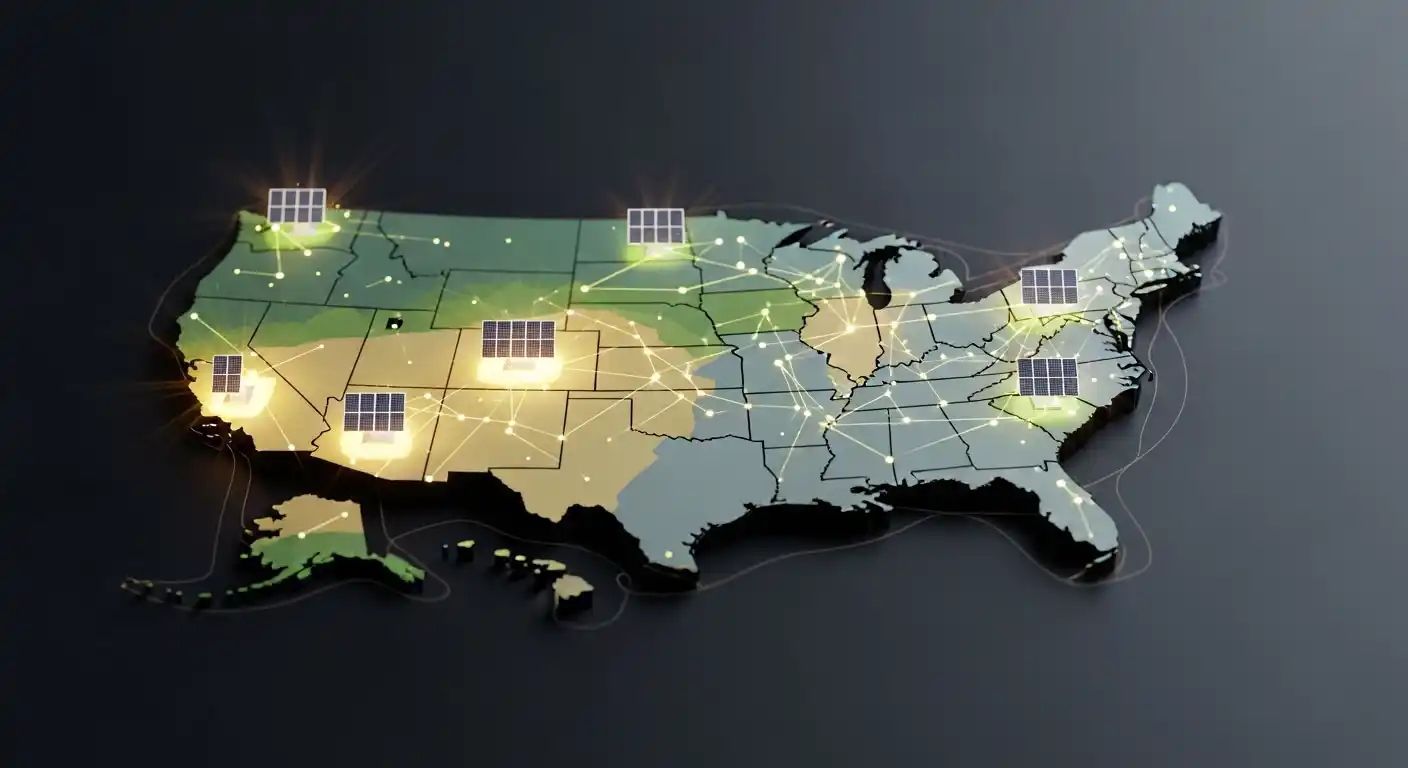
The solar energy market in the United States is a growing but uneven market driven by varying state policies, local opposition, and market forces. It is important to develop an understanding and the influence of Renewable Portfolio Standards (RPS), net metering reforms, and policy changes on the solar market, especially solar with battery storage systems. Some states in the US have effective policy frameworks to grow the distributed solar market. On the other hand, there are states that are facing challenges in the solar market driven by regulatory uncertainty and local opposition.
In 2025, the solar capacity in the United States increased by more than 30 GW. It surpassed the 150+ GW solar capacity milestone with a 23% year-over-year growth rate. In addition, solar contributed to nearly 4-7% of the United States’ overall electricity generation capacity. A decade ago, solar contributed less than 0.5% to the overall electricity generation capacity in the United States.
Today, the adoption of solar energy highly depends on the state-level policy environment. The solar payback period for the homeowner’s solar energy system, the returns generated from the system, as well as the decision to invest in the battery storage system, all driven by RPS environment, the net metering environment, as well as the incentives in the state.
What are Renewable Portfolio Standards (RPS)?
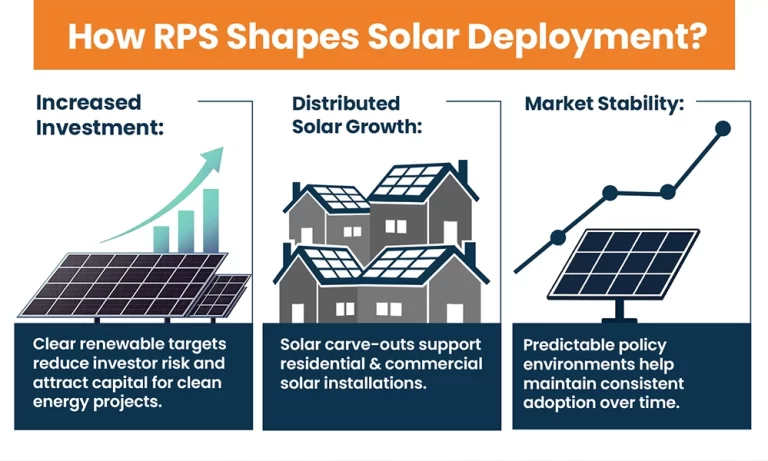
A Renewable Portfolio Standard is a requirement for the electric utilities to generate a certain percentage of the electricity sold to consumers from renewable energy sources. There are many states that have incorporated solar carve-outs in the RPS programs. Solar carve-outs are programs that have set targets for the generation of electricity from solar energy. A robust RPS environment is important in fostering the growth of the solar energy industry as well as the development of the battery storage systems.
How does RPS shape solar deployment?
States that do not have RPS programs or have weak RPS programs have lower adoption rates for solar energy systems in comparison to those having favorable natural resources for the development of the industry.
How Policy and Market Structure Impact Solar with Storage?
Net metering policies and how utilities compensate homeowners for excess energy production can affect the value proposition of solar with battery storage. States with favorable policies, such as compensating excess energy at close to retail rates, can experience higher rates of solar uptake. If utilities reduce export rates or adopt time-of-use rates, homeowners can use battery storage to optimize self-consumption.
State Spotlights: Leading and Emerging Solar Markets
The following states represent the significant role policy, solar capacity growth, and local factors play in the solar industry.
Texas (TX): Sun Power Meets Policy Uncertainty
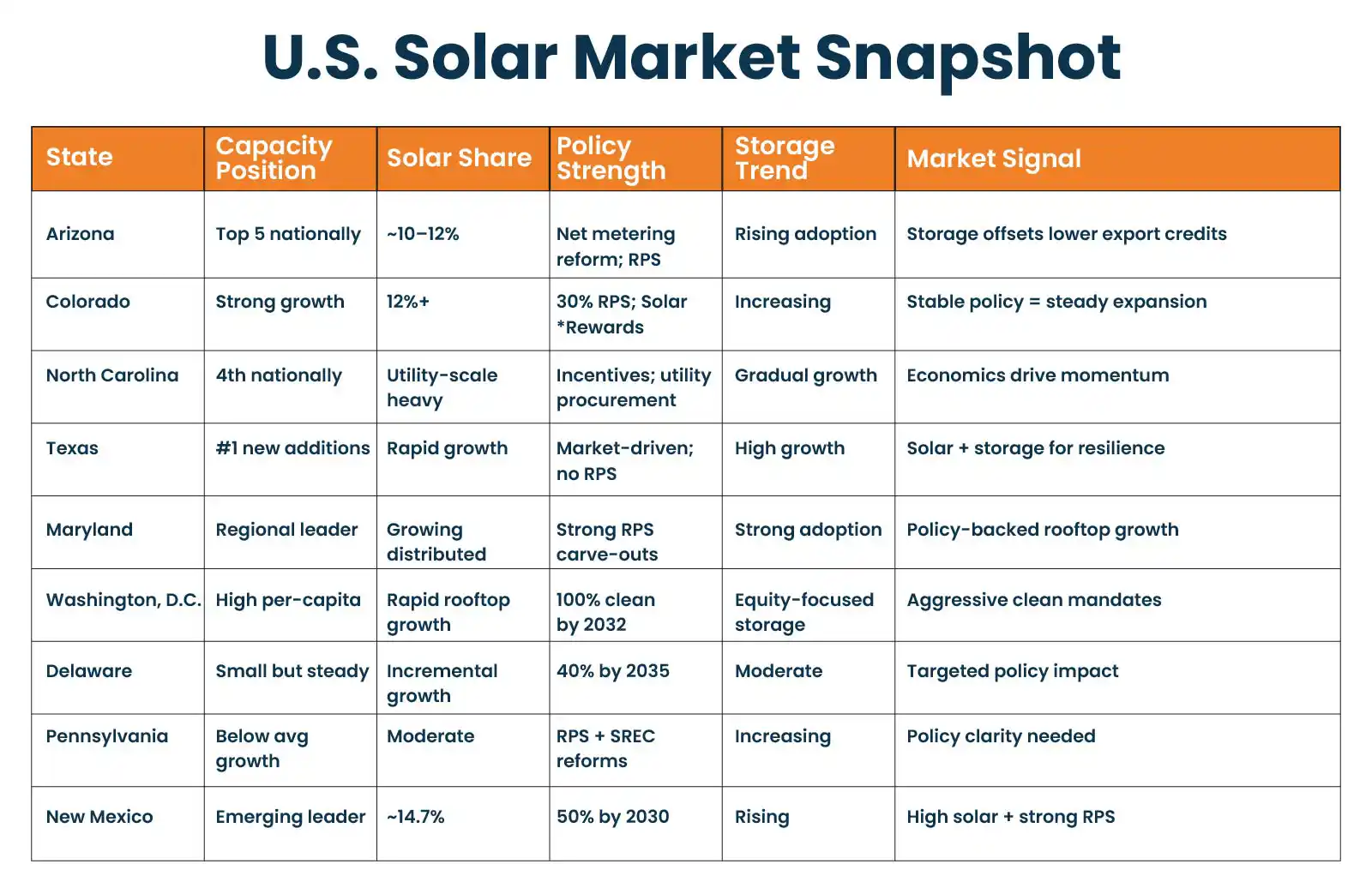
Texas is the leading state in the country in terms of solar installations. Recently, the state represented more than 30 % of the total U.S. solar capacity. This is close to 30 GW in operation and more than 38 GW by 2025. Also, Texas has installed more solar capacity in the latest quarters than any other state and dominated the country’s solar output growth. In 2025, solar power surpassed coal power on the ERCOT grid, marking a significant achievement. Although, the state has no RPS policy in place, and the market dictates. However, unstable net metering and rate structures have hindered residential growth compared to utility-scale installations.
Key Takeaway: The abundance of solar resources and deregulated markets make for attractive conditions. But policy instability causes many homeowners to integrate solar with energy storage solutions.
Maryland (MD) & Washington D.C. (DC): Mid-Atlantic Policy Leaders
Both regions utilize robust RPS policies and solar carve-outs to promote adoption. Maryland RPS policy goals include structured targets for both rooftop solar and community solar. On the other hand, Washington D.C. Policy objectives include 100% clean electricity by 2032, in conjunction with Solar for All initiatives to increase adoption.
Key Takeaway: Effective policies and strategic incentives promote growing distributed solar and battery storage adoption.
Arizona (AZ): Solar Riches with Policy Evolution
Arizona, with its high solar irradiance and favorable net metering policies, was at the top in terms of solar capacity. The state is among the top 5 in the country in terms of total solar capacity. Solar Market performance in Arizona is fifth in state in the country in terms of solar capacity, with over 11,700 GWh generated in 2025. Also, Arizona’s renewable portfolio standard and favorable net metering policies make it an ideal location for solar installations. However, Arizona’s recent change in net metering export credit rates and the slow transition to new rates may hinder the growth of small-scale solar installations, leading to the use of battery storage for maximum self-use.
Key Takeaway: Arizona has high solar irradiance and favorable policies. However, the recent evolution in net metering policies may hinder the growth in solar installations.
Colorado (CO): Balanced Growth with Renewable Goals
Colorado is an established solar industry leader, due to its consistent policies and strong utility engagement. Meeting the state’s 30 % renewable energy goal and providing further incentives such as the Solar Rewards programs are key drivers of solar adoption. Moreover, solar energy is increasingly becoming a part of the state’s overall energy mix, with more than 12 % of in-state electricity production coming from solar power alone, according to late 2025 figures. More solar installations now come with battery backups, taking advantage of favorable rate structures.
Key Takeaway: Colorado’s consistent policies and strong utility engagement have contributed to the development of both utility and residential solar.
North Carolina (NC) : Sunbelt Solar Expansion
North Carolina has become a significant solar market, placing fourth in the country for installed solar capacity in 2025.North Carolina has over 7 GW of solar capacity installed through 2025, and growth is likely to continue. However, North Carolina’s RPS expired, but incentives and utility solicitations remain. Also, North Carolina’s utility-scale solar projects drive the market, but distributed solar is also increasing in metropolitan areas.
Key Takeaway: North Carolina still has strong solar market economics, even though its RPS no longer exists.
Delaware (DE): Small but Strategic Solar Market
Delaware has set a goal to meet a 40% RPS requirement by the year 2035. There are solar carve-outs to ensure the growth of the solar industry in the state’s relatively small market. There are incentives to support the growth in the state’s relatively small market. Home battery systems are available for optimizing the use of the energy generated in the home even if the net metering credits are not as beneficial.
Key Takeaway: Targeted policies can support growing solar markets even in smaller states.
Pennsylvania (PA): Unexplored Solar Resources
Pennsylvania has a moderate RPS policy with solar elements. However, recent changes have affected the profitability of SRECs and the solar net metering policy, which has impacted the growth of solar energy for residential users. The recent changes to the solar net metering policy have made solar with storage more attractive for consumers. Although the adoption of solar energy is below the national average growth rate, it has the potential to grow with the modernization of the grid and better incentives.
Key Takeaway: A stable policy framework and a clear understanding of rate structures are critical to reignite the growth trajectory.
New Mexico (NM): Emerging Solar + Storage Market
New Mexico has a strong RPS of 50 % by 2030 and favorable solar resources, making it an attractive market. Solar now constitutes around 14.7 % of the total electricity produced. Also, people are increasingly turning to battery storage solutions to mitigate peak demand tariffs and improve self-reliance.
Key Takeaway: A strong policy framework and favorable solar resources make NM an emerging leader in the adoption of solar and storage solutions.
The US solar market is a good example that illustrates that the amount of sunshine is not the only important factor in determining the rate at which solar energy is adopted in the world. For example, states with robust RPS policies, stable net metering environments, and adequate incentives have the highest rate of solar energy adoption. Other states with uncertain or weak energy policies have lower growth rates in residential solar energy systems. Thus, the best option for homeowners in such states is to invest in solar energy systems with battery storage to increase the value of the system.
Through the study of energy policies in different states, homeowners are able to plan strategically for the best way to invest in solar energy systems that maximize the amount of savings over the system’s life while increasing energy independence in the process.
Solar SME is a local solar installer serving the best solar states in U.S. You can get a FREE Online Estimate with our solar calculator!
Related Articles:
With Texas buyback plans, you can sell excess solar energy to the grid and reduce your electricity bills by earning credits or money. However, It is essential to compare and understand each plan and choose the best. Explore the best solar buyback plans in Texas!
Every year, more people choose solar panels for their homes and businesses. Homeowners can benefit financially from solar energy in most cases, however state-by-state variations in this regard can be significant. Explore the best states for solar installation!

Solar Renewable Energy Credits are one of the popular solar incentives for those who install a solar energy system. These tradeable credits not only promote shifting to clean energy but also offer monetary benefits by selling SRESs. Explore how to cell your SRECs!