
Get Solar Qualified With Our Smart Calculator!

GET ESTIMATE!

$0 Down, No Debt & No Payments for 12 Months, Power Up Smarter with New Solar Lease!

Time-of-Use Rates: Smart Ways to
Avoid Peak-Hour Charges

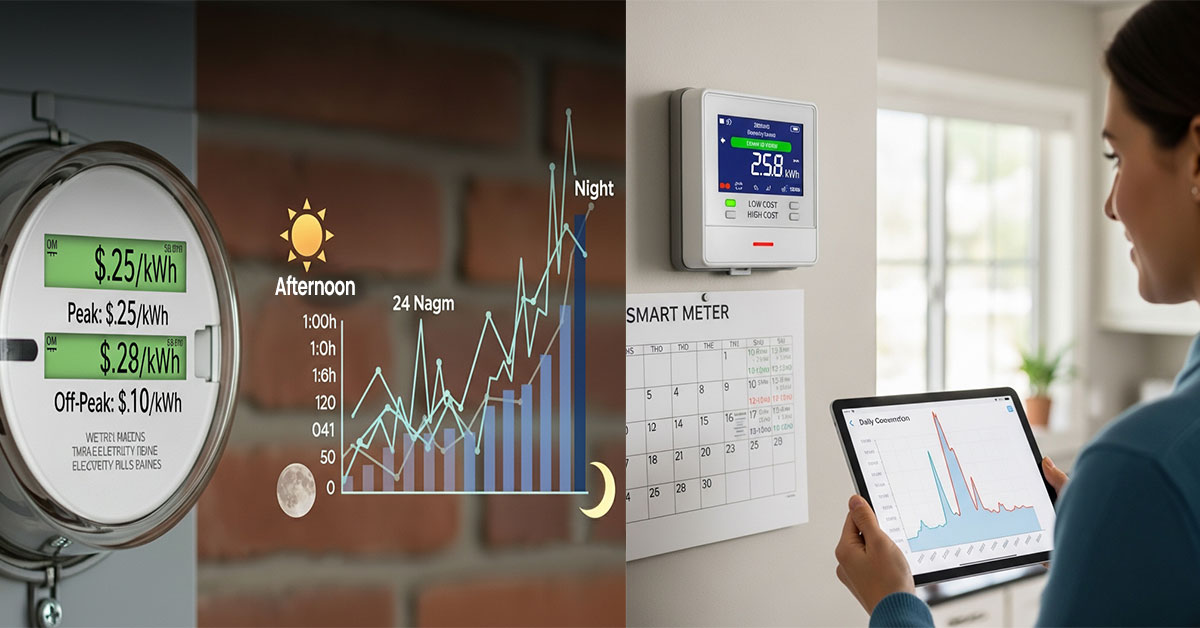
Electricity bills can feel unpredictable, and Time-of-Use (TOU) rates are often the hidden culprit. With TOU pricing, unlike flat pricing, the amount one needs to pay on their electricity bill depends on the time of consumption. More electricity is consumed during peak hours compared to off-peak hours. This concept of electricity pricing is adopted by many utility companies around the country. As a consumer, TOU pricing can be a problem for you due to the additional charges it adds to your monthly electrical bill. Your usage of electrical power now impacts your overall TOU pricing. As TOU rate becomes more common in the country, you must know the basics. 

Time-of-Use Rates

In this article, we’ll explore why TOU rates exist and how you should manage your power usage to lower the impact of peak hours in electric bills. 

How do time-of-use rates work?

Time-of-use rates are part of a wider category of creative utility rate structures that modify your electricity bill throughout the day. These kinds of rate structures, often known as time-varying rates, often exhibit a similar pattern. The lower rate is when both the cost of producing energy and the demand for it are low, such as during the night. On the other hand, the power tariff is significantly higher when both the cost of producing and the demand for electricity are high (for example, in the afternoon of a hot summer day).

Seasons and weekdays compared to weekends and holidays, and different times of day within the same day can all affect time-of-use rates. Pacific Gas & Electric (PG&E), for example, has two residential time-of-use plans with varying rates and peak hours. While the E-TOU-D plan gives a shorter on-peak window from 5:00 to 8:00 PM on weekdays, the E-TOU-C plan’s on-peak time is 4:00 to 9:00 PM every day.  

Why are time-of-use rates necessary?

The goal of time-of-use rates is to more closely match the expenses that power users perceive with the true cost of electricity production. Nowadays, once or twice a year, the majority of utilities alter their home electricity tariffs. The total cost of producing the power that users use is supposed to be covered by that rate, which is stated in dollars or cents per kilowatt-hour ($/kWh).  

However, for several reasons, a utility’s electricity costs vary during the day. Historically, the cost of producing power rises in tandem with the daily demand for electricity. Without a time-varying electricity rate, residential consumers have no window into how electricity costs rise and fall each day.

On the other hand Time-of-use prices can help increase transparency. You can find out more about the actual cost of the electricity you use by varying the rate during the day, week, or month. By modifying use of electricity in off peak hours, you can start to reduce your overall electricity bill by being aware of when prices are higher and lower. 

What is the difference between a time-of-use rate bill and a standard bill?

Calculating a typical electricity bill is simple: Simply multiply the monthly electricity rate by the electricity used during the month to determine your monthly cost.  

Although calculating a time-of-use charge is a little more difficult, the procedure is the same. The quantity of electricity used during various hours of the day must now be multiplied by the rate applicable to those hours, rather than your monthly total usage multiplied by your single electricity rate. Because of these variations, some consumers may experience instant savings on their monthly electricity costs without altering their behavior, while others may experience higher bills without changing how much electricity they use. 

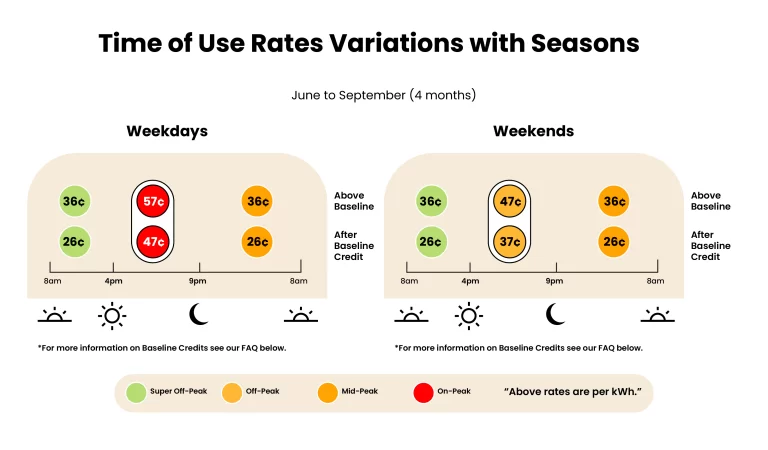
How do Time of Use rates change with seasons?

Electricity usage patterns change from summer to winter. This prompts some utilities to offer different rates based on the time of year. 

Time of Use rates change with seasons

You might have noticed that the cost of power is higher between 9 p.m. and 8 a.m. in the winter.  This is because, while they are at home during the winter, people tend to heat their homes more. 

On holidays, the Time of Use rates are also modified. There are no periods of high demand on holidays like Memorial Day, Labor Day,  and New Year’s Day. This is because most businesses are closed. 

Do solar panels make Time of Use cheaper?

Residential solar systems have appeared on roofs around the country in recent years. Clean energy can save its owners a lot of money in addition to being very beneficial to our environment. In particular, solar panels do not lower Time of Use rates. Instead, your solar panels typically produce the most electricity during off-peak hours. The solar energy generated directly reduces your consumption of the most expensive electricity. The kWh sold back to the grid during peak times are worth more if you have a good net metering plan.  

How do battery backup make TOU pricing work better?

If you add solar batteries to your PV system, you can store excess power and use it during peak electricity hours for lower electric bills. Instead of sending excess power to the grid at lower rates, save and use it during peak TOU rates. Some utilities offer special TOU plans for battery owners with lower off-peak rates or better export compensation during peak hours. For many homeowners, the best TOU strategy is solar + storage working together. This can also shorten the solar payback period compared to solar-only systems.   

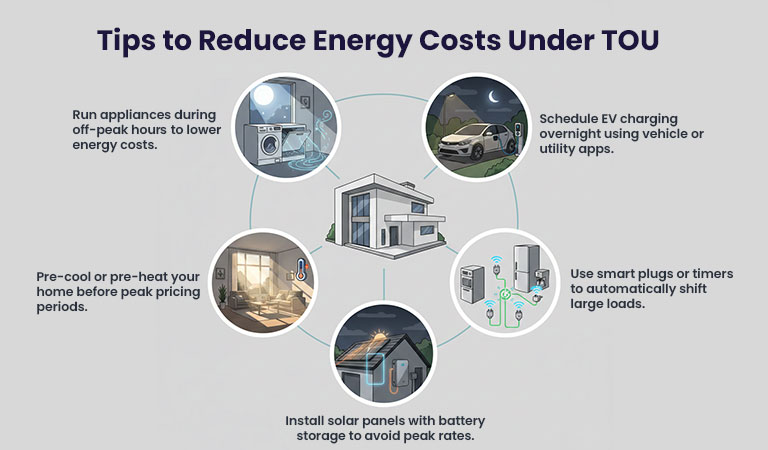
How to reduce your energy costs under TOU?

You don’t need to use less energy, just use it at the right time. These tips may help you manage energy use during peak electricity hours and save more on your high energy bills. 

How to reduce your energy costs under TOU?

As more renewable energy is added to the grid, electricity prices are shifting more throughout the day. TOU rates are how utilities manage this, and they are becoming standard across the country. However, investing in clean power is a great way to decrease your exposure to time-of-use rates.  

Solar SME is a trusted local solar installation company near you. We offer customized solar PV systems and battery backups for your energy requirements. Get a FREE Online Estimate of your solar savings with our smart solar calculator: 

Related Articles:

Solar loans are a cost-effective solution for installing solar panels on your home or business. However, many are unsure about their functionality and the benefits they might derive from this type of solar financing.
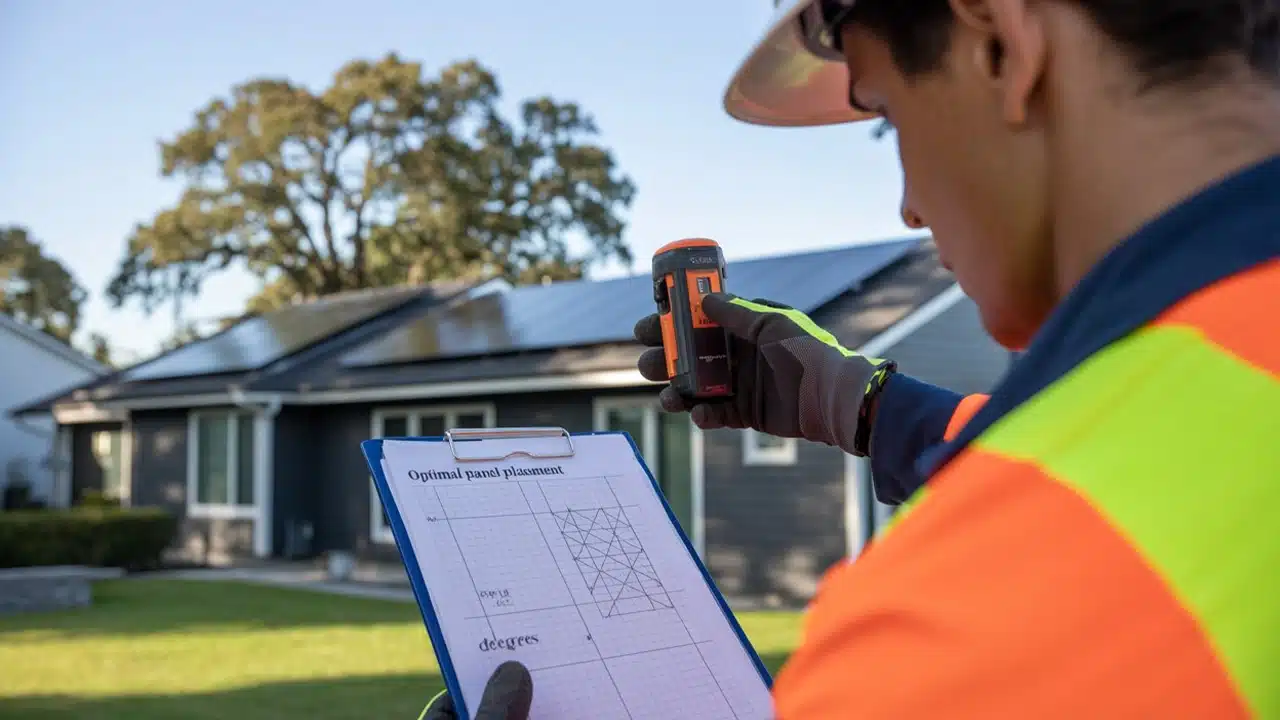
While considering major factors before switching to solar, like cost, financing etc, it is pivotal to analyze, "Is my roof good for solar? it is pivotal to analyze, "Is my roof good for solar? and guide you on all solar roofing factors!
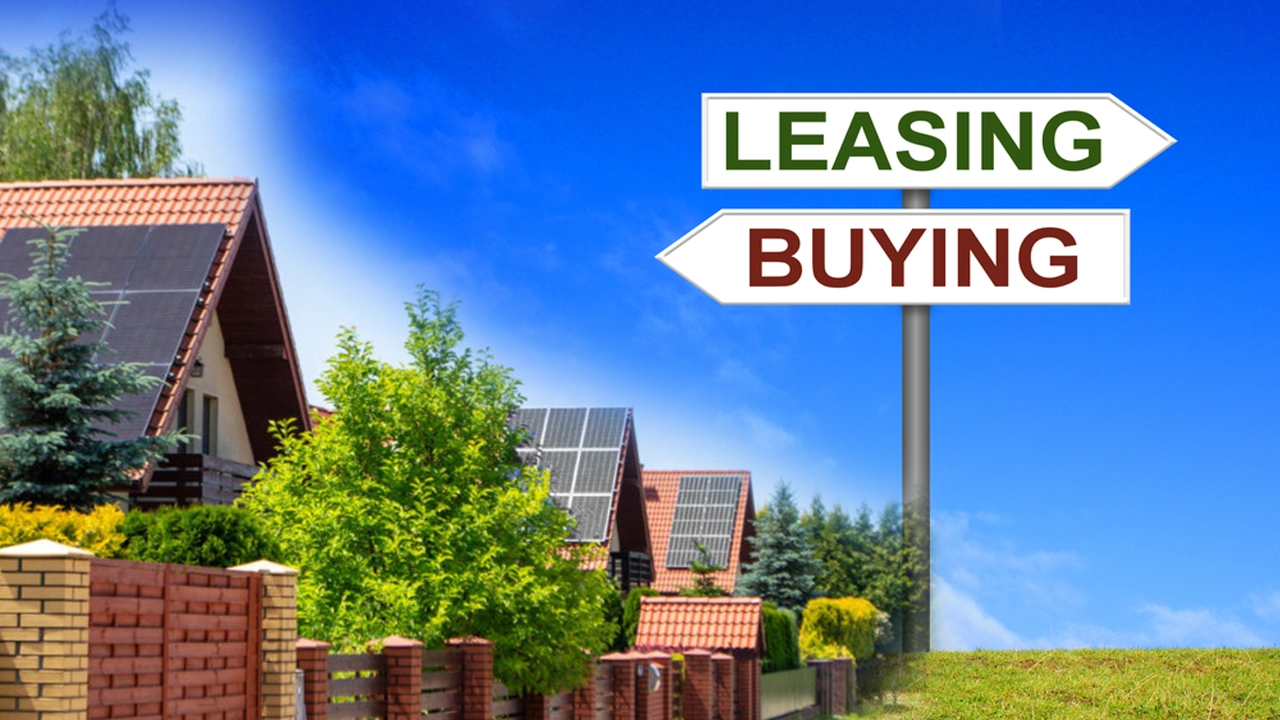
It may require an upfront cost to install solar panels, however, there are various solar financing options. Explore the best option . between solar lease vs buy and make an informed choice.

Scroll to Top