
- Updated On: Nov 25, 2025
Solar EV Charging at Home:
Everything You Should Know
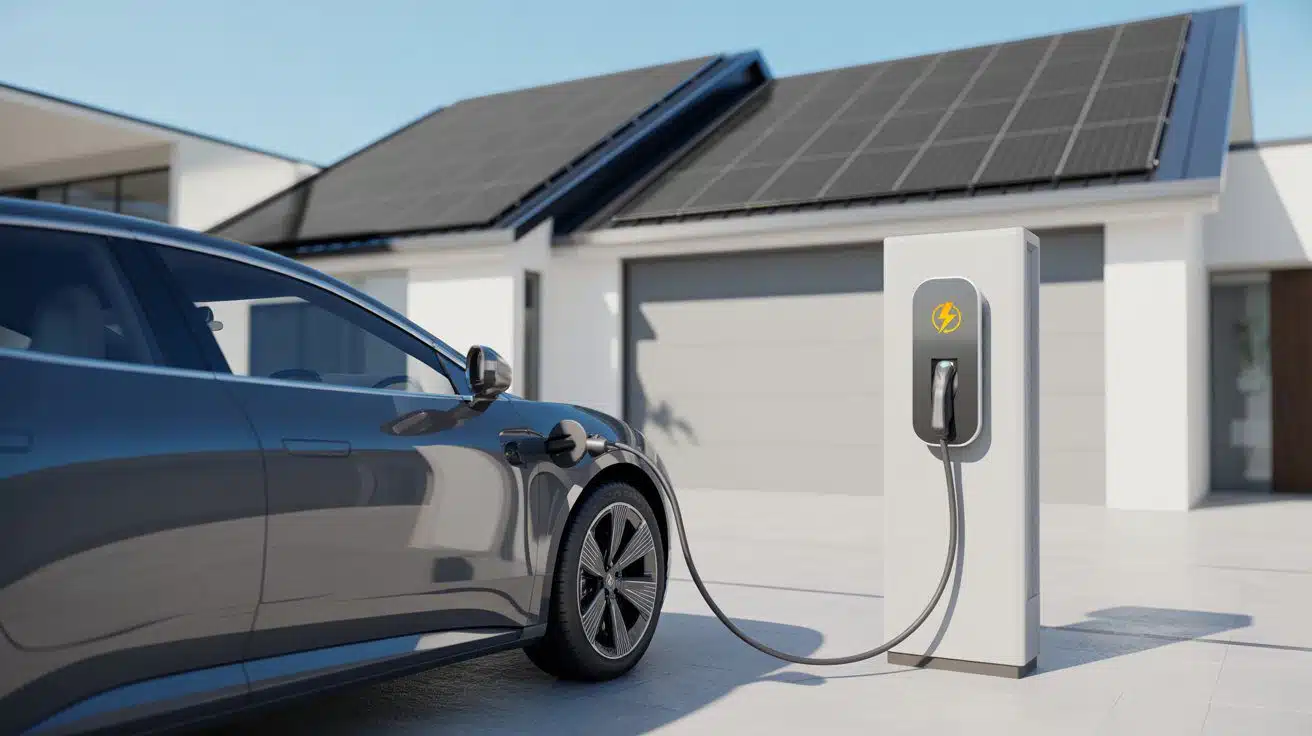
With the increasing adoption of electric vehicles, solar EV charging at home has emerged as a prudent and environment friendly solution. When you integrate a home solar panel system with an EV charger, your vehicle can directly charge for free and unlimited sunlight, reducing not only our electricity expenses but also saving from charging station hustles and high prices.
What is solar EV charging?
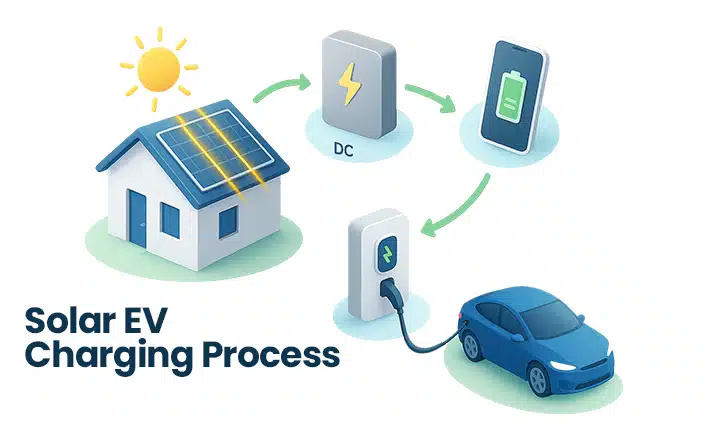
Solar EV charging involves the use of solar energy to charge your electric vehicle. Solar panels capture sunshine and convert it into electricity. You can use this power to charge your car without using grid power. The use of solar-powered EV charging has major cost savings on electricity costs, apart from saving your time from queuing in lines at the charging stations. You can reduce hazardous emissions and save energy by using solar power instead of traditional electricity. It’s an ideal choice for individuals as well as businesses who want to save on their energy expenses and time.
How does solar EV charging work?
A solar EV charging system, which enables you to charge a vehicle from the sun, consists of three key parts:
Solar Panel System: Photovoltaic (PV) cells in solar panels use sunshine to generate electricity, which solar inverters subsequently transform into usable AC power.
Charger: The gadget that connect your car’s battery with a solar inverter in an EV charger.
Energy Management System: Solar EV charging is powered by an energy management system. It must continuously monitor your solar output. Also, it recognize when solar energy is available, and route that energy to your EV charger.
What are the benefits of charging an electric car with solar panels?
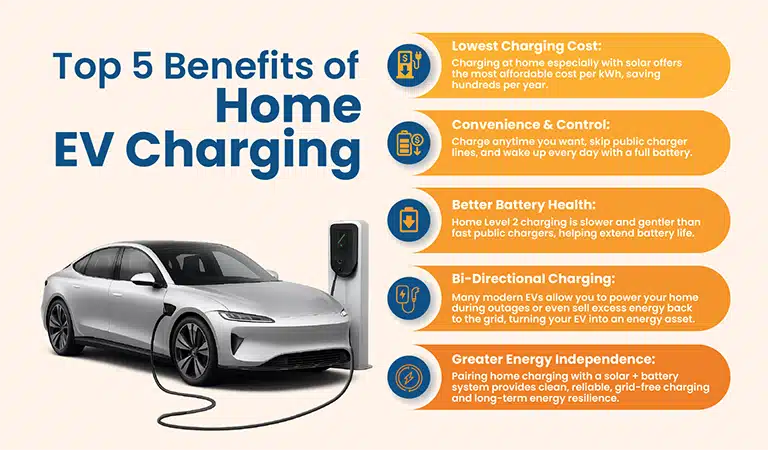
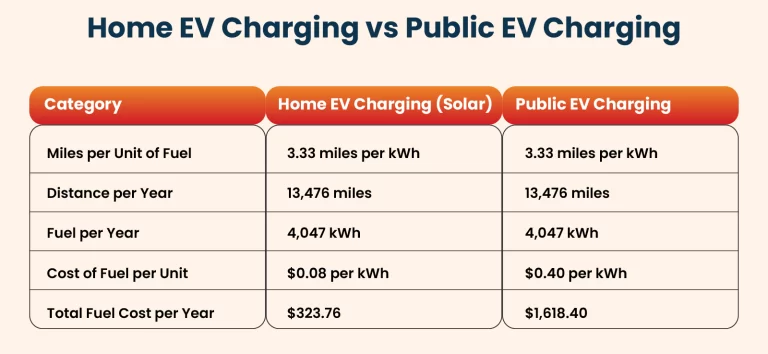
Making the switch to an electric car has many benefits, but using solar panels to charge your EV enhances both the financial and environmental advantages. Your expenses can be reduced by up to 60% when using solar-powered EV charging instead of grid electricity. Additionally, solar offers stable prices. Solar owners lock in stable, predictable energy costs for decades, even though household gas and electricity rates have increased by roughly 3.1% and 2.8%, respectively, during the last ten years. Top benefits of solar EV charging at home include:
How many solar panels do you need to charge an EV?
The short answer is it takes between 5 and 12 solar panels to charge an EV. However, it depends on so many factors, including:
- Fuel efficiency of the EV
- Number of miles traveled per day
- Wattage of the solar panels
- Average hours of sun per day
The following steps can help you calculate the number of solar panels to charge your electric vehicle:
Determine the daily kWh of electricity that a single panel may generate. This figure changes according to the panel’s wattage and the number of hours of daylight it receives each day, but the math is quite straightforward. Divide Watt-hours by 1,000 to get kilowatt hours (kWh), and you now have the daily output of a solar panel.
Hours of daylight per day x wattage = Watt-hours per day
Solar panel outputs range from 250 to 400 Watts, and the average number of sun hours per day ranges from 3.5 to 6 in the US. Let’s assume panel output is 400 Watts and sun hours are 5 hours:
5 hours of sun per day x 400 Watts = 2000 Watts per day or 2 kWh per day
Assuming we need 9.96 kWh of electricity to charge an EV per day, and we also have the solar output of each panel. So, divide the kilowatt hours of electricity needed by the daily kWh output of each panel to get the number of panels needed to charge.
9.69 kWh per day / 2 kWh per panel per day = 4-5 panels
How much money can I save with solar car charging?
The average monthly fuel cost for a gas-powered vehicle is $143. You will save $83 a month simply by converting to an EV, as charging your EV at home will cost around $60 a month. Furthermore, once you start using solar panels to charge an EV, you’ll save even more! Based on the Levelized Cost of Energy (LCOE), charging an EV with solar electricity typically costs $21.72 per month. This implies that using solar energy to charge an EV is more than $100 less expensive per month than using petrol to run a car!
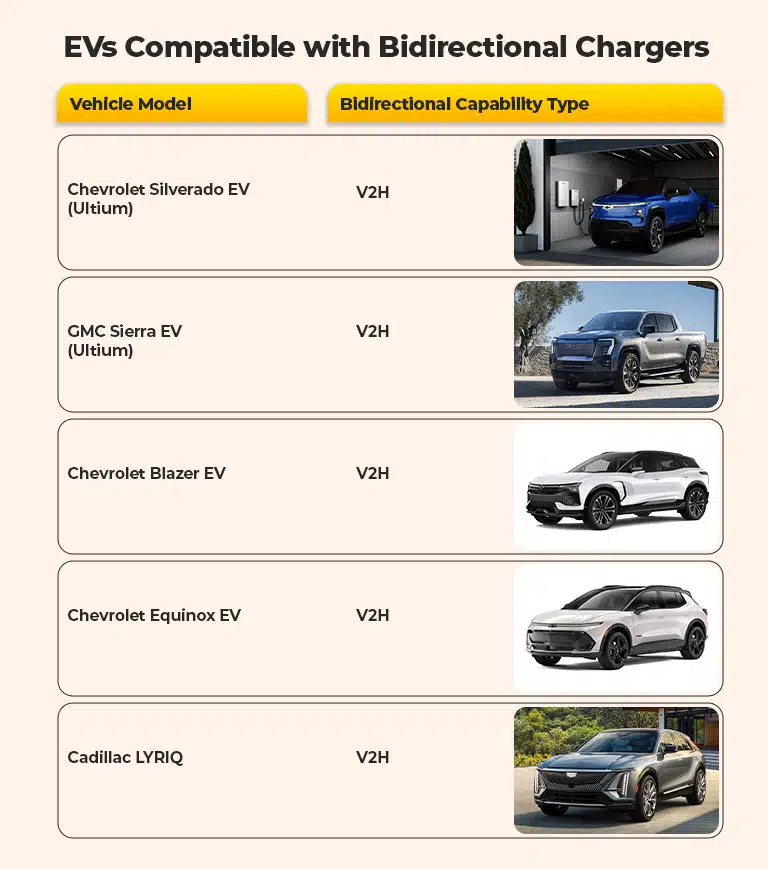
How does bidirectional V2H EV charging work?
A bidirectional charger is an advanced form of EV charger. It allows two-way power flow. When charging a car, a bidirectional charger can change AC (alternating current) to DC (direct current), in contrast to a traditional unidirectional charger. An electric car can power a house like a battery via Vehicle to Home (V2H) EV technology. The EV battery can provide backup power in a blackout. Adding rooftop solar increases the advantages by enabling solar-powered EV charging. The charger receives a signal from the CT meter when the house uses grid electricity. After that, it takes the same amount out of the EV battery. This technique balances the use of grid power.
Concluding, when solar and electric vehicles are combined, both technologies perform well. Your solar panels change the economics of driving an electric vehicle in addition to charging it. You’re driving on sunshine when you produce your own power. Every mile is free once your solar panel system reaches break-even. However, it is essential to size your home solar system according to your energy needs.
Solar SME is a trusted local solar installation company near you. We help you to customize your system for maximum output and long-term savings. Also, we have the best EV charging solutions for homeowners and businesses. Book a FREE Consultation with us!
Related Articles:
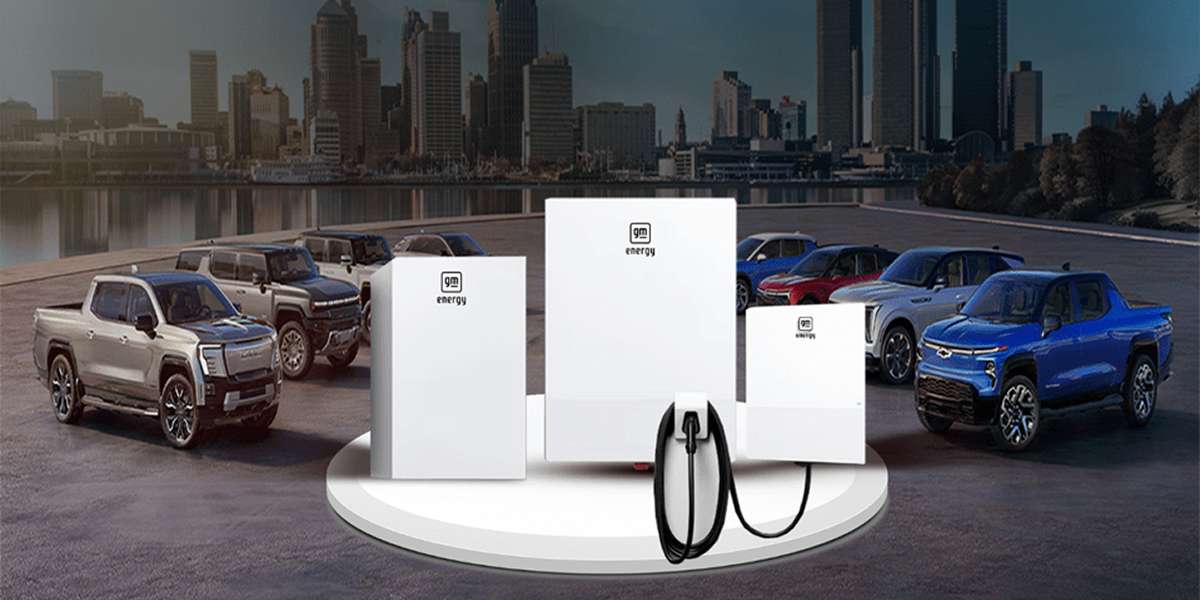
With the increasing trend of using EVs, GM Energy V2H (Vehicle-to-Home) charging system is also gaining popularity.
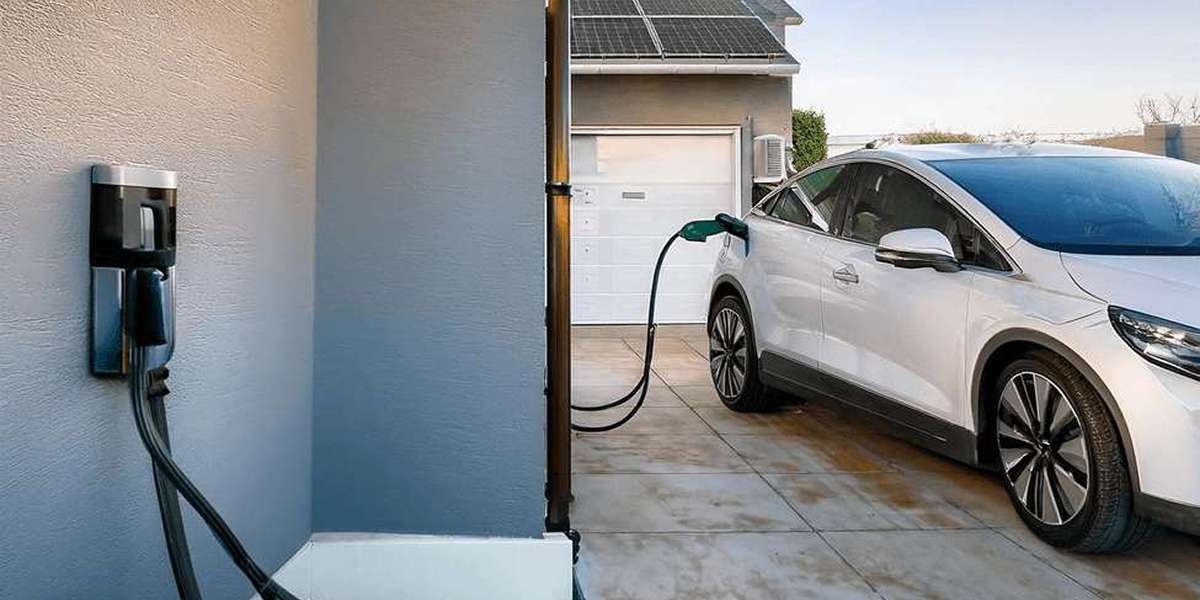
The trend of electric vehicles is booming in the U.S. as an EV offer more sustainable and cleaner source of transportation.
What if your car could power your home during blackouts? Or, supply excess energy to the grid during peak hours?